Helping design and engineering professionals discover, evaluate and specify technologies and processes that shorten the design cycle and enable success.



Digital Engineering April 2026
In the latest issue of Digital Engineering, we take a look at the latest innovations in design for additive manufacturing, including the use of natural language inputs, social media cosplayers, and AI integration. The issue also includes a feature…

January Special Focus Issue: Design for Additive
In this Special Focus Issue of Digital Engineering, learn about the latest advancements in design for additive manufacturing, including new software tools, additive in automotive, custom medical devices, and more.
Developed by MIT’s Self-Assembly Lab and Steelcase, rapid liquid printing creates products in a liquid gel suspension, in a process that is somewhat similar to injection molding. It’s fast, and there are no particular limits to the size of the object that can be created this way. It’s also fascinating to watch.
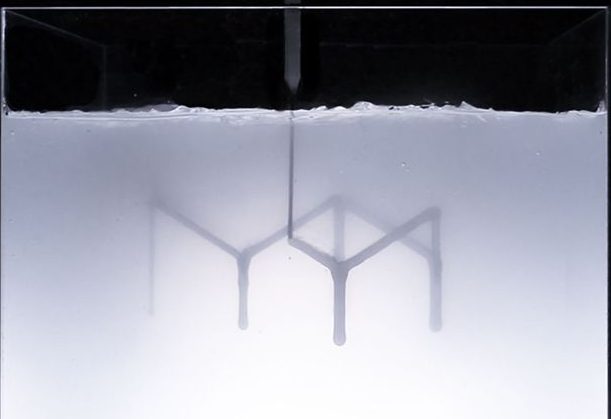
According to the MIT website: “Compared with other techniques, we believe this is the first development to combine industrial materials with extremely fast print speeds in a precisely controlled process to yield large-scale products.”
These products can be printed in just a few minutes. The material is hardened via a chemical interaction with the gel.
The gel suspension eliminates the gravity challenges inherent in 3D printing (you don’t need supports) and the process does not require layer-by-layer printing.
“This means that a part can be printed quickly within the gel and then removed and simply washed off with water. The second is that the gel self-heals after the nozzle passes through,” said Skylar Tibbits, co-director of the lab in an interview with Wired. “This allows you to continuously move and print within the gel and not create tunnels or cavities which would fill up with printed material."
The lab has been able to create products made of foam, plastic, rubber, and metal in the suspension. The process is best suited to larger objects; smaller items with high-resolution features would take longer to produce.
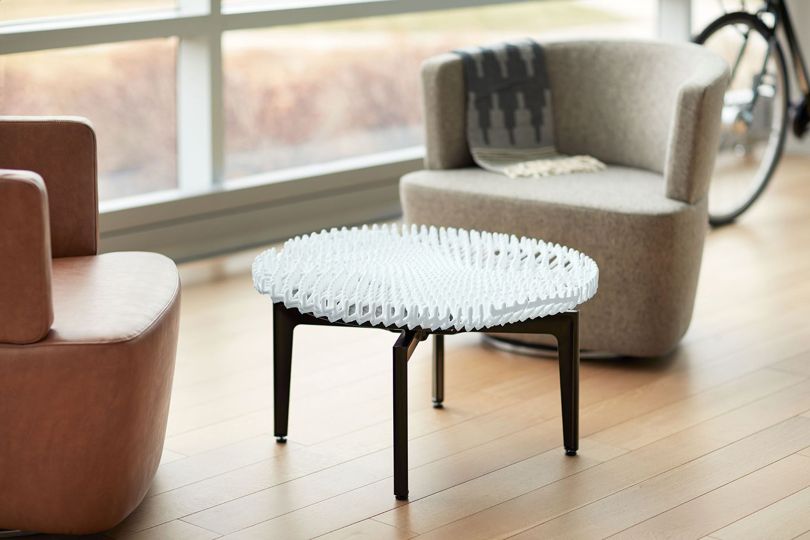
In a demonstration at the Furniture Fair in Milan, MIT used a meter-long tank to create a table top for Bassline—and did so in under 30 minutes.
You can watch the process in action in the video below.
Source: Wired


Brian Albright is the editorial director of Digital Engineering.
Contact him at [email protected].

Join over 90,000 engineering professionals who get fresh engineering news as soon as it is published.






About Us · Contact Us · Editorial Team · Advertising · Privacy Policy · Subscriber Services · © 2026 Digital Engineering 24/7 · Peerless Media