Helping design and engineering professionals discover, evaluate and specify technologies and processes that shorten the design cycle and enable success.



Digital Engineering April 2026
In the latest issue of Digital Engineering, we take a look at the latest innovations in design for additive manufacturing, including the use of natural language inputs, social media cosplayers, and AI integration. The issue also includes a feature…

January Special Focus Issue: Design for Additive
In this Special Focus Issue of Digital Engineering, learn about the latest advancements in design for additive manufacturing, including new software tools, additive in automotive, custom medical devices, and more.
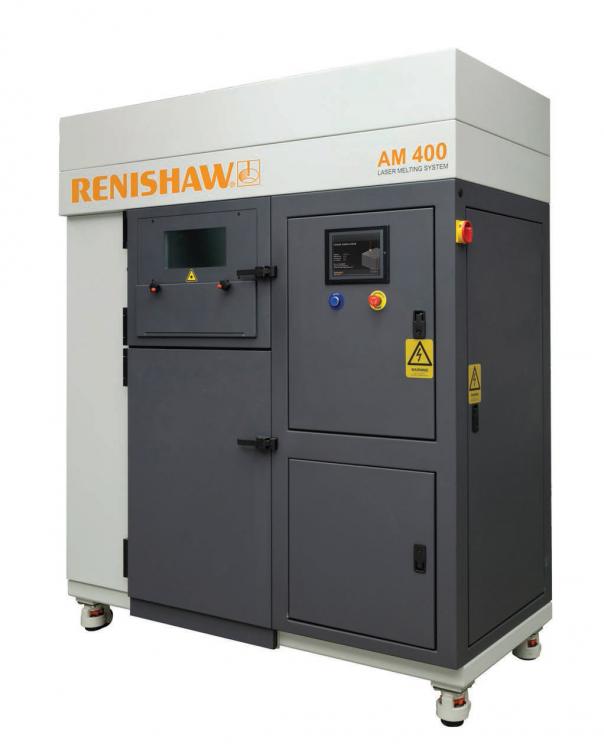
UK-based Renishaw’s laser powder-bed fusion (LPBF) 3D print systems require a high degree of accuracy to produce high-quality metal parts. In practice, however, these types of additive manufacturing machines can produce significant variations from part to part that create anomalies that affect performance.
To help improve consistency and help customers identify these anomalies, the company has released a new process monitoring software called InfiniAM Spectral that can improve process stability and part quality.
“For additive manufacturing to become a truly ubiquitous manufacturing technology, users and practitioners require a deep understanding of the process,” said Robin Weston, marketing manager at Renishaw's Additive Manufacturing Products Division. “The software will be hugely beneficial to manufacturers looking to achieve consistent processing with AM.”
“InfiniAM Spectral is part of a developing family of products that helps users capture, evaluate and store process data from Renishaw LPBF technologies. The software enables data capture, presentation and analysis, representing a powerful tool for developing a deep understanding of the AM process,” the company said in a press release.
The software provides two measurement functions in its sensor modules that provide signals that can be used to identify discrepancies. The LaserVIEW module uses a photosensitive diode to measure laser energy intensity, while MeltVIEW captures melt pool emissions in the near-infrared and infrared spectral ranges.
Data from the two modules can be compared to an existing X-ray or CT scan data from a known good part in order to accurately verify part quality and consistency.
“The amount of process data generated during an AM build is immense, which means it can be difficult to make practical use of it without the correct interpretation tools,” continued Weston. “InfiniAM Spectral enables manufacturers to easily interpret data and gain a more detailed understanding of their AM processes. Access to real-time data opens the door to future developments in process control – detecting and correcting problems in real-time.”
Source: Renishaw


Brian Albright is the editorial director of Digital Engineering.
Contact him at [email protected].

Join over 90,000 engineering professionals who get fresh engineering news as soon as it is published.






About Us · Contact Us · Editorial Team · Advertising · Privacy Policy · Subscriber Services · © 2026 Digital Engineering 24/7 · Peerless Media