Helping design and engineering professionals discover, evaluate and specify technologies and processes that shorten the design cycle and enable success.



Digital Engineering April 2026
In the latest issue of Digital Engineering, we take a look at the latest innovations in design for additive manufacturing, including the use of natural language inputs, social media cosplayers, and AI integration. The issue also includes a feature…

January Special Focus Issue: Design for Additive
In this Special Focus Issue of Digital Engineering, learn about the latest advancements in design for additive manufacturing, including new software tools, additive in automotive, custom medical devices, and more.
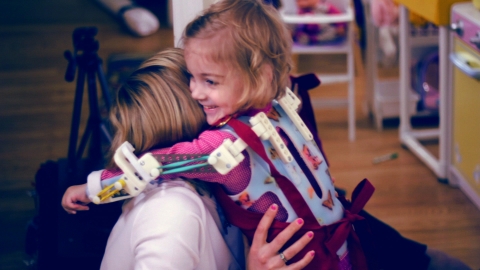
Emma Lavelle was born with arthrogryposis multiplex congenita (AMC). The condition made it impossible for her to raise her arms by herself. While at an AMC conference, her parents learned about the Wilmington Robotic Exoskeleton (WREX), an upper body exoskeleton that provides support for children, allowing them to use their arms.
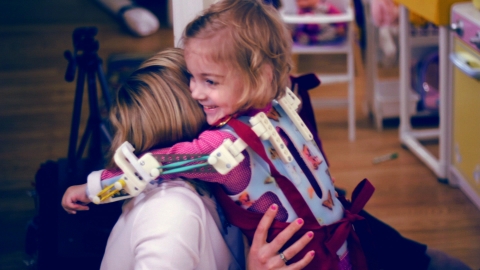
After the conference, Megan Lavelle, Emma’s mother, met with Tariq Rahman, Ph.D, head of pediatric engineering and research, and Whitney Sample, research designer, both from Nemours/Alfred I. duPont Hospital for Children inWilmington, DE. Emma was strapped into a small, prototype version of WREX and was immediately able to feed herself, play with toys and hug her family.
The only problem with the WREX solution was the exoskeleton’s metal framework.
“The existing WREX was all metal parts, and it’s kind of big, and Emma was too small for that,” said Rahman. “So we required something light and small that would attach to her body and go with her.”
Rahman had access to a Dimension SST 1200es printer from Stratasys, and decided to attempt to build a small, lighter version of WREX using AM parts. The ABS plastic parts created by the Dimension were just the right fit for little Emma, and before long Rahman and Sample had designed a WREX fitted to a plastic vest that was light enough to be used by a child.
The plastic WREX also turned out to be durable enough for everyday use. Emma called the exoskeleton her “magic arms” and would begin to cry if they were taken away for repair. Since the creation of the smaller WREX, 15 other children have benefited from 3D printed exoskeletons.
“This is one of those industries that matches perfectly with 3D printing – additive manufacturing – because we need custom everything,” added Sample.
Below you’ll find a video about Emma and her magic arms.

John Newman is a Digital Engineering contributor who focuses on 3D printing. Contact him via [email protected] and read his posts on Rapid Ready Technology.
Follow DE
Join over 90,000 engineering professionals who get fresh engineering news as soon as it is published.






About Us · Contact Us · Editorial Team · Advertising · Privacy Policy · Subscriber Services · © 2026 Digital Engineering 24/7 · Peerless Media