Helping design and engineering professionals discover, evaluate and specify technologies and processes that shorten the design cycle and enable success.



Cut Retrieval-Augmented Generation (RAG) Hallucinations by 50%
Most teams hit the same wall with enterprise AI: LLMs that hallucinate, pipelines that don’t scale, and infrastructure that’s harder to design than the models themselves.

What Is Intelligent BOM Management? A Guide to Smarter Product Development
Learn how intelligent Bill of Materials (BOM) management helps teams collaborate, reduce errors, and bring innovative products to market faster with cloud-based PLM tools.
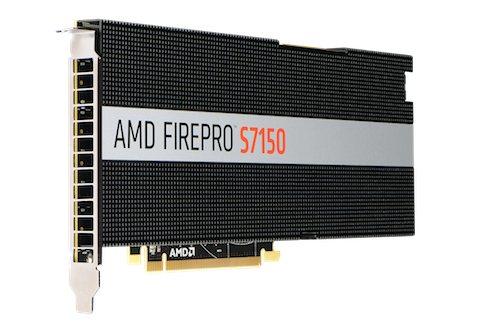
AMD earlier this month released its FirePro S-series GPUs (graphics processing units) with Multiuser GPU (MxGPU) technology, what the company claims is the first hardware virtualized GPU product. The FirePro S7150 and S7150 x2 take a bare-metal architecture approach to enabling a secure, high performance graphics experience tuned for remote workstations and virtual desktop infrastructure (VDI) environments.
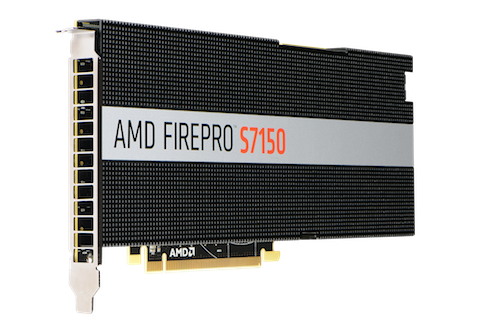 AMD’s FirePro S7150 takes a bare-metal architecture approach to engineering VDI. Image courtesy of AMD.
Essentially, AMD is transplanting the same architecture used in its workstation-based professional graphics line and making it available to servers that will be released by its usual OEM (original equipment manufacturer) partners, including Dell and Hewlett Packard, in the first half of 2016. “We’re taking the same guts of our workstations and putting it back in the data center in a server,” explains Tonny Wong, AMD’s product manager for virtualization products. “Instead of rendering the application and graphics on a workstation, we stream it to a local device and everything else stays back in the data center.”
While traditional VDI is well matched for mainstream business applications, the technology has been too lightweight for handling 3D CAD and simulation files effectively, especially in its ability to support graphics acceleration for workstation-class performance. Typically, users of CAD or simulation programs in a virtual environment have been saddled with poor visual quality, frequent system crashes, and subpar performance, which is unacceptable for accommodating serious engineering workflows. “Up until two years ago, graphics couldn’t be virtualized,” Wong says.
With AMD’s MxGPU, that’s no longer the case. Now, the GPU joins the ranks of key hardware components like CPUs, network controllers and storage devices as hardware that can be virtualized. Specifically, MxGPU technology delivers hardware GPU scheduling with high-precision quality of service; uses hardware-enforced memory isolation logic to preserve the data integrity of VMs (virtual machines); and exposes the GPU functionality to supported applications, allowing virtualization for graphics APIs (application programming interfaces) like OpenGL and OpenCL.
The new AMD FirePro S7150 and FirePro S7150 x2 server graphics cards leverage this technology to provide support for up to 16 simultaneous users with a single GPU card. Each card features 8GB of GDDR5 memory and 256-bit memory bandwidth. The FirePro S7150 x2 card will support up to 32 simultaneous users with 16GB of GDDR5 memory.
“AMD multi-user graphics promises to change how and when companies utilize workstations by providing workers with on-demand powerhouse graphics when needed, while helping significantly reduce the total cost of ownership typically associated with large installations of workstations,” said Jon Peddie, president, Jon Peddie Research, in an AMD press release announcing the product. “The move to virtualization of high-performance graphics capabilities typically associated with standalone workstations only makes sense and will likely gain significant traction in the coming years.”
AMD isn’t alone in pushing accelerated GPU power for virtualized environments. Chief GPU rival NVIDA also has technology called GRID, that is a software-based approach to GPU virtualization. AMD touts the performance of its hardware-based approach in addition to security advantages. “Software adds an extra layer that could give hackers an opportunity to gain unauthorized access,” Wong maintains, comparing AMD’s FirePro offering to NVIDIA GRID. “With hardware, everything is built into the silicon so … that ups the ante from a security aspect.”
Watch this video to hear AMD sow the seeds of how it planned to position FirePro for server-based graphics virtualization.


Beth Stackpole is a contributing editor to Digital Engineering. Send e-mail about this article to [email protected].
Follow DE
Join over 90,000 engineering professionals who get fresh engineering news as soon as it is published.






About Us · Contact Us · Editorial Team · Advertising · Privacy Policy · Subscriber Services · © 2026 Digital Engineering 24/7 · Peerless Media