Helping design and engineering professionals discover, evaluate and specify technologies and processes that shorten the design cycle and enable success.



Digital Engineering April 2026
In the latest issue of Digital Engineering, we take a look at the latest innovations in design for additive manufacturing, including the use of natural language inputs, social media cosplayers, and AI integration. The issue also includes a feature…

January Special Focus Issue: Design for Additive
In this Special Focus Issue of Digital Engineering, learn about the latest advancements in design for additive manufacturing, including new software tools, additive in automotive, custom medical devices, and more.
The restricted ink song-and-dance is, of course, nothing new. It was pioneered by standard 2D printer companies as one way of ensuring continued sales. Interestingly, that appears to be one area of 3D printer commerce HP isn’t concerned in cornering with its MultiJet Fusion system, which is scheduled to launch in the fall.
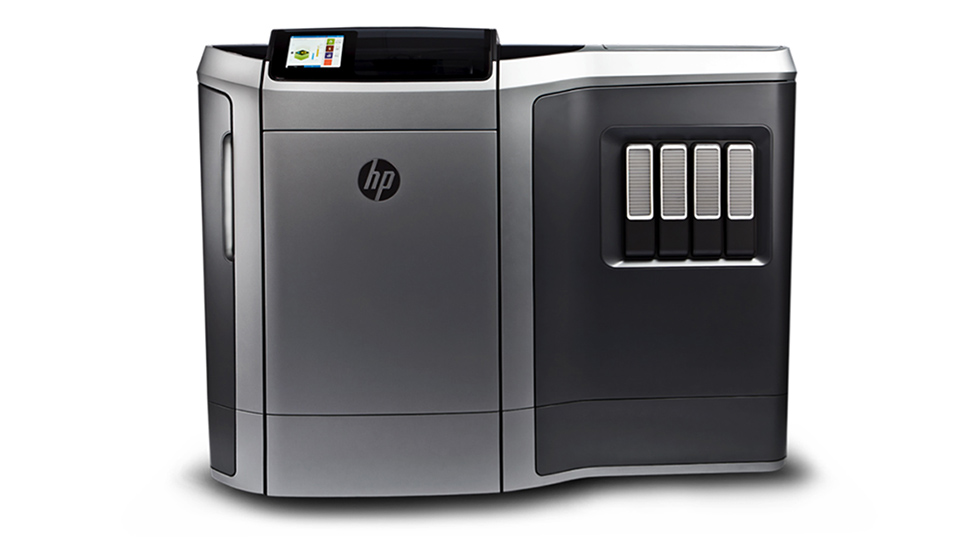 HP's MultiJet Fusion AM system will allow users to fuel their creativity with third party materials. Courtesy of HP.
HP is promising a lot from its new system. According to the company, users will be able to control multiple aspects of the printing process, including flexibility, translucency and color down to the voxel. The company also promises the system will be both faster and less expensive than existing additive manufacturing (AM) systems.
Unlike its ink printers, though, HP says it isn’t interested in cornering customers into buying materials from a single source. The MultiJet Fusion system is intended to be an open platform, and that openness begins with allowing customers to pick and choose their material options.
“We’ll still have print and supplies but our model will be different; we will open up the platform so people can have other supplies that come in,” Shane Wall, CTO at HP told The Register. “They’ll [third party suppliers] have access to our APIs through an SDK that allows them to program to the printer itself, and we’ll allow people to come in and do very disruptive new materials that they wouldn’t have been able to do before.”
Opening material options to third-party developers might just give HP the leg up it will require if it intends to make an impact in the AM game.
Below you’ll find a video about HP’s MultiJet Fusion system.
Source: The Register


John Newman is a Digital Engineering contributor who focuses on 3D printing. Contact him via [email protected] and read his posts on Rapid Ready Technology.
Follow DE
Join over 90,000 engineering professionals who get fresh engineering news as soon as it is published.






About Us · Contact Us · Editorial Team · Advertising · Privacy Policy · Subscriber Services · © 2026 Digital Engineering 24/7 · Peerless Media