Helping design and engineering professionals discover, evaluate and specify technologies and processes that shorten the design cycle and enable success.




Sponsored
Artificial Intelligence for Design and Engineering Workflows
In this white paper, learn how artificial intelligence and machine learning can improve design and simulation.
Technology Focus: Designing for Optimization & Simulation
Simulation is pervasive, with people from different departments and backgrounds discovering new ways to put it to use, in all of its varied forms.
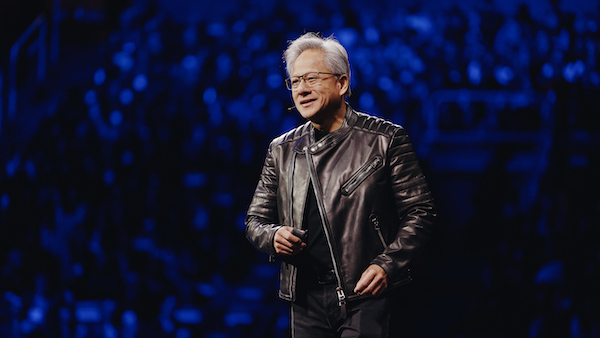
At NVIDIA GTC in San Jose, CA, the keynote took place at the SAP Center, a sports and concert venue that seats 17,000. It was a 14-minute drive from the Denny's on Berryessa Road where the idea for the graphics company that would become NVIDIA was first hatched. In 24 years since its launch, the company has evolved from a graphics hardware maker into an AI powerhouse. This year, in his keynote, NVIDIA CEO Jensen Huang highlighted the rise of Agentic AI.
“It all started with computer vision, or perception AI, then generative AI. For the last five years we focused primarily on generative AI ... generative AI fundamentally changed how computing is done, from a retrieval computing model to a generative model. In the past, it was about creating something in advance to retrieve it on demand. Now, AI understands the context, the request, and if necessary, it gets the information and generates what it knows.”
But Huang believes the industry is ready to move to the next two phases: Agentic AI, and physical AI. “The ability to understand its surroundings is going to lead to a new era—what we call physical AI, and it's going to enable robotics. Each of these waves opens up new opportunities for us,” he said. There is strong evidence of the future Huang envisioned on the show floor, in the form of semi- or fully autonomous robots roaming the venue.
Closing out the keynote, Huang appeared alongside Blue, a small robot, to announce, “Groot N1 is now open source.” NVIDIA Isaac Groot N1 is the company's foundation model for humanoid robots. The outcome of a collaboration among NVIDIA, Google DeepMind, and Disney Research, the model is described as “fully customizable foundation model for generalized humanoid reasoning and skills.”
During his keynote, Huang revealed Blackwell GPUs are in full production. The NVIDIA RTX PRO™ GPUs under the Blackwell architecture are designed for professional users. Huang also teased the audience with the next lineup in the roadmap: NVIDIA Blackwell Ultra GPUs.
“Blackwell Ultra includes the NVIDIA GB300 NVL72 rack-scale solution and the NVIDIA HGX B300 NVL16 system. The GB300 NVL72 delivers 1.5x more AI performance than the NVIDIA GB200 NVL72, as well as increases Blackwell’s revenue opportunity by 50x for AI factories, compared with those built with NVIDIA Hopper,” said NVIDIA.
The company suggested NVIDIA Blackwell Ultra GPUs are ideal for Agentic AI and Physical AI, because they feature “sophisticated reasoning and iterative planning to autonomously solve complex, multistep problems. AI agent systems go beyond instruction-following. They can reason, plan and take actions to achieve specific goals,” and they enable “companies to generate synthetic, photorealistic videos in real time for the training of applications such as robots and autonomous vehicles at scale.”
The RTX PRO 6000 GPUs, meant for professional users, “will double the memory, from 48GB to 96GB,” said Himanshu Iyer, Manufacturing Industry Manager, NVIDIA. The desktop and laptop version of Blackwell GPUs have their own built-in cooling mechanisms, whereas the HPC- and server-targeted Blackwell 6000 will be “passively cooled,” said Iyer.
During the show, NVIDIA announced that 18 leading CAE software vendors, including Ansys, Altair, Cadence, Siemens and Synopsys, are adding GPU-based acceleration using NVIDIA's Blackwell products.
Anirudh Devgan, president and CEO of Cadence, said, “NVIDIA Blackwell’s acceleration of the Cadence.AI portfolio delivers increased productivity and quality of results for intelligent system design — reducing engineering tasks that took hours to minutes and unlocking simulations not possible before. Our collaboration with NVIDIA drives innovation across semiconductors, data centers, physical AI and sciences.”
For demonstration, Cadence used NVIDIA Grace Blackwell-accelerated systems to simulate an entire aircraft's takeoff and landing operations. “Using the Cadence Fidelity CFD solver, Cadence successfully ran multibillion-cell simulations on a single NVIDIA GB200 NVL72 server in under 24 hours, which would have previously required a CPU cluster with hundreds of thousands of cores and several days to complete,” NVIDIA pointed out.

Ajei Gopal, president and CEO of Ansys, said, “By harnessing the computational performance of NVIDIA Blackwell GPUs, we at Ansys are empowering engineers at Volvo Cars to tackle the most complex computational fluid dynamics challenges with exceptional speed and accuracy, enabling more optimization studies and delivering more performant vehicles.”
The two companies collaborated with carmaker Volvo to accelerate fluid flow simulation. According to the announcement, they were able to “reduced external aerodynamic simulation run times from 24 hours to 6.5, using just eight NVIDIA Blackwell GPUs.”
On-demand CAE infrastructure provider Rescale also launched CAE Hub, designed to let users acquire and use NVIDIA GPU-accelerated CAE packages. According to NVIDIA, “Boom Supersonic, the company building the world’s fastest airliner, will use the NVIDIA Omniverse Blueprint for real-time digital twins and Blackwell-accelerated CFD solvers on Rescale CAE Hub to design and optimize its new supersonic passenger jet.”
Cadence showcased ground-breaking acceleration and AI-driven engineering design and science with Grace Blackwell. The company is using NVIDIA Grace Blackwell-accelerated systems to enable the simulation of an entire aircraft during takeoff and landing. According to the company: “Using the Cadence Fidelity CFD solver, Cadence successfully ran multibillion cell simulations on a single NVIDIA GB200 NVL72 server in under 24 hours, which would have previously required a CPU cluster with hundreds of thousands of cores and several days to complete.”
“Cadence is accelerating AI-driven EDA and system design and analysis workloads on NVIDIA’s latest Grace Blackwell NVL72 platform. We’re enabling the delivery of today’s infrastructure AI and agentic AI and transforming the principled simulations that underpin physical AI and sciences AI,” said Dr. Anirudh Devgan, president and CEO of Cadence. “With these breakthroughs, we’re now able to perform massive simulations of complex systems that weren’t possible before in hours, including some of the largest and most accurate simulations of full aircraft to date.”
During the conference, simulation software maker Ansys and NVIDIA announced plans to advance Physical AI and robotics as the next generation of AI technology. Ansys wrote, “PyAnsys is a collection of open-source Python libraries that bridge Ansys tools and the Python scripting language, making it easier to run simulations, modify geometries, and process results automatically. NVIDIA NIM— a set of inference microservices for developers to easily deploy AI models— enables Ansys users to connect with large language models (LLMs), in this case via a chatbot.”
At the show, Ansys demonstrated the framework to offer tailor-made treatments and outcome predictions for those with cardiovascular disease. From within the PyAnsys-Heart library, a clinician can ask the chatbot, “What does my patient’s heart look like?” PyAnsys-Heart is expected to generate the code for the patient's heart, enabling a partial or full anatomical simulation model in LS-DYNA and a full visualization in Omniverse-powered application.
At the show, Luminary Cloud and nTop announced a new integration with NVIDIA PhysicsNeMo to reduce physics-based AI design optimization. The companies stated the new method reduces processing time from weeks or months to mere hours. “By seamlessly connecting nTop's parametric geometry generation, Luminary's GPU-native simulation, and simulation management platform, and NVIDIA's PhysicsNeMo via APIs, engineers can now create and analyze hundreds of design variations in a single day—a process that previously took weeks to months of manual effort across disconnected systems,” said Luminary Cloud.
“The use of cloud-native platforms and modern APIs from nTop and Luminary enable the generation of ensembles of simulations and vast amounts of data that are easy to curate, store, and consume for physics AI model training in less than a day,” said Juan J. Alonso, CTO and cofounder of Luminary Cloud. “Without the ability to seamlessly manage the data we rely on, even the most sophisticated companies today are unable to deploy Physics AI models as quickly as required.”
You can explore NVIDIA GTC conference sessions and keynotes here.


Since its founding in 1993, NVIDIA (NASDAQ: NVDA) has been a pioneer in accelerated computing. The company’s invention of the GPU in 1999 sparked the growth of the PC gaming market, redefined computer graphics, ignited the era of modern AI and…

Cut Retrieval-Augmented Generation (RAG) Hallucinations by 50%
Most teams hit the same wall with enterprise AI: LLMs that hallucinate, pipelines that don’t scale, and infrastructure that’s harder to design than the models themselves.

Brian Albright is the editorial director of Digital Engineering.
Contact him at [email protected].

Join over 90,000 engineering professionals who get fresh engineering news as soon as it is published.






About Us · Contact Us · Editorial Team · Advertising · Privacy Policy · Subscriber Services · © 2026 Digital Engineering 24/7 · Peerless Media