Helping design and engineering professionals discover, evaluate and specify technologies and processes that shorten the design cycle and enable success.



May 2026 Special Focus: Artificial Intelligence in Design and Simulation
In this Special Focus Issue, learn about the latest developments in the integration of artificial intelligence into engineering workflows.

April 2026 Special Focus Issue: Generative Design
In this Special Focus Issue, Digital Engineering takes a look at how generative design solutions can be used across different types of design problems and with a variety of manufacturing approaches to accelerate design space exploration, and…
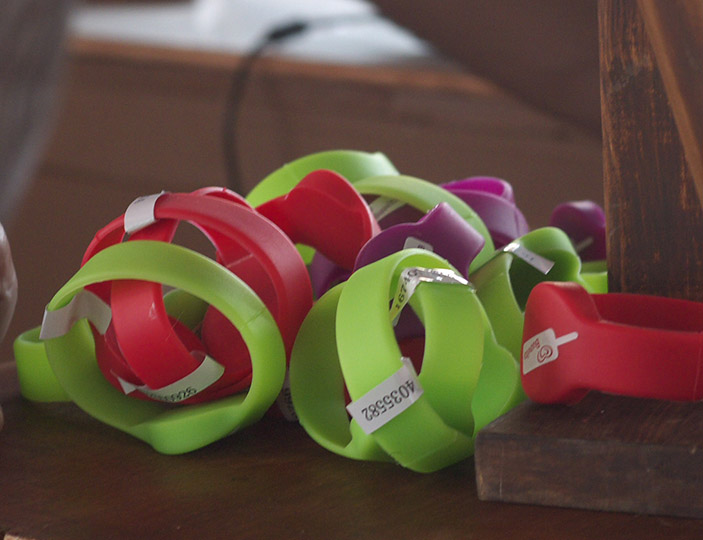
Brunel University London may have helped move the bar a little further. Researchers there announced they have printed a flexible, wearable battery that can store energy without chemical reactions.
The team printed a flexible wristband-shaped supercapacitor using silicone, glue and gel electrolyte pastes.
“This is the first time a flexible supercapacitor including all its components has been produced by 3D printing,” said Milad Areir at Brunel’s Cleaner Electronics Research Group. “The most popular way to produce them is screen printing, but with that you can’t print the frame of the supercapacitor on silicone.”
Previous flexible supercapacitors were created using multiple techniques and equipment. The Brunel project is able to produce the device using a single machine.
In the Brunel experiments, the open-source3D printer was connected via USB to a syringe driver and motor. Three of four syringes were used to apply stacks of silicone, glue and electrolyte pastes which were formed into a wristband using a honeycomb pattern. It is less expensive and easier to duplicate than previous flexible battery manufacturing processes.
The technique could supply temporary power for mobile phones or medical devices. “In future it can be used for mobile phones,” Areir said. “For example, if the phone battery is dead, you could plug the phone into the supercapacitor wristband and it could act as a booster pack, providing enough power to get to the next charging point.”
You can read more about the battery in Materials Science and Engineering.
Source: Brunel University


Brian Albright is the editorial director of Digital Engineering.
Contact him at [email protected].

Join over 90,000 engineering professionals who get fresh engineering news as soon as it is published.






About Us · Contact Us · Editorial Team · Advertising · Privacy Policy · Subscriber Services · © 2026 Digital Engineering 24/7 · Peerless Media