Helping design and engineering professionals discover, evaluate and specify technologies and processes that shorten the design cycle and enable success.




Design & Simulation Software Guide 2025
In this Special Issue, Digital Engineering presents its second annual guide to design and simulation software vendors.

Design & Simulation Software Guide
In this Special Issue, Digital Engineering presents its inaugural guide to design and simulation software vendors, including listings for CAD, CAM, simulation, generative design, PLM, rendering and visualization, design for additive manufacturing,…
In its latest acquisition, Siemens PLM Software has snapped up Mendix, adding a cloud-native, low-code application development environment to its digital enterprise portfolio intended to foster the design of new systems and processes for the industrial internet of things (IIoT).
The roughly $700 million acquisition, which folds Mendix into the software business of Siemens’ Digital Factory Division, is a critical piece of the company’s strategy to position its MindSphere IoT platform for digital transformation, helping businesses bridge the physical and digital worlds and connect data and processes through cloud-native applications, officials said. Mendix’s low-code application development environment, as part of the broader MindSphere IoT platform, will enable companies to create digital twins of not just the product, but production environments and real-time product performance, according to Brenda Discher, senior vice president and strategy for Siemens PLM Software.
“We’re bringing the physical and digital worlds together—that’s the new currency and the make or break for companies, large and small,” explains Discher. “To design in this new era, companies need platforms that are open, extensible and self-service,” and the Mendix environment, combined with Siemens’ existing portfolio, provides us with a strong footprint in this area, she says.
Low-code application platforms are important as companies digitize their operations and embrace the new world of IIoT because demand for business applications far exceed the capacity of IT organizations to deliver them, especially within increasingly compressed time-to-market cycles. Thanks to its agile project management capabilities, visual modeling tools, and reusable components, Mendix lets organization do rapid development and fast deployment and execution of applications in the cloud. MarketsandMarkets research company forecasts the low-code development environment segment to grow from $4.32 billion in 2017 to $27.2 billion by 2022, a compound annual growth rate (CAGR) of 44.49%.
To build this next generation of smart apps—which by Mendix’s definition, are context aware through the ability to tap into big data; are intelligent by way of predictive analytics and AI; and are proactive, meaning they can trigger automated actions—requires more than a low-code development environment that lets domain experts take part in software development. It requires an open ecosystem and entire Smart App stack, which is why the Siemens/Mendix merger is important, officials say. Specifically, the combination of the Mendix low-code platform with Siemens MindSphere covers the bases, with MindSphere delivering IoT connectivity, asset management, storage, event management, data processing, and analytics services. Siemens also delivers design and simulation capabilities that enable app development on top of realistic digital twins that can be adapted continuously thanks to live data feeds from production systems, officials explained.
While Siemens doesn’t expect that access to a low-code application development environment will turn the typical design engineer into a software programmer overnight, there is potential for them to leverage the capabilities to build apps when and where it makes sense. For example, a design engineer might use the Mendix platform to build an app that would help collect and leverage data from a product in the field for insights that could inform future product iterations. “A low-code platform allows them to digitize that operation by managing and improving on the information collected by the product in use in the field and bring it into the design,” Discher explains.
Mendix will retain its brand and continue to serve customers in other industries while Siemens will also make investments in Mendix’s independent product roadmap.
Watch this video for a tutorial on how to get started on the Mendix platform.


Simcenter™ software, from Siemens Digital Industries Software, uniquely combines system simulation, 3D CAE and test to help you predict performance across all critical attributes earlier and throughout the entire product lifecycle. By combining…
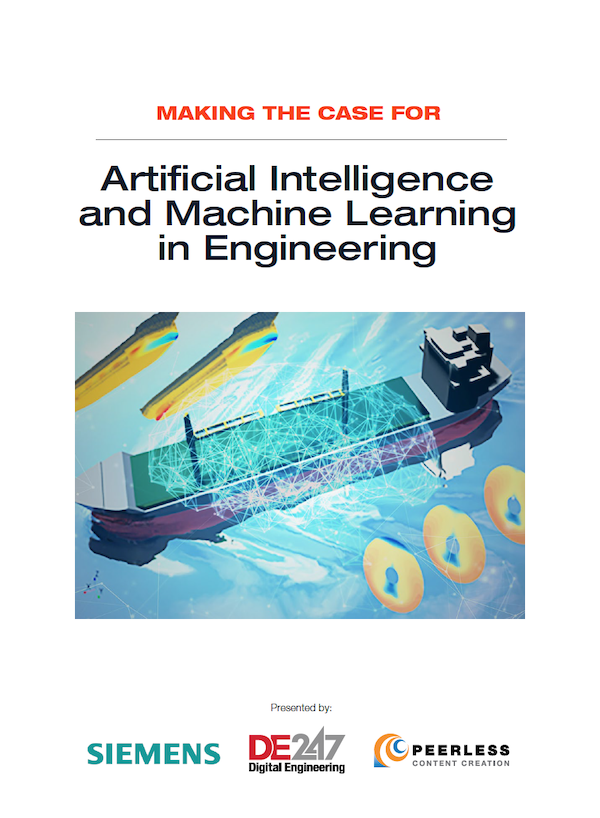
Making the Case for Artificial Intelligence and Machine Learning in Engineering
In this paper, Siemens Digital Industries Software and Digital Engineering will provide an overview of how AI/ML-enabled software can improve design workflows, while also addressing common questions and concerns around implementing this technology in an engineering organization.

Beth Stackpole is a contributing editor to Digital Engineering. Send e-mail about this article to [email protected].
Follow DE
Join over 90,000 engineering professionals who get fresh engineering news as soon as it is published.






About Us · Contact Us · Editorial Team · Advertising · Privacy Policy · Subscriber Services · © 2026 Digital Engineering 24/7 · Peerless Media