Helping design and engineering professionals discover, evaluate and specify technologies and processes that shorten the design cycle and enable success.



Cut Retrieval-Augmented Generation (RAG) Hallucinations by 50%
Most teams hit the same wall with enterprise AI: LLMs that hallucinate, pipelines that don’t scale, and infrastructure that’s harder to design than the models themselves.

What Is Intelligent BOM Management? A Guide to Smarter Product Development
Learn how intelligent Bill of Materials (BOM) management helps teams collaborate, reduce errors, and bring innovative products to market faster with cloud-based PLM tools.
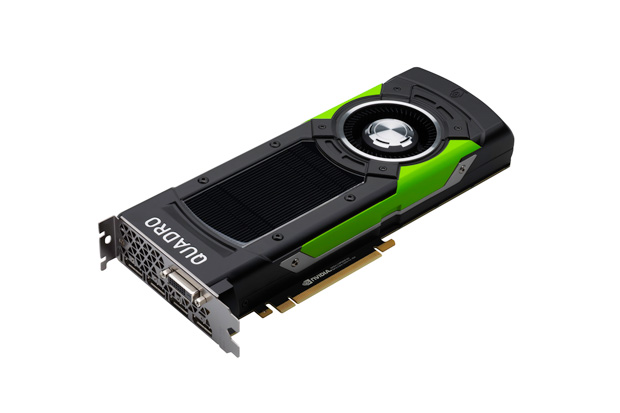 NVIDIA says it designed its new Quadro P6000 GPU “to power the most advanced workstations ever built.” Image courtesy of NVIDIA Corp.
The Quadro P6000 and Quadro P5000 GPUs are based on NVIDIA’s Pascal GPU architecture, meaning that they are designed for intensive visual computing applications such as CAD, CAM, engineering and scientific visualizations as well as virtual reality. The Pascal architecture, says the company, is its most powerful GPU architecture. NVIDIA says that Pascal has been purpose built “to be the engine of computers that learn, see and simulate our world.”
In addition to the Pascal architecture, shared features of the Quadro P6000 and Quadro P5000 include their PCI Express 3.0 x16 graphics bus and 4.4x10.5 in. (HxL) dual-slot form factor. They have four DisplayPort version 1.4 display connectors and a single DVI-D display connector.
NVIDIA describes the Quadro P6000 GPU as designed “to power the most advanced workstations ever built.” Specifications include 3840 parallel-processing cores, 12 teraflops (TFLOPs) of 32-bit floating-point (FP 32) performance and 24GB of GDDR5X (double data rate type five synchronous graphics RAM) memory, the evolutionary successor to the GDDR5 graphics memory standard.
The Quadro P5000 GPU offers 2560 parallel-processing cores, 8.9 TFLOPs of FP 32 performance and 16GB of GDDR5X memory.
The Quadro P6000 and Quadro P5000, as reported earlier by DE's Kenneth Wong, are scheduled to become available in October 2016. The GPUs will be offered by NVIDIA partners HP, Dell, and Lenovo in their workstation product lines, according to Wong.
For further details on the NVIDIA Quadro P6000 and Quadro P5000, click here.
Learn more about NVIDIA's Pascal architecture here.
See why DE's editors selected NVIDIA Quadro P6000 and Quadro P5000 GPUs as their Pick of the Week.
Sources: Press materials received from the company and additional information gleaned from the company's website.


Anthony J. Lockwood is Digital Engineering's founding editor. He is now retired. Contact him via [email protected].
Follow DE
Join over 90,000 engineering professionals who get fresh engineering news as soon as it is published.






About Us · Contact Us · Editorial Team · Advertising · Privacy Policy · Subscriber Services · © 2026 Digital Engineering 24/7 · Peerless Media