Helping design and engineering professionals discover, evaluate and specify technologies and processes that shorten the design cycle and enable success.



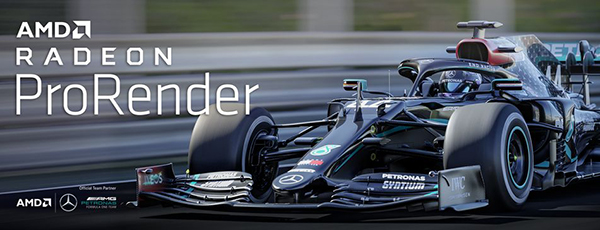
AMD announces updates to the AMD Radeon ProRender SDK and plug-ins, a physically based path tracing rendering engine that supports a variety of CAD and content creation software products. There is also a Software Developers Kit (SDK), available under the Apache 2.0 open source license.
ProRender supports CPUs and GPUs that run either OpenCL or Apple Metal.
ProRender also offers specific plug-ins for Autodesk Maya, Blender and SideFX Houdini (which have been recently updated), and a new plug-in for Inventor has been released. These updates have been posted to GitHub, allowing developers to use them as examples of how to integrate ProRender into other applications.
New features in the plug-ins include:
Radeon ProRender Plug-in for Autodesk Inventor: A free, downloadable plug-in is now available for Autodesk Inventor using the latest rendering standards, USD and MaterialX, and supporting hardware-accelerated raytracing on AMD RDNA 2 architecture-based graphic cards.
Radeon ProRender USD Hydra Plug-in for Blender: The Pixar USD system is a robust and open way to exchange and assemble data from multiple applications. AMD’s new beta USD plug-in for Blender includes the Radeon ProRender USD Hydra renderer, and uses the open source MaterialX standard for materials.
General ProRender Plug-in Updates: Plug-in updates add support for the latest versions of Maya, Blender and USD, as well as a new “RPR Toon Shader” node to create interesting rendering looks. In addition, Radeon ProRender 2 now supports subsurface scattering, refraction absorption and volume shaders to enable the creation of organic or light-absorbing materials.
Sources: Press materials received from the company and additional information gleaned from the company’s website.


AMD, or Advanced Micro Devices, has driven innovation in high-performance computing, graphics and visualization technologies. They develop high-performance computing and visualization products to solve some of the world’s toughest and most…
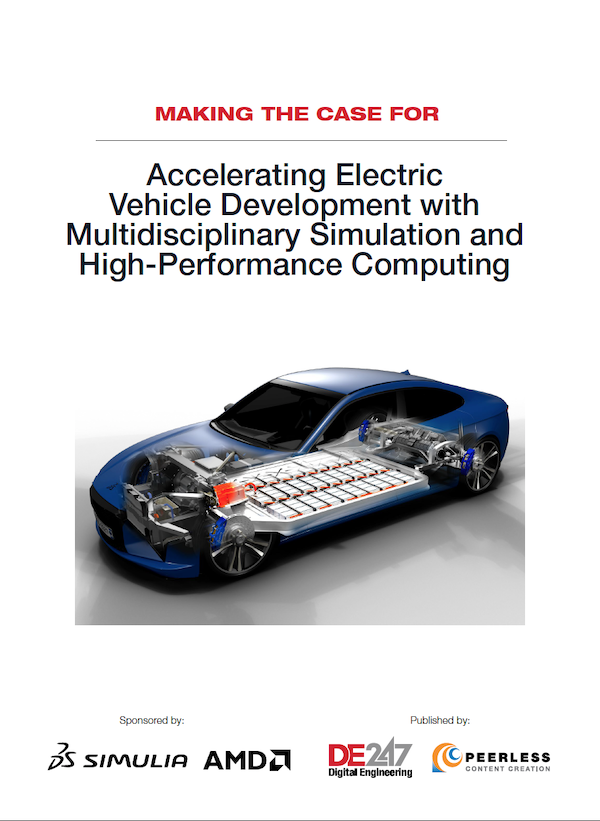
Accelerating Electric Vehicle Development with Multidisciplinary Simulation and High-Performance Computing
In this new Making the Case guide, learn how a unified approach to design and multidisciplinary simulation from Dassault Systèmes, combined with high-performance computing powered by AMD EPYC™ processors, can accelerate EV design.

DE's editors contribute news and new product announcements to Digital Engineering. Press releases may be sent to them via [email protected].
Follow DE
Join over 90,000 engineering professionals who get fresh engineering news as soon as it is published.






About Us · Contact Us · Editorial Team · Advertising · Privacy Policy · Subscriber Services · © 2026 Digital Engineering 24/7 · Peerless Media