Helping design and engineering professionals discover, evaluate and specify technologies and processes that shorten the design cycle and enable success.


Alert!
Digital Engineering ceased publication on July 1, 2026. This website remains available as an archive of engineering content.
For inquiries or information, please email [email protected].
Sponsored


May 2026 Special Focus: Artificial Intelligence in Design and Simulation
In this Special Focus Issue, learn about the latest developments in the integration of artificial intelligence into engineering workflows.

April 2026 Special Focus Issue: Generative Design
In this Special Focus Issue, Digital Engineering takes a look at how generative design solutions can be used across different types of design problems and with a variety of manufacturing approaches to accelerate design space exploration, and…
Three major shifts are driving Design Engineering toward a strategic inflection point:
How we build, what we build, and with whom we build, are all undergoing fundamental change.
The companies that will thrive will be those that excel in technical communication. Now more than ever, communication must be intentional, explicit, and succinct. The most enduring record of communication remains the written word, particularly for requirements specifications. Without a common shared understanding, any artifact derived from requirements will not and cannot be correct.
Three decades of research have shown that up to 80% of product defects can be avoided if detected during the requirements phase. As those defects lurk throughout the development phases, their severity compounds over time. Although collaboration and workflow management tools are important, in the end — as it was in the beginning — content is king. What matters most is the quality of the requirements, and how quickly that quality can be achieved.
In this episode of Leadership Profile, a sponsored podcast series, we talk to QRA Corp. founder Dr. Jordan Kyriakidis to discuss the challenges of requirements writing as product designs become more complex, and how QRA’s flagship product, QVscribe, helps companies measure and improve the quality of their technical requirements.
To learn more, listen to the podcast below.


About this podcast
Leadership Profile: QRA Founder Jordan Kyriakidis Discusses the Evolution of Requirements Writing
January 24, 2023 at 2:30 pm
10:34 hr/min/sec
Media file
Latest podcasts
Find us
Tune in to Digital Engineering 24/7's podcast and get engineering news, products and analysis from industry experts delivered in real time. Follow us on these popular platforms:
Requirement writing software
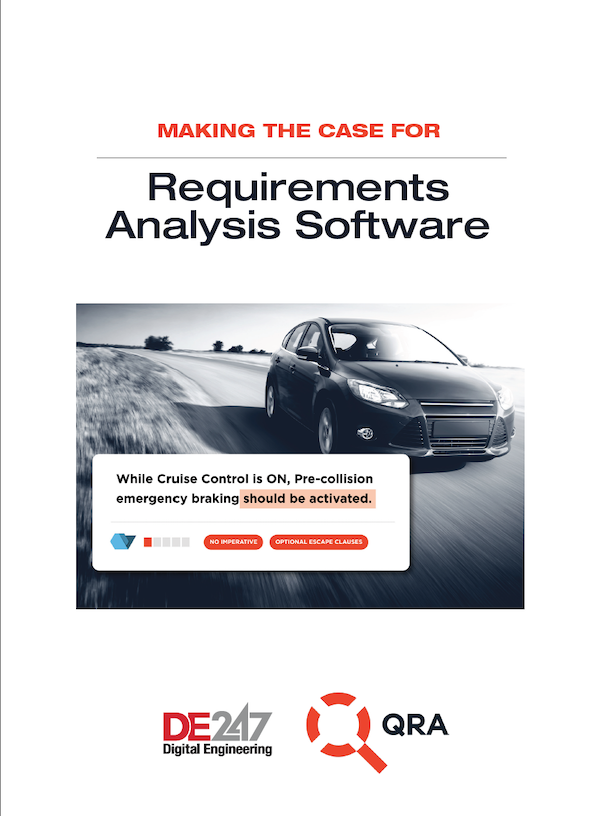
Making the Case for Requirements Analysis Software
Clear, concise requirements are the foundation of good design and engineering. Requirements analysis software can streamline and improve the entire requirements writing process.

Brian Albright is the editorial director of Digital Engineering.
Contact him at [email protected].






About Us · Contact Us · Editorial Team · Advertising · Privacy Policy · Subscriber Services · © 2026 Digital Engineering 24/7 · Peerless Media