Helping design and engineering professionals discover, evaluate and specify technologies and processes that shorten the design cycle and enable success.



April 2026 Special Focus Issue: Generative Design
In this Special Focus Issue, Digital Engineering takes a look at how generative design solutions can be used across different types of design problems and with a variety of manufacturing approaches to accelerate design space exploration, and…

Electrum utilizes the 3DEXPERIENCE platform on the cloud to develop their new electric motorcycle
Electrum, a new brand of electric motorcycles, utilizes the 3DEXPERIENCE platform. Their mission is to support Indonesia’s shift to low-carbon, sustainable transport and to ultimately help the country’s government achieve its vision of net…
Now Marvel's "Black Panther" movie has taken over the box office and engineers everywhere are wondering "What could I make with vibranium?" If you haven't seen the movie or read the comics, it's the nearly indestructible metal in Captain America's shield and is used to make Black Panther's suit. The Wakandan vibranium isotope can absorb vibrations and kinetic energy, which Black Panther can then release in a shockwave that sends villains flying.
 In the "Black Panther" movie, the mythical African nation of Wakanda sits atop a huge reserve of vibranium. Image courtesy of Marvel.
But how strong is vibranium? The material scientists at Matmatch wanted to know as well. Matmatch is a searchable database of more than 80,000 materials. Now engineers can use the site to compare the properties of vibranium to see how it stacks up to less fantastic materials.
“While vibranium is a completely fictional material, it is interesting to see how it compares to its real-life counterparts and the metals that inspired it,” explains Ben Smye, head of Growth at Matmatch, via a press release. “It felt like a fun idea to bring real properties to a mythical material that underpins so much of Marvel lore and to demonstrate that, even if you’re Tony Stark or Shuri, the Q to Black Panther’s Bond, materials selection matters."
While Matmatch looked to titanium and tantalum for comparison, the latter of which was reportedly an inspiration for the "Black Panther" movie's representation of vibranium, its special properties made it tough to compare apples to apples.
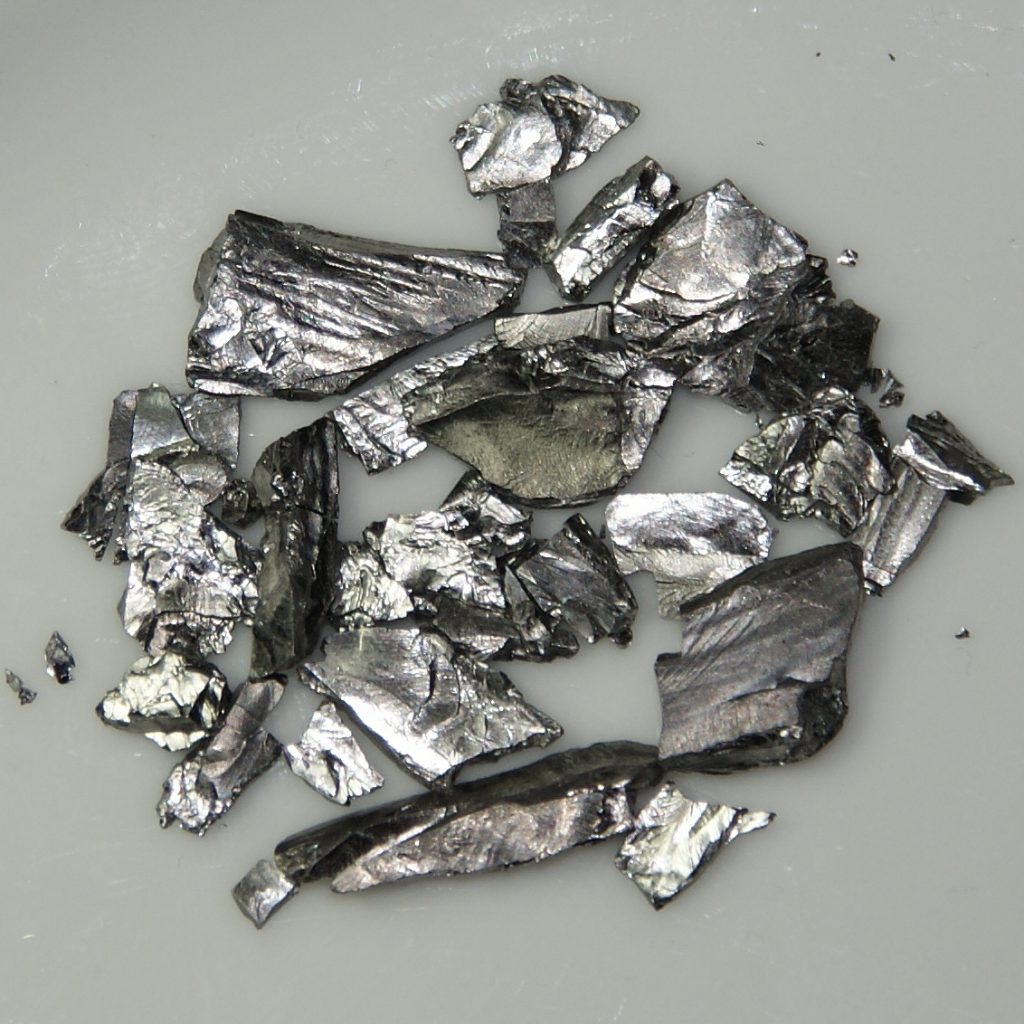 Tantalum is highly resistant to corrosion, making it ideal for electronics. Image courtesy of Matmatch.
“One of (vibranium's) defining characteristics is its ability to absorb vibrations and shock of a magnitude that metals simply cannot," states Smye. "In this sense, we assume it to be closer to a polymer for its repeatable shock absorption. Of course, this might have unexpected consequences. We know from thermodynamics that energy cannot be destroyed, so the shock will likely be converted to thermal energy. In such instances, high impact collisions and shockwaves will probably have undesirable, skin-burning consequences for anybody wearing or wielding vibranium — which is bad luck if you’ve just been struck by the hammer of a Norse god.”
Unfortunately, design engineers and product designers hoping to specify vibranium for their next project may have to wait, as Matmatch has confirmed that the product will be unavailable for the foreseeable future. In the meantime, they suggest using Matmatch’s online materials database to search for alternatives.


Jamie Gooch is the former editorial director of Digital Engineering.
Follow DE
Join over 90,000 engineering professionals who get fresh engineering news as soon as it is published.






About Us · Contact Us · Editorial Team · Advertising · Privacy Policy · Subscriber Services · © 2026 Digital Engineering 24/7 · Peerless Media