Helping design and engineering professionals discover, evaluate and specify technologies and processes that shorten the design cycle and enable success.


Sponsored

Design & Simulation Software Guide 2025
In this Special Issue, Digital Engineering presents its second annual guide to design and simulation software vendors.

Special Focus Issue: Artificial Intelligence in Simulation
In this Special Focus Issue of Digital Engineering, we look at the latest trends in integrating AI and machine learning with design and simulation tools. The issue includes features on synthetic data, open-source AI for modeling, AI-powered…
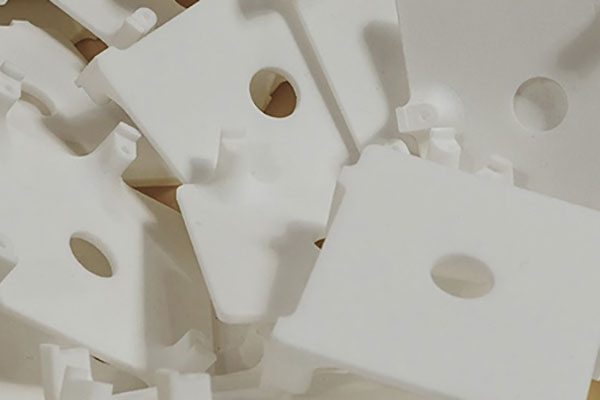
As additive technologies, materials, and processes mature, so does the argument for using additive manufacturing (AM) to make production parts—let go of traditional manufacturing constraints and embrace a new mindset that explores additive manufacturing as a serious means of production.
The additive technologies most commonly used for production of plastic parts include Fused Deposition Modeling (FDM), Selective Laser Sintering (SLS), and Multi Jet Fusion (MJF).
The break-even point of AM compared to injection molding (IM) was once a few hundred parts but is now pushing into the thousands with trends showing the cut-off point even higher in the coming years.
Although, if you are projecting production volumes in the 10’s, 100’s of thousands, or even millions, AM can still prove to be a strong option for manufacturing throughout the early stages of production. AM has many other benefits not explicit to part price comparisons.
Click thru to read more about production-grade materials, lower costs, repeatable processes, and reliable supply chains—considerations, advantages, and application examples included!


The FATHOM team is driven by advanced technologies that enhance and accelerate today's product development and production processes—we're changing the way products are being designed and manufactured by helping designers and engineers…
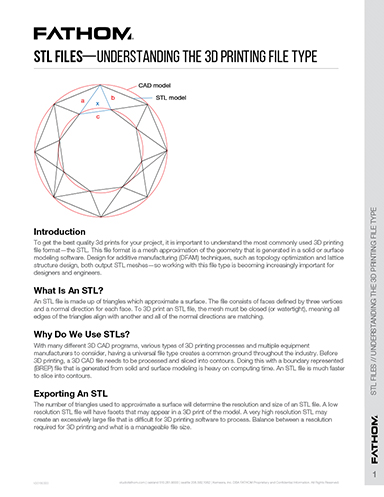
STL Guidelines To Get The Best 3D Printed Parts
Created by FATHOM's Application Engineering Team, this 4-page STL guideline for 3D printing and additive manufacturing will help you get the best quality parts for your project. The easy-to-read PDF includes sections on why STL files are used, export best practices, difficulties you should expect to encounter, and much more.

Join over 90,000 engineering professionals who get fresh engineering news as soon as it is published.






About Us · Contact Us · Editorial Team · Advertising · Privacy Policy · Subscriber Services · © 2026 Digital Engineering 24/7 · Peerless Media