Helping design and engineering professionals discover, evaluate and specify technologies and processes that shorten the design cycle and enable success.



By DE Editors
There’s no doubt about it: Simulation has come a long way since its inception.
For decades, analysis was the exclusive domain of expert analysts. They would develop carefully crafted mesh models to assess only the most critical applications, such as automotive crash tests or the tension in a threaded connector. The stakes were immense. Accuracy was paramount. The significant effort invested in those simulations was worth it.
Fast forward to today, and many things have changed with simulation. Automated meshers can produce robust, highquality simulation models. Cloud-based solvers can yield results in minutes. Easier-to-use interfaces make analysis available to practically anyone. And while that technological progress is irrefutable, many companies labor to figure out how to incorporate analysis into their development processes.
While simulation has expanded beyond being an exclusive tool for analysts, many companies continue question whether analysis is an effective tool for their business. Who should be using it? How can it impact your design, prototyping, and decision making? This paper will address questions such as these.

From small design firms to Fortune 500 companies, we support thousands of market-leading companies in every niche of product development, design and manufacture.
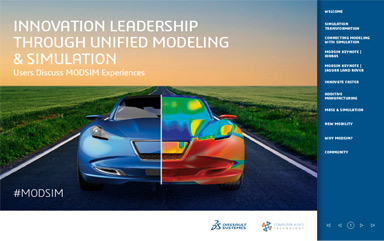
Innovation Leadership Through Unified Modeling & Simulation
For innovation to thrive and for companies to transform, the people, their knowledge, contributions, ideas, and know-how have to come together at the right time with the right tools. Transformation requires change.




About Us · Contact Us · Editorial Team · Advertising · Privacy Policy · Subscriber Services · © 2026 Digital Engineering 24/7 · Peerless Media