Helping design and engineering professionals discover, evaluate and specify technologies and processes that shorten the design cycle and enable success.


Alert!
Digital Engineering ceased publication on July 1, 2026. This website remains available as an archive of engineering content.
For inquiries or information, please email [email protected].

May 2026 Special Focus: Artificial Intelligence in Design and Simulation
In this Special Focus Issue, learn about the latest developments in the integration of artificial intelligence into engineering workflows.

April 2026 Special Focus Issue: Generative Design
In this Special Focus Issue, Digital Engineering takes a look at how generative design solutions can be used across different types of design problems and with a variety of manufacturing approaches to accelerate design space exploration, and…
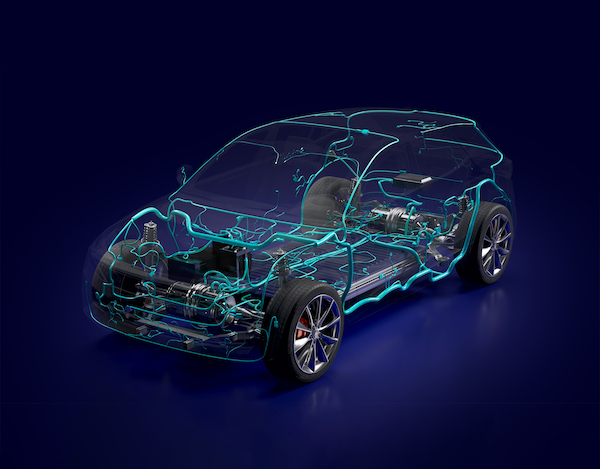
At Siemens Realize LIVE in Detroit this week, Siemens unveiled new 3D electrical design capabilities within its Capital software to unify wiring design and physical harness routing in a single, model-based workflow across its Siemens Xcelerator software portfolio. According to the company, the new capabilities enable electrical and mechanical engineers to work concurrently in a shared 3D context, improving collaboration while reducing late-stage design changes.
According to Siemens the new capabilities address existing gaps in ECAD and MCAD collaboration by integrating Capital within its Designcenter software for advanced product engineering and Teamcenter software for product lifecycle management (PLM).
“For the first time, customers can pair best-in-class electrical system design, including AI-driven harness development, with 3D mechanical design in a unified, model-based workflow without compromise,” said Frances Evans, senior vice president, Lifecycle Collaboration Software, Siemens Digital Industries Software. “We are helping our customers reduce development risk while accelerating innovation with better collaboration across disciplines, earlier insight into design issues, and more confident decision making for complex electromechanical products.”
According to the company, the new 3D electrical design capabilities support earlier validation of electrical systems, improve data continuity across the digital thread and reduce manual handoffs between multidisciplinary engineering teams. Engineers can visualize electrical content in 3D, identify issues sooner and work to align between design intent and physical implementation.
Key benefits include:
"Cross-disciplinary conflicts between electrical and mechanical teams are relatively inexpensive to resolve early and increasingly painful to resolve late, once adjacent subsystems have hardened around them," said Chad Jackson, CEO and chief analyst, Lifecycle Insights. "A shared 3D context, what Siemens is offering here, that connects electrical and mechanical engineers from the start of harness design is what makes early resolution operationally possible, not just an aspiration in a process diagram."
Sources: Press materials received from the company and additional information gleaned from the company’s website.


DE's editors contribute news and new product announcements to Digital Engineering. Press releases may be sent to them via [email protected].
Follow DE






About Us · Contact Us · Editorial Team · Advertising · Privacy Policy · Subscriber Services · © 2026 Digital Engineering 24/7 · Peerless Media