Helping design and engineering professionals discover, evaluate and specify technologies and processes that shorten the design cycle and enable success.



April 2026 Special Focus Issue: Generative Design
In this Special Focus Issue, Digital Engineering takes a look at how generative design solutions can be used across different types of design problems and with a variety of manufacturing approaches to accelerate design space exploration, and…

Electrum utilizes the 3DEXPERIENCE platform on the cloud to develop their new electric motorcycle
Electrum, a new brand of electric motorcycles, utilizes the 3DEXPERIENCE platform. Their mission is to support Indonesia’s shift to low-carbon, sustainable transport and to ultimately help the country’s government achieve its vision of net…
A collaboration between Heijmans and MX3D is working on a different type of construction effort using 3D printing. The team is in the process of adapting its freeform fabrication technology to erect a new pedestrian bridge in Amsterdam. If the project succeeds, it would become the first bridge built with AM in the world.
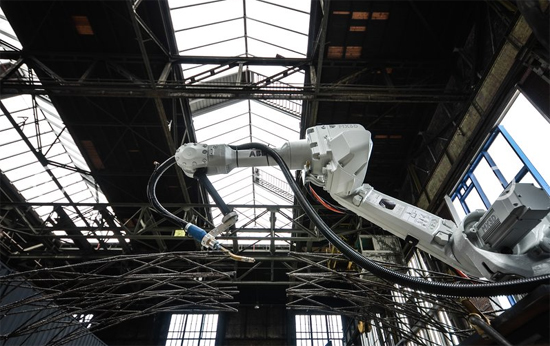
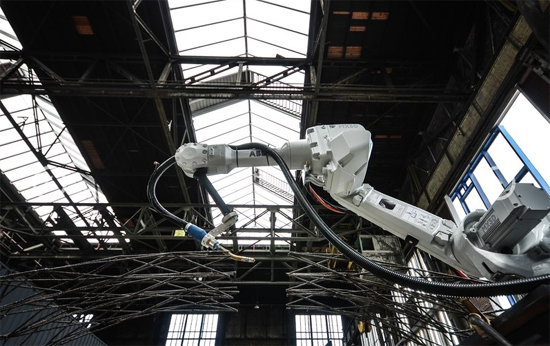 Prototype of the 3D printed bridge under construction. Courtesy of MX3D.
"I strongly believe in the future of digital production and local production, in ‘the new craft,’" said designer Joris Laarman. “This bridge will show how 3D printing finally enters the world of large-scale, functional objects and sustainable materials while allowing unprecedented freedom of form. The symbolism of the bridge is a beautiful metaphor to connect the technology of the future with the old city, in a way that brings out the best of both worlds."
MX3D is the result of Laarman’s interest in developing a new type of AM that didn’t rely on flat printing areas or tubs filled with resin to build new objects. As reported last year by Rapid Ready, MX3D’s process involves the use of a precision robotic arm connected to a print head. Rather than extruding a stream of material, the print head produces metal droplets that fuse together to form solid lines.
The bridge project envisions using a pair of the robotic printers to build the bridge largely autonomously. This would allow construction to continue day and night, though I’m not sure how well it’d fare during rainfall. While a pedestrian bridge might sound like a modest undertaking, there’s no real reason the same construction process couldn’t be scaled up by adding more robot workers to create much larger structures.
Amsterdam will announce the exact location of the bridge later this year. Once constructed, the bridge will join another 3D printed architectural project in the city, assuming the canal house is completed by that point. Below you’ll find a short video about the project.


John Newman is a Digital Engineering contributor who focuses on 3D printing. Contact him via [email protected] and read his posts on Rapid Ready Technology.
Follow DE
Join over 90,000 engineering professionals who get fresh engineering news as soon as it is published.






About Us · Contact Us · Editorial Team · Advertising · Privacy Policy · Subscriber Services · © 2026 Digital Engineering 24/7 · Peerless Media