Helping design and engineering professionals discover, evaluate and specify technologies and processes that shorten the design cycle and enable success.



Digital Engineering April 2026
In the latest issue of Digital Engineering, we take a look at the latest innovations in design for additive manufacturing, including the use of natural language inputs, social media cosplayers, and AI integration. The issue also includes a feature…

January Special Focus Issue: Design for Additive
In this Special Focus Issue of Digital Engineering, learn about the latest advancements in design for additive manufacturing, including new software tools, additive in automotive, custom medical devices, and more.
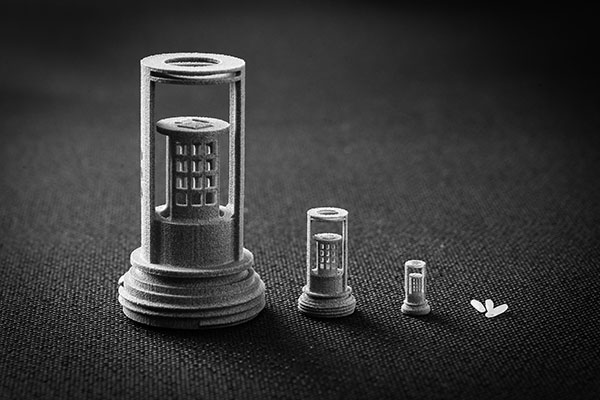
Finer detail and enhanced precision are coming to Stratasys’ SAF (selective absorption fusion) technology, the company reports. Stratasys announces its new SAF HighDef Printing capabilities and the launch of the H350 printer, Version 1.5 (V.1.5) to expand SAF adoption with more applications and use cases for manufacturing end markets.
Stratasys’ HighDef Printing capabilities are designed to enable more exact, high-definition printing with detailed resolution, according to the company. This gives manufacturers ability to scale their additive manufacturing through repeatability, while creating more intricate parts and expanding design capabilities.
“High-definition printing enables tighter tolerances, moving assemblies and a new range of applications for SAF customers,” says Adam Ellis, corporate applications manager, Stratasys. “Bringing HighDef to our customers will help us expand and improve their capabilities and increase their adoption of 3D printing in manufacturing roles.”
Delivered as part of a firmware update, Stratasys’ HighDef Printing will be backwards compatible with previous H350 models and made available to customers at no additional cost.
Stratasys is introducing the H350 V1.5 printer. This new printer has improved sensors and remote service capabilities, making the printer easier to operate and service. The H350 V1.5 will also come with the new Stratasys HighDef Printing firmware update.
“The new capabilities and the upgraded H350 align with the performance needs that our customers indicated to us, that will allow them to further benefit from additive manufacturing and SAF technology in particular,” says Torben Lange, vice president, SAF Research & Development, Stratasys. “New applications and use cases will allow manufacturers to scale their production, with more intricate parts, without compromising speed or quality.”
Sources: Press materials received from the company and additional information gleaned from the company’s website.


Every day, our customers find simpler, smarter approaches to stubborn design problemsand greater confidence to confront towering human and technological challenges. Less hindered by the usual constraints, they can imagine, design, iterate and…
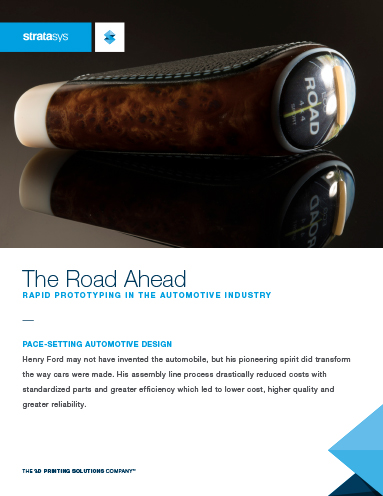
Rapid Prototyping in The Automotive Industry
Henry Ford may not have invented the automobile, but his pioneering spirit did transform the way cars were made. His assembly line process drastically reduced costs with standardized parts and greater efficiency which led to lower cost, higher quality and greater reliability.

DE's editors contribute news and new product announcements to Digital Engineering. Press releases may be sent to them via [email protected].
Follow DE
Join over 90,000 engineering professionals who get fresh engineering news as soon as it is published.






About Us · Contact Us · Editorial Team · Advertising · Privacy Policy · Subscriber Services · © 2026 Digital Engineering 24/7 · Peerless Media