Helping design and engineering professionals discover, evaluate and specify technologies and processes that shorten the design cycle and enable success.



Digital Engineering April 2026
In the latest issue of Digital Engineering, we take a look at the latest innovations in design for additive manufacturing, including the use of natural language inputs, social media cosplayers, and AI integration. The issue also includes a feature…

January Special Focus Issue: Design for Additive
In this Special Focus Issue of Digital Engineering, learn about the latest advancements in design for additive manufacturing, including new software tools, additive in automotive, custom medical devices, and more.
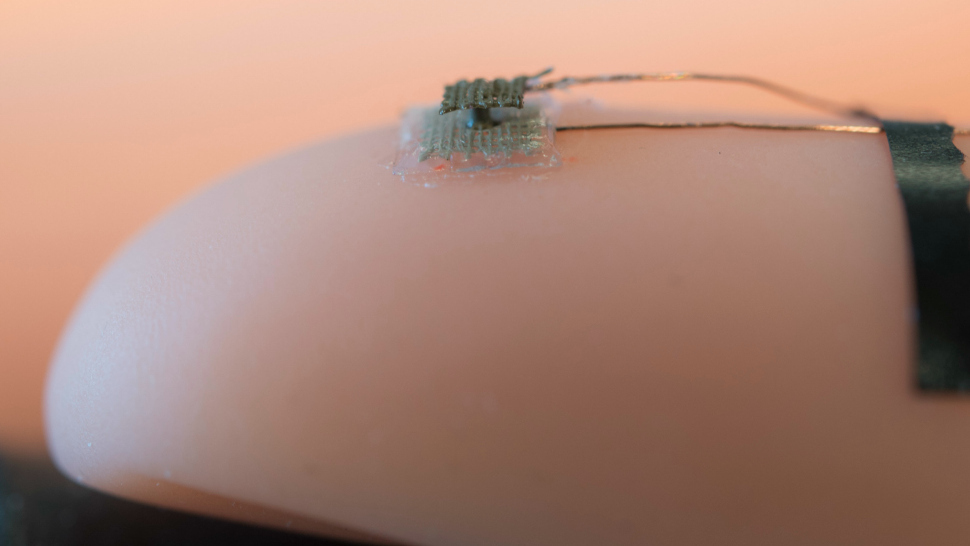 There have been 3D-printed sensors and 3D-printed medical implants, but researchers at the University of Minnesota have taken things a step further with new sensors that can be printed directly on a person’s hand.
In Advanced Materials, professor Michael McAlpine published a description of the technology that can help enable new types of wearable technology and surgical techniques.
“For surgical applications, giving surgical tools [a] sense of touch so doctors don’t have to just rely on looking at a screen,” McAlpine said. “Or imagine you’re a soldier on the field. You have this printer in your backpack and need some chemical sensor in chemical warfare. You would be able to print this device for your body.”
McAlpine’s team printed the sensors using $50,000 printers developed at the university. The printer uses nozzles to create a base layer of silicone, two layers of electrodes form conductive ink and a coil-shaped pressure sensor, and a “sacrificial layer” holds the top layer in place while it sets. This final layer is washed away at the end of the process.
The sensors can stretch up to three times their original size, and the ink can set at room temperature.
“This is a completely new way to approach 3D printing of electronics,” McAlpine said. “We have a multifunctional printer that can print several layers to make these flexible sensory devices. This could take us into so many directions from health monitoring to energy harvesting to chemical sensing.”
The technology could also allow robots to “feel” using tactile sensors.
“This stretchable electronic fabric we developed has many practical uses,” said Michael McAlpine, a University of Minnesota mechanical engineering associate professor and lead researcher on the study. “Putting this type of ‘bionic skin’ on surgical robots would give surgeons the ability to actually feel during minimally invasive surgeries, which would make surgery easier instead of just using cameras like they do now. These sensors could also make it easier for other robots to walk and interact with their environment.”
The researchers printed sensors on the curved surface of a model hand. Theoretically, the printer could print sensors directly on a human finger.
Source: University of Minnesota


Brian Albright is the editorial director of Digital Engineering.
Contact him at [email protected].

Join over 90,000 engineering professionals who get fresh engineering news as soon as it is published.






About Us · Contact Us · Editorial Team · Advertising · Privacy Policy · Subscriber Services · © 2026 Digital Engineering 24/7 · Peerless Media