Helping design and engineering professionals discover, evaluate and specify technologies and processes that shorten the design cycle and enable success.



Digital Engineering April 2026
In the latest issue of Digital Engineering, we take a look at the latest innovations in design for additive manufacturing, including the use of natural language inputs, social media cosplayers, and AI integration. The issue also includes a feature…

January Special Focus Issue: Design for Additive
In this Special Focus Issue of Digital Engineering, learn about the latest advancements in design for additive manufacturing, including new software tools, additive in automotive, custom medical devices, and more.
The sciences of uncovering and restoring the past are getting a boost with additive manufacturing (AM). Rapid Ready has previously looked at the use of 3D printing by the Smithsonian and to build dinosaur bones. As more people are exposed to AM, it’s no surprise that other branches of academia are finding ways to use the technology.
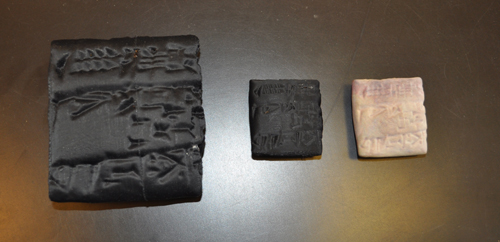
Archaeologists at Cornell University are using a Next Engine 3D scanner and a 3D Systems ZPrinter 650 to reproduce cuneiform tablets from Mesopotamia. This process allows archaeologists around the world to share in the wealth of Cornell’s collection, without undertaking the logistics necessary in packing, shipping and handling the artifacts. Cornell offers .stl files of the tablets online, allowing anyone with Internet access and a 3D printer to literally build their own research.
Researchers at Harvard’s Semitic Museum have turned to 3D printing as part of the restoration process. Joseph Greene and Adam Aja gathered together the pieces of a lion sculpture that was smashed some 3,000 years ago, and used a 3D scanner along with a CAD program to create a virtual restoration. The archaeologists then determined which pieces of the lion were missing, and used AM and CNC milling to fill in the gaps, allowing them to complete the restoration.
”The Semitic Museum has thousands of other objects this technique could be applied to, as do other museums around the world,” said Greene. “3D imaging [with] or without printing is a perfect way to study, conserve, share and teach using objects.”
AM has also been applied to restoration projects at the Forbidden City in China. More traditional methods of restoration are time and money intensive, requiring a good amount of work to be done by hand. The ability to scan a damaged object and repair it with a CAD program reduces expenses fairly significantly. This new process has been successfully employed several times already, including fixes to the ceiling and enclosure of a pavilion in the Emperor Chanlong Garden.
Below you’ll find a short video demonstrating the scanning and AM process on a bust of Hypnos.
Sources: Wired, Cornell Creative Machines Lab, Gizmag


John Newman is a Digital Engineering contributor who focuses on 3D printing. Contact him via [email protected] and read his posts on Rapid Ready Technology.
Follow DE
Join over 90,000 engineering professionals who get fresh engineering news as soon as it is published.






About Us · Contact Us · Editorial Team · Advertising · Privacy Policy · Subscriber Services · © 2026 Digital Engineering 24/7 · Peerless Media