Helping design and engineering professionals discover, evaluate and specify technologies and processes that shorten the design cycle and enable success.



Digital Engineering April 2026
In the latest issue of Digital Engineering, we take a look at the latest innovations in design for additive manufacturing, including the use of natural language inputs, social media cosplayers, and AI integration. The issue also includes a feature…

January Special Focus Issue: Design for Additive
In this Special Focus Issue of Digital Engineering, learn about the latest advancements in design for additive manufacturing, including new software tools, additive in automotive, custom medical devices, and more.
As part of an $80 million investment in AM, China is researching laser sintering as a way to reduce costs of working with titanium in aerospace parts. In general, AM offers an advantage over traditional manufacturing methods when it comes to expensive materials because the AM process involves less waste, and can produce parts with more complex internal geometries.
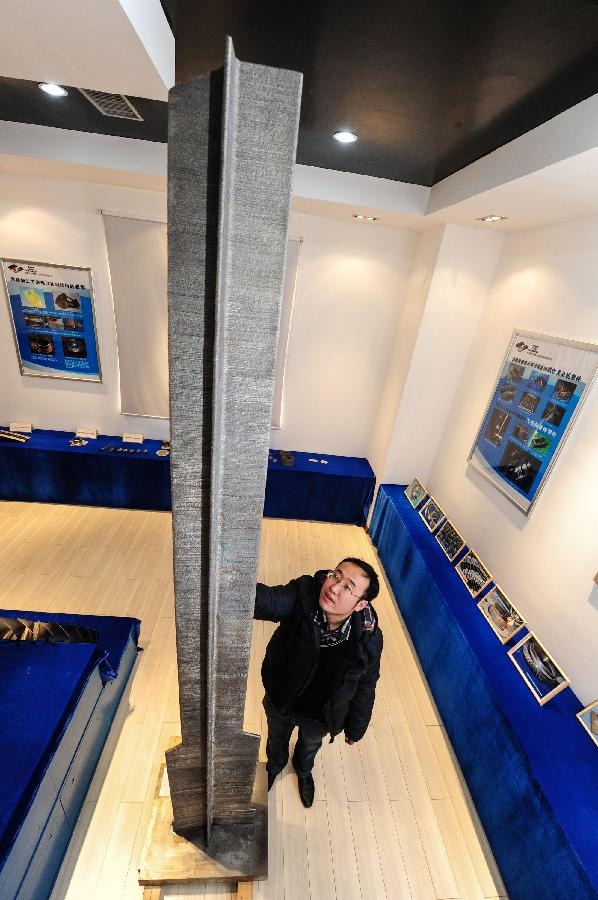
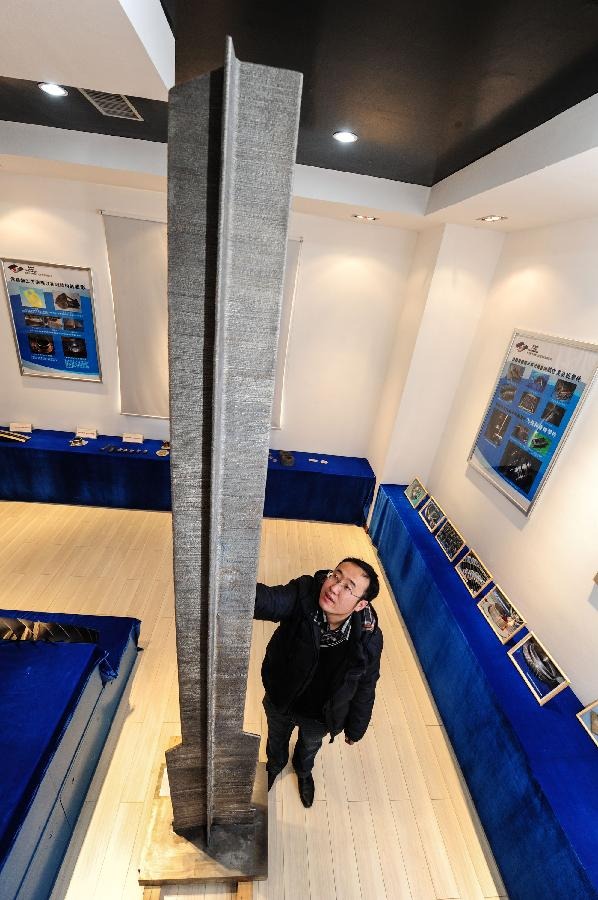
With a large chunk of the $80 million coming from defense, China is particularly interested in investigating ways to use AM to increase the efficiency of its air force, specifically in the production of its next generation of fighter jets, the J-20 and J-31. Thus far, Northwestern Polytechnical University has succeeded in building titanium wing beams that measure in at a little over 16 ft. (5 meters), and is aiming at commercialization of the process by 2016
"As the aviation technology develops, the components are also getting lighter, more complicated, and also need to have better mechanical properties," said Huang Weidong, director of Northwestern Polytechnical University’s laboratory. "It is very hard to use traditional technologies to make such parts, but 3D printing could just meet such demands."
Below you’ll find a video about the state of AM in China.
Source: ZDNet


John Newman is a Digital Engineering contributor who focuses on 3D printing. Contact him via [email protected] and read his posts on Rapid Ready Technology.
Follow DE
Join over 90,000 engineering professionals who get fresh engineering news as soon as it is published.






About Us · Contact Us · Editorial Team · Advertising · Privacy Policy · Subscriber Services · © 2026 Digital Engineering 24/7 · Peerless Media