Helping design and engineering professionals discover, evaluate and specify technologies and processes that shorten the design cycle and enable success.


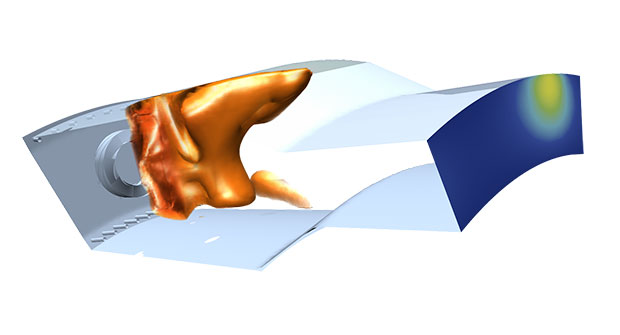

The real-world is a mashup of physics phenomena interactively exerting influences on your designs. For engineers, that inevitably leads to the need to gain insight and predict the behavior of your designs through multidisciplinary, multiphysics analysis. Those analysis imperatives have gained in importance as product design becomes more about systems development than creating and simulating a single part's behavior. Today's Editor's Pick of the Week looks at a new release of a well-known, widely deployed multidisciplinary simulation solution, STAR-CCM+.
Siemens recently released version 12.02 of STAR-CCM+. The theme of this release is to enhance and speed up simulations. Key new features introduced to do just that include Adaptive Gridding and ray-tracing capabilities as well as new models for analyzing electrochemical reactions.
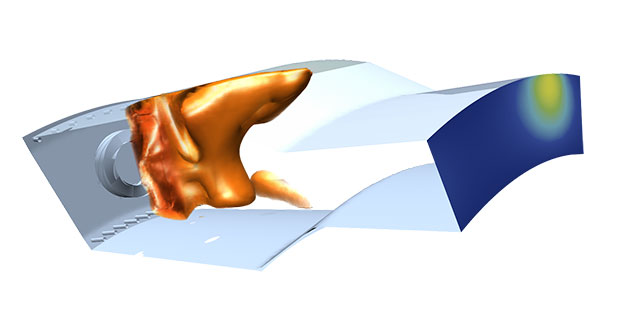 STAR-CCM+'s new Adaptive Gridding feature increases the accuracy of a combustion table in less time while keeping the table size at a minimum, according to Siemens.
Adaptive gridding is for working with simulations that have reacting flows – gas turbines, furnaces, internal combustion engines and the like. It's designed to reduce the computational overhead of building combustion tables as well as minimizing their size without compromising accuracy. How much? Siemens says up to a 30% reduction in memory usage.
Linked at the end of today's main write-up is a terrific blog post that really gets into Adaptive Gridding. It has this example showing a combustion table going from 1.6GB in an earlier version of STAR-CCM+ to 128MB in version 12.02. Time to generate the table falls 14 minutes to just 5. The results are identical otherwise.
As you probably guessed, the new ray-tracing capability lets you add photorealistic renderings to your design and simulation results. Beyond your own needs, this should really help your clients and co-workers understand what you're talking about. You'll find a link to a blog post on it at the end of today's write-up. Check out the neat animations.
The new models for analyzing electrochemical reactions introduced in STAR-CCM+ v12.02's incorporate multi-component gas/liquid species and solid ions models. These should be a boon for you dealing with solid oxide fuel cells (SOFCs). They should enable you to create a spot-on virtual model of your product’s real-world physical and performance characteristics – a digital twin. That, in turn, should lead to better predictions and, ultimately, better designs.
Interesting things are afoot in the world of engineering analysis like digital twins. This is where STAR-CCM+ fits in. You can learn more about version 12.02 from today's Editor's Pick of the Week write-up. Don't skip the linked blog posts. They're good.
Thanks, Pal. – Lockwood
Anthony J. Lockwood
Editor at Large, DE


Anthony J. Lockwood is Digital Engineering's founding editor. He is now retired. Contact him via [email protected].
Follow DE
Join over 90,000 engineering professionals who get fresh engineering news as soon as it is published.






About Us · Contact Us · Editorial Team · Advertising · Privacy Policy · Subscriber Services · © 2026 Digital Engineering 24/7 · Peerless Media