Helping design and engineering professionals discover, evaluate and specify technologies and processes that shorten the design cycle and enable success.


Alert!
Digital Engineering ceased publication on July 1, 2026. This website remains available as an archive of engineering content.
For inquiries or information, please email [email protected].


Sponsored

Artificial Intelligence for Design and Engineering Workflows
In this white paper, learn how artificial intelligence and machine learning can improve design and simulation.

Technology Focus: Designing for Optimization & Simulation
Simulation is pervasive, with people from different departments and backgrounds discovering new ways to put it to use, in all of its varied forms.
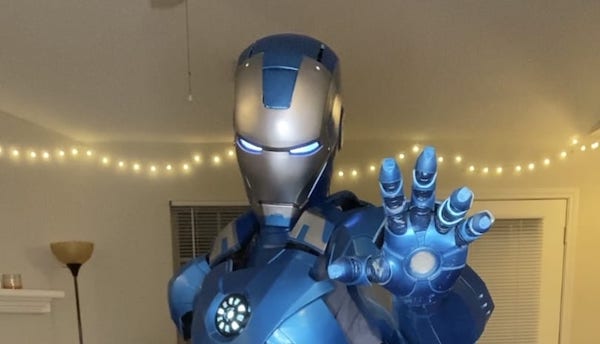
Emily the Engineer (Emily Yarid) is a mechanical engineering graduate of Clemson University who has made a name for herself on TikTok, YouTube and Instagram by leveraging her engineering know-how, her Dell Precision 5750 mobile workstation powered by the NVIDIA® Quadro® RTX 3000 GPU, Dell UltraSharp 27-inch monitor and 3D printing technology to create an impressive array of props – including a full-scale Iron Man suit.
Having gone viral with her Iron Man build, Yarid has continued to make waves online by posting videos of her work, as well as maker hacks like coating the build plate of her 3D printer with painter's tape to help secure the filament.
A second-generation engineer, Yarid first discovered 3D printing at Clemson. “I had always assumed that these printers were way too expensive for someone to own in their home but learned that wasn’t necessarily the case. After printing some smaller things at my university, I decided to purchase one for myself to attempt bigger projects like the Iron Man suit,” she told Dell's Matt Allard in an interview last year.
Obsessed with The Avengers films since seeing them as a teenager, she built her first Iron Man suit from foam, but saw the possibilities of 3D printing when it came to upgrading the project. Her video of the design/build process of the 3D-printed replica armor gained her more than 80 million views and national media coverage. The video went viral while she was in the middle of her graduation ceremony.
The upgraded armor includes a helmet visor that closes automatically, a laser in the arm, and back flaps that open when she presses a button in the glove.
According to a news story from Clemson, Yarid used Autodesk Fusion 360 to design the Iron Man suit. She has also designed in SolidWorks.
Coming from a family of engineers (her father is a Clemson engineering graduate, and her brother is also enrolled), Yarid learned early on how to take things apart and rebuild them, and her videos include just as much manual finishing and tinkering as they do high-tech design work. She recommends other engineering students get some experience in working with physical objects.

“Get your hands dirty! Build things, assemble things, disassemble things to figure out how they work, etc.,” she told Dell. “ Throughout this hobby, I’ve learned a ton about 3D printing, different materials and how parts work together. What I learned on my own, outside of classes, not only translated to projects I had for school, but also helped me in different areas of work at internships.”
One of those internships included a stint at Bosch as part of the Clemson cooperative education program.
She credits her Dell workstation as a key part of her workflow. “Dell Technologies has played a huge role in my work. My Dell Precision workstation has been an absolute workhorse in helping me do my work while on the go, with anything from light browsing to hardcore modeling. And my new 27-in. Dell UltraSharp Monitors have already been the biggest help with multitasking, prepping models and more. So far, they have been insanely reliable and I enjoy using my PC setup more than ever.”
In a recent post about a Halo energy sword that she modeled, rendered and built in her apartment, Yarid also noted that the NVIDIA Quadro RTX 3000 GPU in the workstation helped model the sword in Blender and then render with HDRI in less than a few seconds.
Other recent projects include reproducing Captain America's shield and Thor's hammer, and her Iron Man armory now includes three suits.
Yarid says she plans to continue sharing her creations online. “As far as my career goes, I’ve thoroughly loved the content creation scene and getting to share my builds with people in general. Next, I will hopefully obtain a workshop of some sort, so I have space to work on my projects. As of now, I’m operating out of my apartment, so getting a designated space for my work is my next goal,” she said.
@emily.the.engineer iron man update :) #ironman #fyp #3dprinting #haventseen ♬ Celebrate the Good Times - Mason


Dell sells personal computers (PCs), servers, data storage devices, network switches, software, computer peripherals, HDTVs, cameras, printers, MP3 players, and other electronics.
Artificial Intelligence for Design and Engineering Workflows
In this white paper, learn how artificial intelligence and machine learning can improve design and simulation.

Brian Albright is the editorial director of Digital Engineering.
Contact him at [email protected].






About Us · Contact Us · Editorial Team · Advertising · Privacy Policy · Subscriber Services · © 2026 Digital Engineering 24/7 · Peerless Media