Helping design and engineering professionals discover, evaluate and specify technologies and processes that shorten the design cycle and enable success.



Digital Engineering April 2026
In the latest issue of Digital Engineering, we take a look at the latest innovations in design for additive manufacturing, including the use of natural language inputs, social media cosplayers, and AI integration. The issue also includes a feature…

January Special Focus Issue: Design for Additive
In this Special Focus Issue of Digital Engineering, learn about the latest advancements in design for additive manufacturing, including new software tools, additive in automotive, custom medical devices, and more.
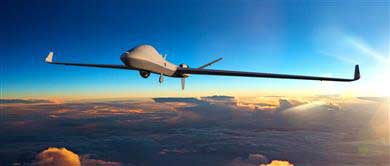
GE Additive AddWorks has been supporting General Atomics Aeronautical Systems' (GA-ASI) strategy for scaling metal additive technology across its portfolio of Remotely Piloted Aircraft (RPA) platforms.
Over the past nine years, GA-ASI has built deep experience with polymer-based additive technologies and over recent years, has made strides in developing its metal additive roadmap and a dedicated additive manufacturing team.
After establishing the required ecosystem requirements to develop its metal additive manufacturing application space, the GA-ASI Additive Manufacturing (AM) team identified a series of parts and families of applications with potentially favorable business cases.
Last year, the GA-ASI AM core team selected GE Additive AddWorks to support the acceleration of metal laser powder bed fusion (LPBF) additive development at the company, with the objective of having its first 3D-printed metal part take flight within an aggressive timeline.
GA-ASI and GE Additive AddWorks began collaborating in April 2019, an engagement that included a wide range of engineering consultancy services, such as design for additive (DfAM) training, industrialization process development and materials validation for titanium and other metals—to optimize part design and accelerate part qualification.
Within eight months, this intensive period of collaboration resulted in the GA-ASI additive manufacturing team reaching the milestone they had set themselves—performing the company’s first test flight of a metal 3D-printed part—a NACA inlet made in Titanium Ti6Al4V—on a SkyGuardian RPA in early February 2020.
With a desire to secure an early win, the GA-ASI AM team had already begun to identify a pipeline of suitable components for metal additive manufacturing and had started to tie them back to GA-ASI’s business priorities.
During that process, a NACA inlet was identified as a strong contender to be the first metal 3D-printed part for the SkyGuardian program.
After assessing the business case, part criticality as well as program impacts, GA-ASI selected the NACA inlet as their first metal component to be qualified, the GE Additive AddWorks team was able to accelerate and support the industrialization process and production readiness of the NACA inlet by unlocking design potential, as well as providing expertise to reduce deterministically the qualification risks.
Following the successful test flight, the NACA inlet will now enter the final qualification phase for the SkyGuardian program.
The reimagined single piece NACA inlet in Titanium Ti6Al4V offers GA-ASI significant reductions to its weight and cost, especially when compared to the conventional method of manufacturing that makes the inlet from three parts of welded formed sheet metal Titanium. This made tooling, fabrication labor and weld inspection a challenge.
The inlet is now additively manufactured as a single piece, rather than three—on a Concept Laser M2 machine.
Consolidating the number of parts has numerous benefits, including reduced procurement cost. Reduced assembly and inspection time in turn simplifies GA-ASI’s supply chain and inventory requirements.
Following the successful completion of the work on the first inlet, the GA-ASI team is already applying best practices and knowledge to its wider NACA inlet part family and several other components and sub-systems.
As a result of its achievements through 2019, GA-ASI’s has placed an order for multiple GE Additive Concept Laser M2 Series 5 machines, which will be installed at its new Additive Design & Manufacturing Center of Excellence in Poway, CA, in 2020; adding to their non-metal AM capabilities. The strategy to achieve production was to establish the necessary ecosystem of knowledge and tools to achieve industrialization level.
“With the GE Additive AddWorks team, we were able not only to achieve our short term objective of qualifying the NACA inlet, but we also worked together on a number of additional application development and qualification efforts, which are continuing into 2020 and beyond,” said Elie Yehezkel, senior vice president of Advanced Manufacturing Technologies for GA-ASI.
Note: NACA inlets, also called NACA ducts, are a type of submerged air inlet that has found application on many types of air and ground vehicles. Developed by the National Advisory Committee for Aeronautics (NACA) in the 1940s, they were originally conceived to efficiently draw air from the outside to the inside of an aircraft, providing fresh air that can be used, for instance, in jet engines, cooling systems or carburetors. Their submerged design has the advantage of adding only a little additional drag, while providing a design-friendly way to get air into duct systems.
Citation: Aerodynamic and aeroacoustic analyses of a submerged air inlet in a low-Mach-number flow, NJ Pignier, CJ O’Reilly, S Boij, Computers & Fluids 133, 15-31 https://www.sciencedirect.com/science/article/pii/S004579301630113X
Sources: Press materials received from the company and additional information gleaned from the company’s website.


DE's editors contribute news and new product announcements to Digital Engineering. Press releases may be sent to them via [email protected].
Follow DE
Join over 90,000 engineering professionals who get fresh engineering news as soon as it is published.






About Us · Contact Us · Editorial Team · Advertising · Privacy Policy · Subscriber Services · © 2026 Digital Engineering 24/7 · Peerless Media