Helping design and engineering professionals discover, evaluate and specify technologies and processes that shorten the design cycle and enable success.


Sponsored

Cut Retrieval-Augmented Generation (RAG) Hallucinations by 50%
Most teams hit the same wall with enterprise AI: LLMs that hallucinate, pipelines that don’t scale, and infrastructure that’s harder to design than the models themselves.

What Is Intelligent BOM Management? A Guide to Smarter Product Development
Learn how intelligent Bill of Materials (BOM) management helps teams collaborate, reduce errors, and bring innovative products to market faster with cloud-based PLM tools.
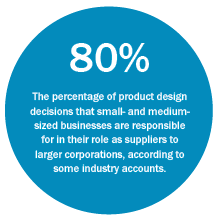
 High-performance computer clusters have proven to be a perfect solution for many design engineering teams tasked with running more advanced computer-aided engineering (CAE) simulations in less time. As products increase in complexity, simulations are following suit. The large model sizes and multidisciplinary workloads can be too demanding for existing hardware, including those high-performance workstations specifically calibrated for engineering software.
Clusters are well positioned to drive HPC horsepower downstream, but there are still deployment challenges that the average small- to mid-size shop can’t handle without assistance. For example, proper configuration of an HPC cluster entails far more than choosing the right processor and core count or specifying enough memory. On the hardware front alone, there are many decisions to be made, from weighing the benefits of a CPU-centric architecture to building out a system that has a greater reliance on GPU technology and memory, just to name a few.
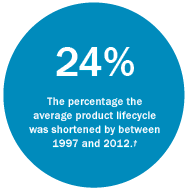 Beyond the hardware, there are considerations around network computing and storage resources in addition to what kind of communications bus can best support the target CAE applications and workloads. Additionally, there are requirements specific to HPC environments—for example, the proper configuration and on-going management of the job scheduling software along with workload management applications that ensure the environment runs at peak performance.
HPC clusters provide an obvious path to more powerful simulation studies, but not every company has the internal know-how to benefit from that journey without an expert guide. Specially trained value-added resellers, working in partnership with key HPC providers like HP and CAE software specialists, can deliver a fully integrated solution in conjunction with support services that reduce HPC complexity and allow engineers to focus on what they do best: innovating great products.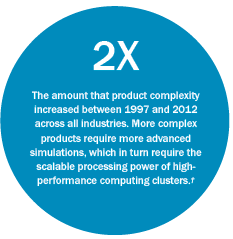
Download the complimentary report, “Partnerships Remove Complexity from Clusters,” sponsored by HP and Intel, and produced by Desktop Engineering, for more information on how value-added resellers can help you deploy high-performance computing clusters.
† Source: “Mastering Product Complexity,” Roland Berger strategy consultants.


Join over 90,000 engineering professionals who get fresh engineering news as soon as it is published.






About Us · Contact Us · Editorial Team · Advertising · Privacy Policy · Subscriber Services · © 2026 Digital Engineering 24/7 · Peerless Media