Helping design and engineering professionals discover, evaluate and specify technologies and processes that shorten the design cycle and enable success.



April 2026 Special Focus Issue: Generative Design
In this Special Focus Issue, Digital Engineering takes a look at how generative design solutions can be used across different types of design problems and with a variety of manufacturing approaches to accelerate design space exploration, and…

Electrum utilizes the 3DEXPERIENCE platform on the cloud to develop their new electric motorcycle
Electrum, a new brand of electric motorcycles, utilizes the 3DEXPERIENCE platform. Their mission is to support Indonesia’s shift to low-carbon, sustainable transport and to ultimately help the country’s government achieve its vision of net…
nTop offers implicit modeling software that allows users to develop complex, high-performance parts and automate their processes.
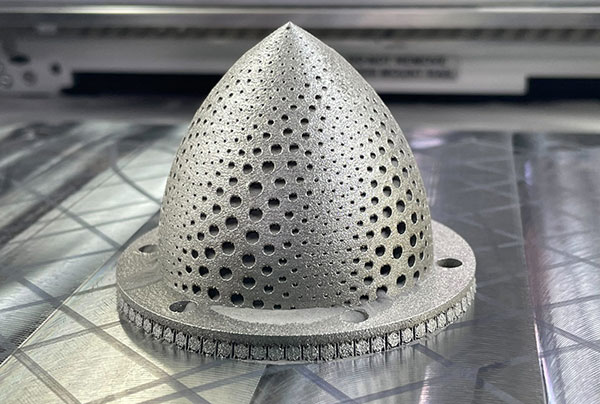
Autodesk harnesses the power of implicit modeling within Autodesk Fusion with the introduction of volumetric lattice capabilities included with the Product Design Extension, the company says. Users can modify existing solid or mesh bodies to create complex volumetric lattices that alter the shape and appearance of a design.
nTop’s announcement regarding Implicit Interop initiative led Autodesk to integrate nTop’s technology into Fusion. This enables the two companies' shared users to work with both software platforms. This feature will allow for the transfer of designs between systems, with file sizes reduced from gigabytes to megabytes.
Designers who use Fusion for creating models for additive manufacturing can benefit from nTop’s implicit modeling capabilities. This helps to enhance their models for lightweighting, improved thermal management and the creation of complex architected materials, Autodesk reports.
The integration of nTop with Autodesk Fusion offers several advantages. nTop users will be able to transition their designs to Autodesk’s CAD/CAM tools using the nTop add-in for Fusion. This integration ensures that the design workflow remains uninterrupted.
The implicit import feature eliminates the need for large mesh files, making it easier to handle highly complex parts. By avoiding the meshing process, nTop users can export their implicit designs and import them directly into Fusion.
Autodesk Fusion offers build preparation capabilities tailored for additive manufacturing. These include; part orientation, packing, support generation, slicing, machine-specific build file generation and machine connectivity. By incorporating these features, customers can enhance their additive manufacturing processes.
The integration’s implicit import functionality is not limited to manufacturing preparations. It also offers a bridge to Fusion’s process simulation toolset. This allows for nTop users to access Fusion’s metal powder bed fusion process simulation capabilities to predict potential build failures and create compensated models.
Sources: Press materials received from the company and additional information gleaned from the company’s website.


Autodesk is a world leader in 3D design, engineering, and entertainment software. They produce software for the architecture, engineering, construction, manufacturing, media, and entertainment industries.

DE's editors contribute news and new product announcements to Digital Engineering. Press releases may be sent to them via [email protected].
Follow DE
Join over 90,000 engineering professionals who get fresh engineering news as soon as it is published.






About Us · Contact Us · Editorial Team · Advertising · Privacy Policy · Subscriber Services · © 2026 Digital Engineering 24/7 · Peerless Media