Helping design and engineering professionals discover, evaluate and specify technologies and processes that shorten the design cycle and enable success.



Digital Engineering April 2026
In the latest issue of Digital Engineering, we take a look at the latest innovations in design for additive manufacturing, including the use of natural language inputs, social media cosplayers, and AI integration. The issue also includes a feature…

January Special Focus Issue: Design for Additive
In this Special Focus Issue of Digital Engineering, learn about the latest advancements in design for additive manufacturing, including new software tools, additive in automotive, custom medical devices, and more.
Using the material, objects can be printed that take advantage of its molecular properties in the function of the printed objects.
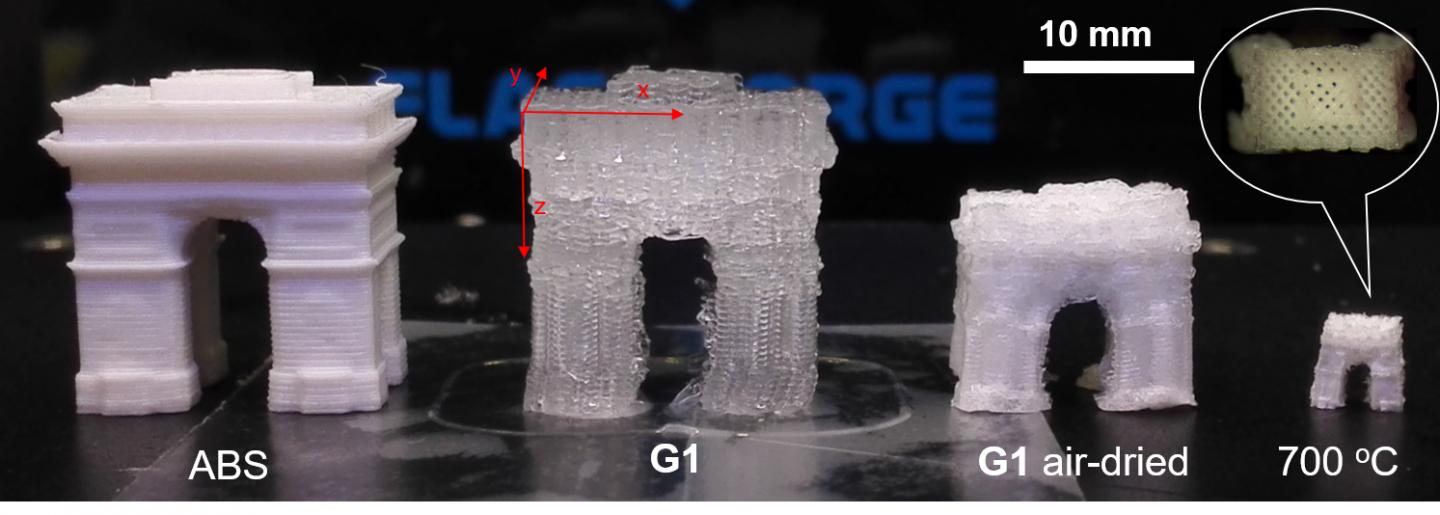
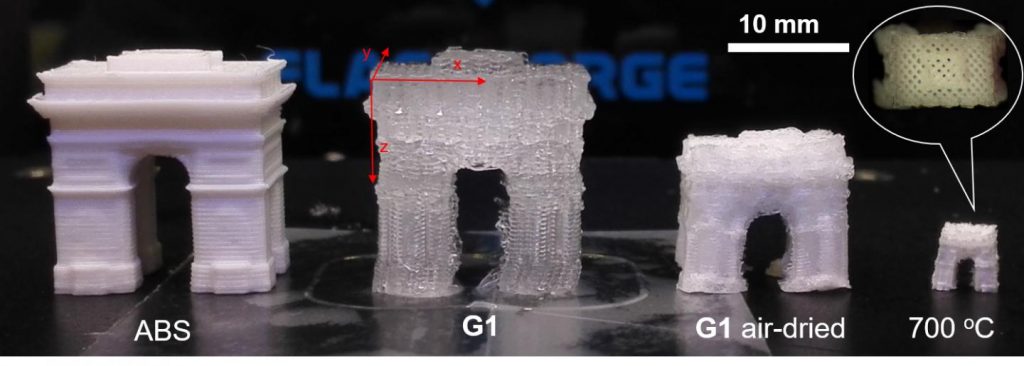 Dartmouth researchers' smart ink can be used to print objects that change size and color. Image: Dartmouth
"This technique gives life to 3D-printed objects," said Chenfeng Ke, an assistant professor of chemistry at Dartmouth. "While many 3D-printed structures are just shapes that don't reflect the molecular properties of the material, these inks bring functional molecules to the 3D printing world. We can now print smart objects for a variety of uses."
The smart ink was created using a polymer based substance that can integrate intelligent molecular systems in a printing gel. According to Dartmouth, “the new process introduces a series of post-printing reactions which lock the active ingredients together and retain the form of the molecular structure throughout the printing process.”
The Dartmouth process allows users to create specific molecular alignments in the material during printing. Objects could be printed and then reduced to 1% of their original size with 10-times the resolution. The researchers were also able to print objects that expand and contract multiple times. Adding fluorescent trackers allowed the objects to change color in response to light and other stimuli.
Potentially, this would allow users to print objects at much higher resolutions than were previously possible using lower cost printers.
"This process can use a $1,000 printer to print what used to require a $100,000 printer," said Ke. "This technique is scalable, widely adaptable and can dramatically reduce costs."
“This is something we’ve never seen before. Not only can we 3D print objects, we can tell the molecules in those objects to rearrange themselves at a level that is viewable by the naked eye after printing. This development could unleash the great potential for the development of smart materials,” Ke added.
Source: Dartmouth College


Brian Albright is the editorial director of Digital Engineering.
Contact him at [email protected].

Join over 90,000 engineering professionals who get fresh engineering news as soon as it is published.






About Us · Contact Us · Editorial Team · Advertising · Privacy Policy · Subscriber Services · © 2026 Digital Engineering 24/7 · Peerless Media