Helping design and engineering professionals discover, evaluate and specify technologies and processes that shorten the design cycle and enable success.



Design & Simulation Software Guide 2025
In this Special Issue, Digital Engineering presents its second annual guide to design and simulation software vendors.

Design & Simulation Software Guide
In this Special Issue, Digital Engineering presents its inaugural guide to design and simulation software vendors, including listings for CAD, CAM, simulation, generative design, PLM, rendering and visualization, design for additive manufacturing,…
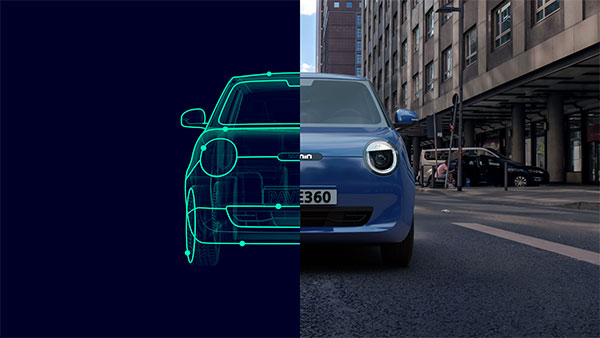
PAVE360 digital twin solution gives developers access to virtual models of Arm automotive IP in the cloud, including the new Arm Zena Compute Subsystems (CSS). Siemens has been a longstanding partner with Arm and was a lead partner in offering a virtual platform for the Arm Cortex-A720AE. Siemens extends this support to Zena CSS.
Zena CSS is designed to meet the needs of complex, mixed criticality and AI-defined workloads, so developers need virtual environments like PAVE360 to address the challenges that come with next-generation vehicle technology platform development. Currently, customers cannot assess system integration failures prior to integrating the actual hardware and software. PAVE360 offers a solution for this.
Siemens offers integrated electronic design automation, and product lifecycle management/application lifecycle management solutions to build multi-domain, multi-vertical digital twin, for design, development and validation. This enables early identification of potential issues, ensuring integration and validation of the system throughout the development cycle.
"Software-defined vehicles (SDV) are a subset of software-defined systems (SDS); a development methodology where software and hardware are flexible and refined in parallel along with connectivity to iteratively ensure the system under development meets requirements. The result is an optimal solution measured by performance, cost, manufacturability, reliability, safety and customer satisfaction. It extends the vehicle’s lifespan and creates additional revenue models," says David Fritz, vice president, Hybrid and Virtual Systems, Siemens Digital Industries Software.
SDVs and AI-defined vehicles are complex, highly connected systems, according to Siemens. They are extensions of the home, the office, entertainment and consumer lifestyle. Future success will depend on two new criteria.
The vehicle should be software-defined as customer interaction brings the opportunities for differentiation.
Development must be systems-aware to handle the complexity. Many failure mechanisms will only arise during systems integration, or worse, when the vehicle is deployed in the field. Finding these issues earlier in the design cycle reduces the risk of failure and ensures better integration and validation of the entire system.
This requires a “threaded” approach automatically connecting validation from system level down through unit testing, requirements fulfillment, and verification through all levels of abstraction, all levels of fidelity. This avoids the systems integration storm experienced by vehicle developers , mostly caused by manual processes to reconcile validation with requirements. This leads to multiple failed and cancelled vehicle electronics platforms.
Sources: Press materials received from the company and additional information gleaned from the company’s website.


DE's editors contribute news and new product announcements to Digital Engineering. Press releases may be sent to them via [email protected].
Follow DE
Join over 90,000 engineering professionals who get fresh engineering news as soon as it is published.






About Us · Contact Us · Editorial Team · Advertising · Privacy Policy · Subscriber Services · © 2026 Digital Engineering 24/7 · Peerless Media