Helping design and engineering professionals discover, evaluate and specify technologies and processes that shorten the design cycle and enable success.


Sponsored

Digital Engineering April 2026
In the latest issue of Digital Engineering, we take a look at the latest innovations in design for additive manufacturing, including the use of natural language inputs, social media cosplayers, and AI integration. The issue also includes a feature…

January Special Focus Issue: Design for Additive
In this Special Focus Issue of Digital Engineering, learn about the latest advancements in design for additive manufacturing, including new software tools, additive in automotive, custom medical devices, and more.

Dear DE Reader:
Off-the-shelf welding fixtures are multipurpose tools, albeit setup and tear down takes away profit-making time. But when you need customized or specialized fixtures for one-offs or single purposes, that's kids’ stuff. The costs and lead times to design, then machine custom, high-precision weld fixtures are budget- and schedule-busting. Maybe even a reason to turn away business. 3D printing can help ease some of these pain points.
Markforged's on-demand webinar “Using 3D Printing for Welding Fixtures” shows how 3D printing can help you contain costs and regain lots of productive time quickly. This is a fast presentation—just 13 minutes. Yet it packs in a ton of details and never strays into boosterism.
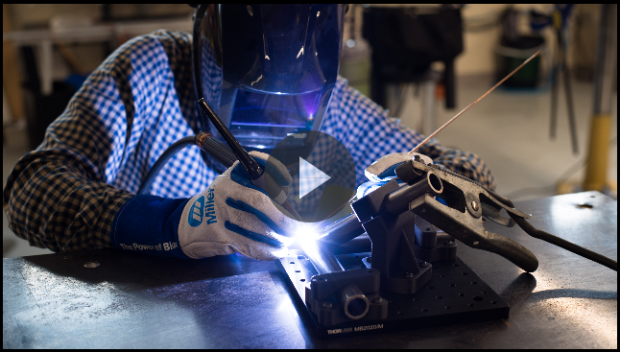
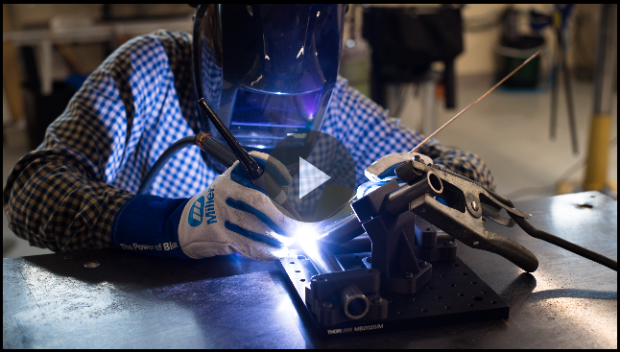 The on-demand webinar “Using 3D Printing for Welding Fixtures” demonstrates that 3D printing can produce durable, custom fixturing quickly, saving both time and money. Image courtesy of Markforged Inc.
Basically, the webinar sets the table like this: You need custom and specialized weld fixtures to hold specific components in place. The more complex your structure, the more complex your fixtures get. Adapting traditional fixtures is a kludge job. High-quality and precise custom fixturing can ensure you do the job right. But machining high-precision custom or single-purpose fixtures takes weeks and a tidy checkbook balance. 3D printing offers three answers.
First, 3D printing makes parts exhibiting high precision and dimensional stability. Deployed wisely, fiber-reinforced 3D parts won't deform. Two, 3D print materials cost less than metals. Three, 3D printing provides shorter turnarounds to make customized fixtures. Like next-day delivery shorter.
A side benefit: 3D printing can reduce setup and tear down costs. How? You can design in features that allow for quick and simple alignment and easy removal.
The webinar puts this thesis to test through three implementation examples. The first steals the show.
It's a 3D printed fixture for track welding steel. After discussing some part details and matching them to 3D printing's capabilities, you're treated to a brief, unnarrated video of a human welding a structure with the fixture right there doing its job. Great stuff.
Next are examples of custom risers and mounts, followed by customized alignment jigs and check gauges. If not for the strength of the first demo, these examples alone would be showstoppers.
Perhaps the strongest aspect of “Using 3D Printing for Welding Fixtures” is its implied advocacy of 3D printing as a partner manufacturing system and not the avatar of a new world order. That pragmatic, “here's what you can do” approach makes this presentation an enjoyable and down-to-earth learning opportunity. See for yourself. Hit the link.
Thanks, Pal. – Lockwood
Anthony J. Lockwood
Editor at Large, DE

Markforged started with a vision: Empower engineers to create strong-as-metal, finished parts using the right materials for the job - and remove the multiple barriers between design and a final product. We are overturning not only the 3D printing…
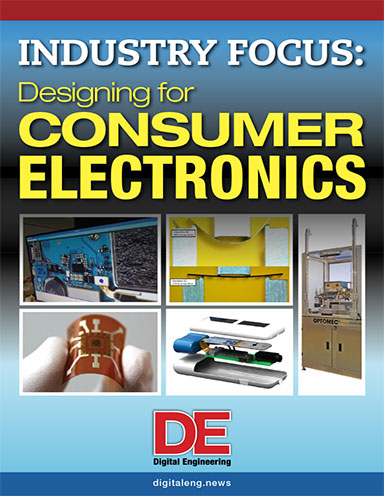
Industry Focus: Designing for Consumer Electronics
Design engineers developing consumer electronics were some of the first to arrive at the intersection of hardware, electronics, software and aesthetics. That intersection has since become jammed with engineers from various disciplines trying to navigate their way through an ever-changing smart product landscape filled with new sensors, electronic design automation (EDA) tools, communication protocols and embedded software.

Anthony J. Lockwood is Digital Engineering's founding editor. He is now retired. Contact him via [email protected].
Follow DE
Join over 90,000 engineering professionals who get fresh engineering news as soon as it is published.






About Us · Contact Us · Editorial Team · Advertising · Privacy Policy · Subscriber Services · © 2026 Digital Engineering 24/7 · Peerless Media