Helping design and engineering professionals discover, evaluate and specify technologies and processes that shorten the design cycle and enable success.



Cut Retrieval-Augmented Generation (RAG) Hallucinations by 50%
Most teams hit the same wall with enterprise AI: LLMs that hallucinate, pipelines that don’t scale, and infrastructure that’s harder to design than the models themselves.

What Is Intelligent BOM Management? A Guide to Smarter Product Development
Learn how intelligent Bill of Materials (BOM) management helps teams collaborate, reduce errors, and bring innovative products to market faster with cloud-based PLM tools.
Dear Desktop Engineering Reader:
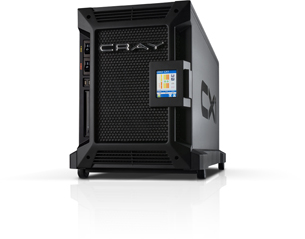 |
So, I was at the COMSOL user conference a few weeks ago in Boston attending a discussion on the multiphysics analysis of natural convective flow within an air-filled, articulated 3D cubic enclosure with Rayleigh number Ra = 105 – aka, what my kids and I talk about at dinner time just like you. The speaker, a professor from UNLV, interrupted his presentation to ask the crowd how many knew about the Cray CX1. A few hands went up. He then veered of his presentation to urge the crowd to learn about this deskside high-performance computer since it was one impressive systems. Plug-and-play HPC that was affordable, tailor-made for CAE, and as easy to set up and operate as your typical home Windows computer.
Could not have agreed more, I told the guys standing next to me. And now, I'm telling you. You've got to check out the CX1. This is something different. It's validated out of the box for all sorts of CAE applications, and it's a plug it in and fire it up sort of thing. Yet it's HPC, it's cluster ready, and it fits next to your desk.
Today's Check It Out video gives you a quick tour of the CX1's components, which, for those of you of the geekish bent, you'll like since Cray packs a lot into this 5-minute video. I should say at this point that Cray also offers a light configuration that you can use to start your HPC development and a brand new workstation configuration called the CX1-iWS. The latter combines a fully featured Microsoft Windows 7 workstation with a 24-core Intel Xeon Processor 5500 series cluster running Windows HPC Server 2008, meaning that it is an engineering workstation and a workgroup HPC hub.
But you CAE users will a really good idea of what's the CX1 means for you at about the 2-minute 35-second mark. You get four quick demos of some CEI Ensight visualizations. (Quick snarky note: Listen to how the deep-throated guy says “motherboard” in the fist demo. That articulation was surely banned in Peoria not so long ago.) Then you see streamlines over a Formula One racing car, air in take into the engine, and flow over a Puegot. Ensight's visualizations are cool, and they're even cooler when you realize that what you are seeing were done on an HPC system that you can afford.
What I really like about the Cray CX1 is that it is high productivity system for a wide range of users, whether you are talking about a single user using a personal supercomputer to a department of users accessing shared clustered resources. It gets any outfit into the HPC business without the hassles. Plug it in and start rocking. Check out the Cray CX1 for yourself from the link over there.
Thanks, pal. -- Lockwood'
Anthony J. Lockwood
Editor at Large, Desktop Engineering


Anthony J. Lockwood is Digital Engineering's founding editor. He is now retired. Contact him via [email protected].
Follow DE
Join over 90,000 engineering professionals who get fresh engineering news as soon as it is published.






About Us · Contact Us · Editorial Team · Advertising · Privacy Policy · Subscriber Services · © 2026 Digital Engineering 24/7 · Peerless Media