Helping design and engineering professionals discover, evaluate and specify technologies and processes that shorten the design cycle and enable success.



Digital Engineering April 2026
In the latest issue of Digital Engineering, we take a look at the latest innovations in design for additive manufacturing, including the use of natural language inputs, social media cosplayers, and AI integration. The issue also includes a feature…

January Special Focus Issue: Design for Additive
In this Special Focus Issue of Digital Engineering, learn about the latest advancements in design for additive manufacturing, including new software tools, additive in automotive, custom medical devices, and more.
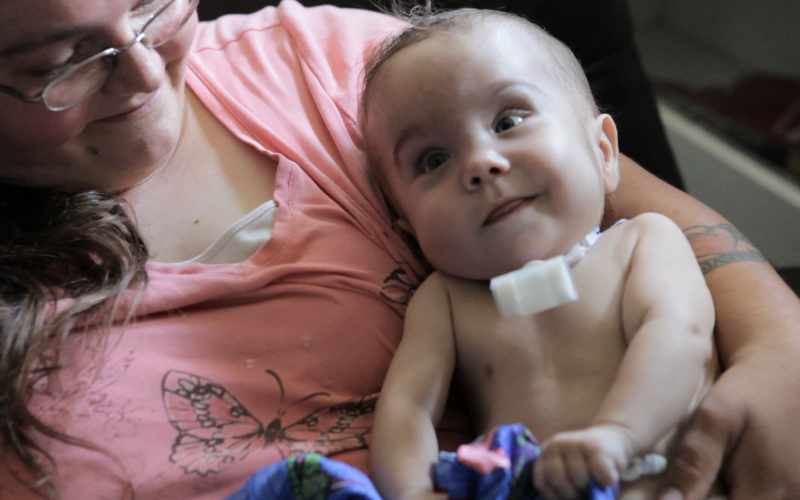
Kaiba Gionfriddo was born with a rare medical condition named tracheobronchomalacia. From the time Kaiba was six weeks old, the bronchus responsible for moving air to his left lung would collapse, leaving him unable to breathe. Doctors weren’t optimistic about the baby’s chances.
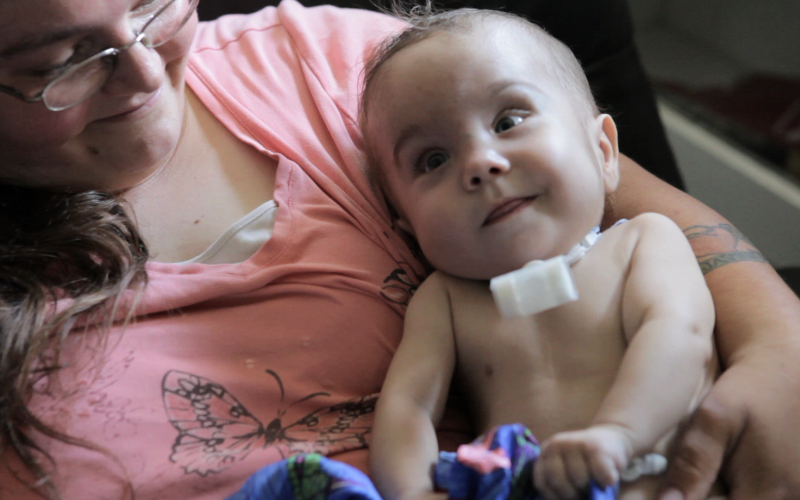
“Quite a few doctors said he had a good chance of not leaving the hospital alive,” says April Gionfriddo, about her now 20-month-old son, Kaiba. “At that point, we were desperate. Anything that would work, we would take it and run with it.”
Fortunately for the Gionfriddo’s, help wasn’t far away. Dr. Glenn Green and his colleague, Scott Hollister, Ph.D, both at the University of Michigan, had been experimenting with a bioresorbable tracheal splint. Kaiba was transported to the C.S. Mott Children’s hospital where Green and Hollister received special permission from the FDA to create and implant a tracheal splint for Kaiba made from a biopolymer called polycaprolactone.
The custom medical device was designed using a CT scan of Kaiba's trachea/bronchus. From there, the design was fabricated with a 3D printer before being sewn around Kaiba’s airway to expand the bronchus and give it a skeleton to aid proper growth. No additional surgery will be required to remove the splint after Kaiba’s bronchus grows and stabilizes on its own.

“The material we used is a nice choice for this. It takes about two to three years for the trachea to remodel and grow into a healthy state, and that’s about how long this material will take to dissolve into the body,” said Hollister.
Immediately following the surgery, Kaiba was able to breathe more freely and was permanently taken off ventilator support 21 days after the procedure. He has been able to breathe completely independently ever since.
“It was amazing. As soon as the splint was put in, the lungs started going up and down for the first time and we knew he was going to be OK,” said Green.
Below you’ll find a video about Kaiba and the life-saving surgery.
Source: UofM Health


John Newman is a Digital Engineering contributor who focuses on 3D printing. Contact him via [email protected] and read his posts on Rapid Ready Technology.
Follow DE
Join over 90,000 engineering professionals who get fresh engineering news as soon as it is published.






About Us · Contact Us · Editorial Team · Advertising · Privacy Policy · Subscriber Services · © 2026 Digital Engineering 24/7 · Peerless Media