Helping design and engineering professionals discover, evaluate and specify technologies and processes that shorten the design cycle and enable success.


Sponsored

Digital Engineering April 2026
In the latest issue of Digital Engineering, we take a look at the latest innovations in design for additive manufacturing, including the use of natural language inputs, social media cosplayers, and AI integration. The issue also includes a feature…

January Special Focus Issue: Design for Additive
In this Special Focus Issue of Digital Engineering, learn about the latest advancements in design for additive manufacturing, including new software tools, additive in automotive, custom medical devices, and more.

 Dear DE Reader:
Snap quiz: Name three U.S. centers of creativity, engineering and manufacturing expertise. Answer: Hollywood, the Big Apple and Maple Plain, MN. Maple Plain? “Wakanda (sorry) trick question is that?” you ask. Tisn't.
Today's Check it Out link takes you to a quick-read blog post called “PepsiCo R&D Team Elevates Packaging Design with 3D Printing.” It's about how teams of smart, talented people collaborated on a project to replicate the mask from the “Black Panther” movie for a limited edition swag kit for online film critics and others who helped make the hit movie.
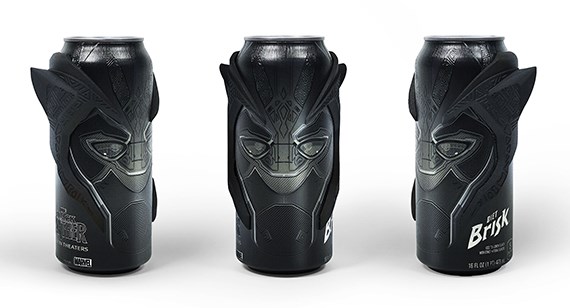 Engineers at PepsiCo evaluated five different production-grade 3D printing technologies before choosing Multi Jet Fusion for the final version of this replica of the mask worn in the movie “Black Panther.” Image courtesy of Proto Labs Inc.
The kit was a Hollywood production, nothing like what you normally get at a trade show. Along with a Samsung tablet, comic books and miscellany, it came with five cans adorned with representations of the movie's main characters. Also included was a 3D printed Black Panther mask that fit onto the cans.
Now, if you've seen the movie or Google up some images, you know that the mask has lots of complex details. They weren't the biggest challenge here. It was how to best make 250 masks cost-effectively and within a six-month concept-to-delivery timeline.
That led PepsiCo's team to 3D printing. And that eventually led them to Proto Labs in Minnesota to make the end product using Multi Jet Fusion technology because of its low cost, smooth finish and durability. And when word about the kit got out, it raked in over 10 million social media impressions.
But nothing's that easy. This blog post takes you through how this all shook out. For example, the project's requirements offered more complications. The mask's cosmetics had to be picture perfect. The team wanted to create a collector's item with coloring still looking good in 20 years. The mask had to stay on the cans in mint condition after all those abusive vibrations, drops and squeezes that come with shipping.
All that meant fast turnaround 3D printing from fit through finished parts. Plastic test fixture models were sent through design for manufacturing analyses. Alternatives were discussed with a Proto Labs manufacturing engineer. Designs were tweaked. Eventually, they vetted five different 3D production grade technologies for the end product after using a completely different technology for concept designs.
“PepsiCo R&D Team Elevates Packaging Design with 3D Printing” is marvelous stuff. It totally encapsulates how dispersed teams can collaborate to make a cool idea happen quickly. Click here and read on.
Thanks, Pal. – Lockwood
Anthony J. Lockwood, Editor at Large, DE


Anthony J. Lockwood is Digital Engineering's founding editor. He is now retired. Contact him via [email protected].
Follow DE
Join over 90,000 engineering professionals who get fresh engineering news as soon as it is published.






About Us · Contact Us · Editorial Team · Advertising · Privacy Policy · Subscriber Services · © 2026 Digital Engineering 24/7 · Peerless Media