Helping design and engineering professionals discover, evaluate and specify technologies and processes that shorten the design cycle and enable success.



May 2026 Special Focus: Artificial Intelligence in Design and Simulation
In this Special Focus Issue, learn about the latest developments in the integration of artificial intelligence into engineering workflows.

April 2026 Special Focus Issue: Generative Design
In this Special Focus Issue, Digital Engineering takes a look at how generative design solutions can be used across different types of design problems and with a variety of manufacturing approaches to accelerate design space exploration, and…
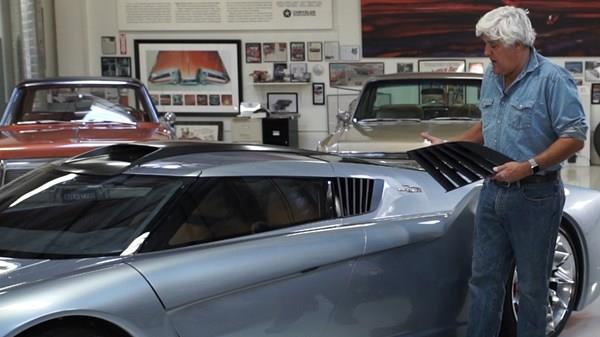
Most people have probably heard of Jay Leno’s garage. The retired talk show host is renowned for his love of nearly anything with a motor, and his collection of 200+ vehicles includes some rare or one-of-a-kind pieces. When Leno requires replacement parts, he generally can’t head on down to the nearest automotive shop to find a spare. 3D printing takes over where the parts market falls short.
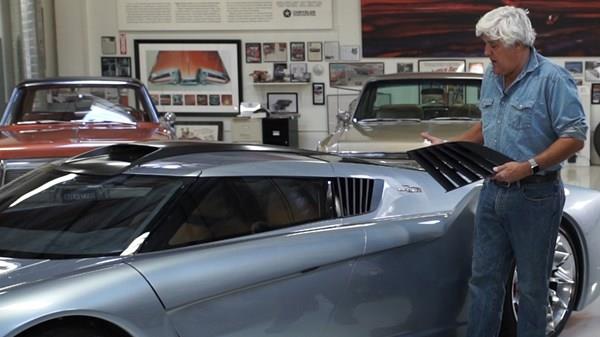 Jay Leno compares the 3D printed replacement vent with the original. Courtesy of 3DS.
The EcoJet concept car is one of Leno’s rarities It is the result of a collaboration between his garage and a handful of companies, including GM and BASF. The motor in the EcoJet isn’t your standard gas guzzler. Instead, the modified helicopter engine runs on biodiesel.
Part of the design required building vents to ensure the engine received enough airflow to operate. The vents were placed just behind the doors and, while stylish, proved to be fragile when one was accidentally broken while wheeling the vehicle out of the workshop. Finding a replacement part was out of the question, so Leno turned to 3D printing for the solution.
Leno’s garage contacted 3D Systems for assistance. The 3DS team began the reconstructive effort by scanning the broken part. The scan data was fed into Geomagic Design, which was able to create a CAD file for the part. Digital reconstruction efforts took half an hour to complete, compared to the weeks that would have been required for a human craftsman to fashion a replacement by hand.
The vent was then printed out in DuraForm HST, a lightweight, fiber-filled nylon material, and shipped back to Leno’s garage. With minor finishing, the part was completed and fit into place.
“It is amazing, how we just take 3D scans and come back with end-use parts that fit perfectly,” said Jay Leno. “With 3D printing, the automotive industry has changed more in the last decade than it previously did in the last century.”
Below you’ll find a video about the replacement vent.
Source: 3DS


John Newman is a Digital Engineering contributor who focuses on 3D printing. Contact him via [email protected] and read his posts on Rapid Ready Technology.
Follow DE
Join over 90,000 engineering professionals who get fresh engineering news as soon as it is published.






About Us · Contact Us · Editorial Team · Advertising · Privacy Policy · Subscriber Services · © 2026 Digital Engineering 24/7 · Peerless Media