Helping design and engineering professionals discover, evaluate and specify technologies and processes that shorten the design cycle and enable success.



May 2026 Special Focus: Artificial Intelligence in Design and Simulation
In this Special Focus Issue, learn about the latest developments in the integration of artificial intelligence into engineering workflows.

Design & Simulation Software Guide 2025
In this Special Issue, Digital Engineering presents its second annual guide to design and simulation software vendors.
How do you design extremely small components for viewing the extreme environment of outer space?
 |
| Figure 1: An artist’s conception of the XEUS telescope. The cylindrical object in the background is the instrument’s free-flying mirror or |
The ESA is working on a number of missions to study the evolution of the universe from the era of the Big Bang. Scientists believe that long ago all matter and energy existed in an infinitely small point of infinite density with infinite heat, thus known as "hot" matter (see Figure 2, below). After the Big Bang, the energy and matter started to distribute itself to create what we now know as the universe. Some of this matter remains extremely dense, in some cases so dense that light cannot escape, such as in black holes; this matter’s temperature remains extremely high, so even today hot matter still exists in the universe. In contrast, the universe we see with our eyes and traditional optical telescopes is known as cold matter because it has undergone constant cooling ever since the universe came into being.

Figure 2: "Hot" and "cold" matter started to appear approximately a billion years after the Big Bang. Various space probes (represented by the row on the bottom) will investigate various early stages of the universe.
Under the auspices of the Horizon 2000 Scientific Programme, the ESA has launched a number of telescopes and probes to investigate the early stages of the universe by looking at the remnants of the radiation that filled the universe immediately after the Big Bang. Depending on their goals, these spacecraft have or will examine different types of radiation and phenomena. For instance, the Planck mission, scheduled for launch in 2007, will investigate the clumping of matter that took place 300,000 years after the Big Bang.
Approximately a billion years after the Big Bang, the emergence of self-gravity created differentiated galactic properties that resulted in a hot and a cold universe. The XEUS telescope will investigate this hot universe by looking at the formation of the first black holes as well as galaxy clustering. Because hot matter does not emit visible light, the telescope will gather X-rays to investigate issues such as how the evolution of black holes is related to star formation as well as the steps in the creation of the first metal elements. This telescope is now targeted for launch in January 2014.
The two-part XEUS telescope will be launched into a low earth orbit on the Ariane V rocket developed at the European Aeronautical Defense and Space Company (EADS). These two components, basically the telescope’s mirror and detector, will maintain a separation of 50m, which cannot vary by more than 0.25mm, under supervision of an orbit control system. The spacecraft will also have the ability to dock with the International Space Station for expansion and refurbishment. Scientists anticipate that XEUS will continue to provide data on the universe’s evolution for more than 20 years after its launch.
To create XEUS, the ESA is cooperating with a number of commercial entities such as EADS as well as other governmental labs and academic institutions. Among them is the Space Research Organization Netherlands (SRON) where physicist Dr. Marcel Bruijn is working on the design and manufacture of the pixels in the detector, some of the smallest components in this complex telescope.
"Time’s earliest black holes and galaxy clusters leave behind signatures in the form of X-rays that we can measure," explains Dr. Bruijn. "The detector’s pixels must measure the energy of X-rays coming from millions of light-years away. To do so, the detectors must filter this incoming information out of noise coming from the universe. We can do so in part by maintaining the pixels at a temperature of a few milliKelvin, but a good geometric and thermal design is also essential."
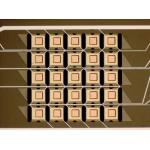
Figure 3: Each pixel in a prototype 5 x 5 pixel array contains a copper absorber, a Ti/Au superconducting transition edge sensor, and a Si3N4 membrane for thermal insulation. Electrical wiring to the pixels runs across narrow beams of silicon, which also form a thermal ground. In a future version, mushroom-shaped Cu/Bi absorbers will replace those currently made of copper.
Through these efforts, the researchers hope to increase the telescope’s sensitivity by a factor of 200 and its energy resolution by a factor of 30 over XMM-Newton, the current telescope in operation. After only six years of development, Dr. Bruijn and the Sensor Research and Technology Department at SRON have reached this goal for a single pixel, and they’re close to producing a 5 x 5 pixel-array prototype (see Figure 3, above left). Eventually they hope to implement a 32 x 32 pixel array. Because the telescope’s launch won’t take place before 2014, they should have time to reach this goal.
"Reaching our goal within six years was an immense task and partly a direct result of mathematical modeling," comments Dr. Bruijn. "This progress gives us an opportunity to concentrate on even greater accuracy and resolution for our measuring devices before XEUS launches."
Rather than build many prototypes in a variety of geometries and from many types of materials, Dr. Bruijn is modeling the pixel design mathematically. As he explains, "We can quickly gauge material suitability through computer simulations, and we can also swiftly assess geometry shapes and thicknesses. Further, modeling has become pertinent not only in optimizing the pixel but also in doing so for the surrounding components."
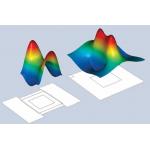
Figure 4: Temperature in the absorber (lower geometry) and the transition edge sensor (upper geometry) after 300 nanoseconds. A heat pulse is applied to the absorber geometry at one of the poles, and Comsol Multiphysics can calculate the heat flow and subsequent current density in the transition edge sensor.
The pixel is made from two distinct but coupled geometries—an absorber and a superconducting transition edge sensor (TES). In the absorber, X-rays hit a bismuth plate that translates them to heat energy through the movement of electrons and the vibration of the crystalline lattices. Any model of the absorber must be able to consider different relationships in heat capacity and conductivity in order to give an accurate assessment of the heat flux to the lower geometry.
The second geometry acts as a thermometer where heat generated in the absorber affects the electrical conductivity of the TES material (see Figure 4, above). By placing a potentiometer across the sensor, the instrument can calculate the resulting current density. The scientists use this information to calculate the energy of the original X-ray photon. They then obtain the intensity of the incoming X-ray flux simply by counting the number of electrical pulses.
To model the pixels, Dr. Bruijn and his team decided to use finite-element software, and the package they selected was Comsol Multiphysics, formerly FEMLAB. As he notes, "That software allows us to model both geometries separately while setting up the simulation, and then it solves them simultaneously as a truly coupled problem."
Another advantage is Comsol’s equation-based modeling approach. Says Dr. Bruijn, "We found it extremely convenient that the software allows us to simply type in the highly nonlinear equations for heat capacity plus thermal and electrical conductivities for all the materials involved. Some of these relationships include functions of temperature raised to the power of five, while others require the derivative of temperature. It was great being able to avoid the work that would otherwise have arisen when trying to force other software to include such arduous and unusual terms."
Figure 5: Schematic of the XEUS narrow-field detector shows X-rays hitting the absorber, which transforms them into heat energy that the transition edge sensor (TES) then measures. Using an applied voltage bias, any change in TES-material conductivity generates a current that varies with the heat energy provided by the X-rays. A feedback mechanism drives the temperature in the absorber/TES combination to a setpoint. The entire detector assembly is cooled to a temperature of a few tens of milliKelvin.
Figure 6: A Comsol Multiphysics plot of temperature in the sensor array in which the temperature differences are small, and the position in the array gives rise to noise if the units are not compensated properly for position.
Yet another type of signal interference that Dr. Bruijn’s group must account for is geometric noise—the uncertainty in the landing position of an incoming X-ray photon. "For a given sensor layout," he continues, "we can calculate the amount of geometric noise, which we cannot directly exclude through filtering. Comsol helps in designing our layout until we minimize that noise (see Figure 7, below). Once we decide on a layout, we can calculate the pulse shape as a function of X-ray energy. This helps us design a digital-filter template to reduce the effects of electronic and thermal noise in an optimum fashion."
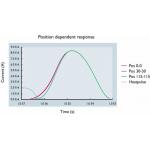
Figure 7: The effect of geometric noise when the same heat pulse is applied at different positions on the absorber, resulting in a different signal for the measurement of the original heat source. Proper layout of the sensor pixel can minimize this noise.Small Details for a Bigger Picture
The XEUS mission is an impressive project that will observe the wonders of the universe as never before possible. This telescope is a magnificent piece of engineering, in a sense much like the human eye. Engineering skills must be applied at all levels to ensure that all the components work well together, from the largest to the smallest level: The universe is infinitely large, the XEUS mirror is meters in diameter, while the detector pixels are 0.25mm in size, and the measured data are in milliKelvin and electron-volts.
L. James Ashley has been writing about high-tech for more than 25 years. Send your thoughts about this article via e-mail by clicking here.
SRON—Space Research Organization Netherlands
As a part of the Netherlands Organization for Scientific Research, SRON (sron.nl) is the national center of expertise for the development and exploitation of satellite instruments in astrophysics and earth system science. It acts as the Dutch national agency for space research and as the national point of contact for ESA programs.—L.J.A.
European Space Agency
• Europe’s gateway to space
• 15 member countries, 1920 employees, budget of 2,700 million Euros
• Works closely with space organizations outside Europe
• Headquarters in Paris, France
• Four subunits:
ESTEC (Netherlands): design hub for most ESA spacecraft
ESOC (Germany): responsible for controlling ESA satellites in orbit
EAC (Germany): trains astronauts for future missions
ESRIN (Italy): collects, stores, and distributes satellite data to ESA’s partners,
and acts as the Agency’s information technology center
• Tracking stations in Europe, Africa, and Australia
—L.J.A.
Contact Information
Comsol Multiphysics
COMSOL, Inc.
Burlington, MA
European Aeronautical Defense and Space Company
ESA— European Space Agency
Paris, France
SRON—Space Research Organization Netherlands
Utrecht, Netherlands
XEUS


DE's editors contribute news and new product announcements to Digital Engineering. Press releases may be sent to them via [email protected].
Follow DE
Join over 90,000 engineering professionals who get fresh engineering news as soon as it is published.






About Us · Contact Us · Editorial Team · Advertising · Privacy Policy · Subscriber Services · © 2026 Digital Engineering 24/7 · Peerless Media