Helping design and engineering professionals discover, evaluate and specify technologies and processes that shorten the design cycle and enable success.



Design & Simulation Software Guide 2025
In this Special Issue, Digital Engineering presents its second annual guide to design and simulation software vendors.

Design & Simulation Software Guide
In this Special Issue, Digital Engineering presents its inaugural guide to design and simulation software vendors, including listings for CAD, CAM, simulation, generative design, PLM, rendering and visualization, design for additive manufacturing,…
New findings from Hexagon’s global Robot Generation study show that adults and children don't mind robots at work, but are detailing where and how they should be used.
Asked for preference of a human or a robot for managing specific workplace tasks, adults chose robots for physical, repetitive, and hazardous work. A total of 68% prefer a robot for lifting and transporting heavy items, 54% for carrying and delivering, and 52% for monitoring hazards. Children have greater openness, with 69% preferring a robot for heavy lifting, and 59% for carrying and delivering.
However, for tasks that require empathy or accountability, both groups move decisively to humans. The biggest gap? Caregiving. A total of 67% of children and 71% of adults want a human to care for the sick, elderly or children. Elsewhere, just 16% and 12%, respectively, would choose a robot, the lowest robot preference for any task tested.
So what do people want from a robot? According to Hexagon, the answer for both groups—adults and children—is practical help. Adults prioritize tasks such as capturing measurements or research (53%), managing admin (38%), and ensuring workplace safety (34%). Children want assistants to help them understand school lessons (60%) and generate ideas (48%).
Only 21% of adults think robots should be viewed as colleagues, and only 14% would want them in charge, but children are 50% more likely to view robots as colleagues, pointing to a generational shift. Interestingly, 40% of adults say a robot colleague might be exciting, but 38% say it would be frightening, mirroring a similar earlier response captured in the first wave of the study.
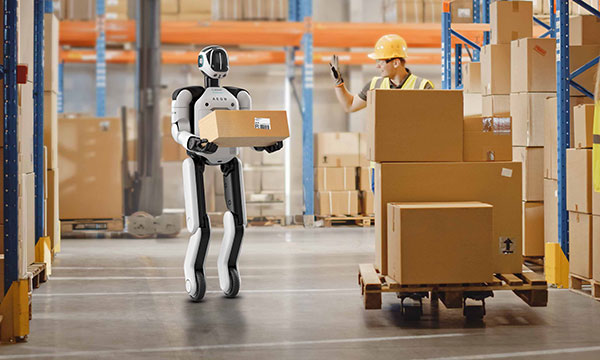
The environment where robots perform practical tasks is important. Adults are comfortable with robots helping in factories and warehouses (63%), ahead of hospitals and clinics (45%), or classrooms (39%). This pattern holds across markets: in China, where 75% of adults have encountered robots in real life, 63% would be comfortable with a robot in the home. In contrast, just 32% in the UK, where exposure remains the lowest of any market surveyed. As the first wave of the study found, anxiety is highest where robots are least visible.
Preference also tilts toward machine-like robots (28%) over human-like (22%), suggesting trust is built through function, not appearance. Yet adoption remains conditional: 86% of adults say clear rules for what robots can and can’t do are essential. Furthermore, concerns around security (51%), reliability (21%), and trust (26%) underline that governance must keep pace with deployment.
“People are telling us exactly where robots belong and where they don’t, and their instincts are remarkably consistent across markets,” says Burkhard Boeckem, chief technology officer at Hexagon. “Industrial environments are where the tasks for robots are the most defined, the safety cases are mature, and governance is in public view. That is where people feel most comfortable working alongside humanoids, and it’s precisely where our technologies already operate. This data confirms that the path to adoption runs through industry, not around it.”
Methodology
The Hexagon Robot Generation study surveyed 9,000 adults and 9,000 children aged 8–18 across the USA, UK, Germany, Switzerland, Japan, South Korea, China, Brazil, and India. The survey was carried out by Vitreous World on behalf of Hexagon in late 2025.
‘Robot’ in this context means a machine that can carry out tasks either completely on its own or with human guidance. These tasks could be pre-programmed or the robot could be acting independently. Robots can be found in many forms.
Sources: Press materials received from the company and additional information gleaned from the company’s website.


Hexagon is considered a global leader in measurement technologies. The company aims to bridge the physical and digital worlds with solutions in discrete manufacturing, reality capture, and positioning solutions.

Accelerating Your Journey to Smarter Industrial Facilities: Design
Transform your design processes for this new digital world by identifying efficiencies that can be gained that can help improve project delivery and overall quality in your projects.

DE's editors contribute news and new product announcements to Digital Engineering. Press releases may be sent to them via [email protected].
Follow DE
Join over 90,000 engineering professionals who get fresh engineering news as soon as it is published.






About Us · Contact Us · Editorial Team · Advertising · Privacy Policy · Subscriber Services · © 2026 Digital Engineering 24/7 · Peerless Media