Helping design and engineering professionals discover, evaluate and specify technologies and processes that shorten the design cycle and enable success.



Digital Engineering April 2026
In the latest issue of Digital Engineering, we take a look at the latest innovations in design for additive manufacturing, including the use of natural language inputs, social media cosplayers, and AI integration. The issue also includes a feature…

January Special Focus Issue: Design for Additive
In this Special Focus Issue of Digital Engineering, learn about the latest advancements in design for additive manufacturing, including new software tools, additive in automotive, custom medical devices, and more.
Those challenges are the routine for Doctors Without Borders/Médecins Sans Frontières (MSF), a charitable group that sets up medical care facilities in war zones or locations hit by natural disasters. Even with all its experience, getting a facility up and running takes months, and unforeseen problems cause delays with real human costs. A desire to speed up and improve the planning process has led MSF to investigate the possibilities for advance planning offered by 3D technology.
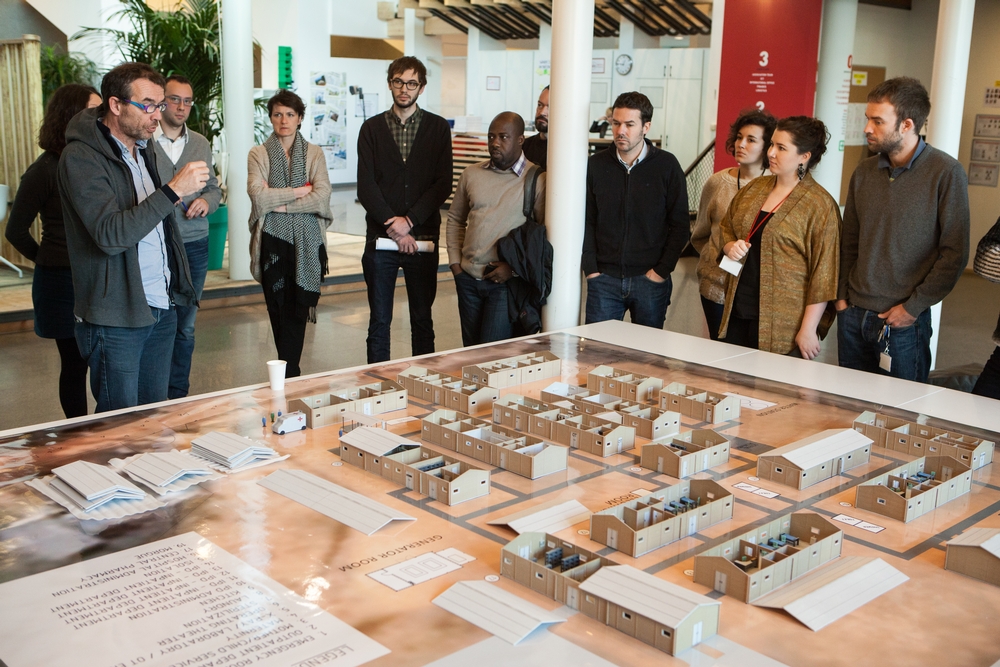
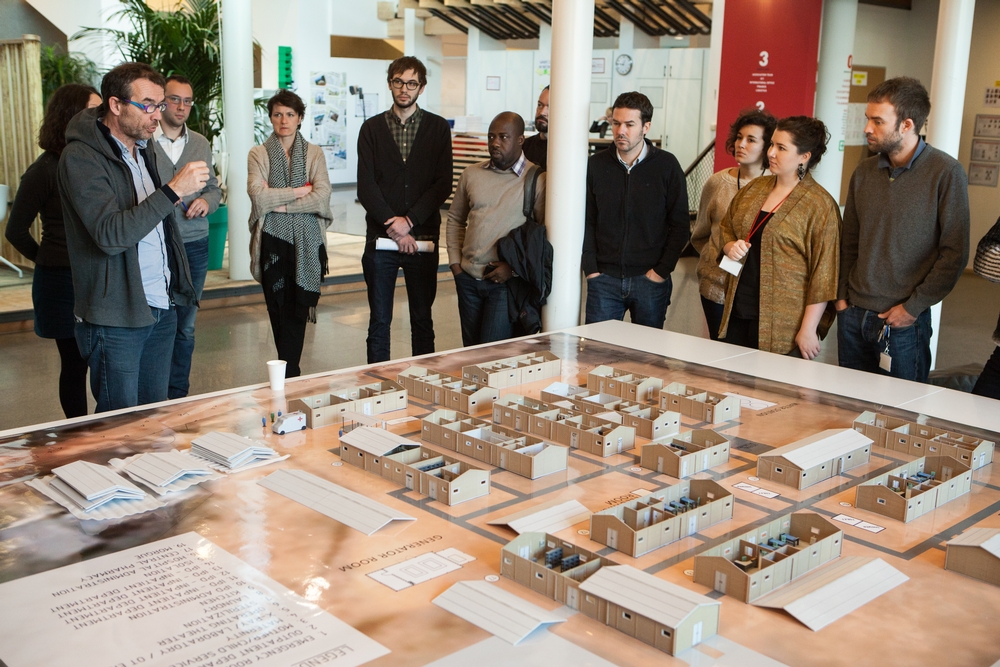 3D printed model MSF campus on display. Courtesy of MSF.
Rather than relying on the traditional 2D blueprint alone, MSF has begun to experiment with additive manufacturing (AM) and VR to both assist with the design process and to help familiarize staff with a facility before they arrive on site. AM is used to build a scale model of the facility, which gives the architects a better look at how the final product will shape up. VR in the shape of Occulus Rift goggles allows both architects and staff to experience a walking tour of the facility before the first brick is mortared into place.
“Such technologies will undoubtedly make discussions more efficient, more vivid and more graphic,” said Jean Pletinckx, MSF director of logistics. “They will allow people to really see themselves inside our future hospital and this will improve hospital design as well as training and briefings. It will also allow our partners, like local ministries of health, to better understand what we can provide and better feedback on our suggestions.”
Many of the field hospitals require multiple buildings in order to operate, and using AM to build a campus allows designers and doctors to work together to ensure the results are as efficient and practical as possible. Physical models of the buildings can easily be shuffled around by MSF staff who might not possess the technical savvy to work with CAD programs.
Once the design is approved, it becomes a VR model that works similarly to a video game. Simulations offer a glimpse into how the facility might operate, offering the potential to clear up any previously undiscovered traffic flow or practicality issues.
Below you’ll find a video about the process.
Source: MSF


John Newman is a Digital Engineering contributor who focuses on 3D printing. Contact him via [email protected] and read his posts on Rapid Ready Technology.
Follow DE
Join over 90,000 engineering professionals who get fresh engineering news as soon as it is published.






About Us · Contact Us · Editorial Team · Advertising · Privacy Policy · Subscriber Services · © 2026 Digital Engineering 24/7 · Peerless Media