Helping design and engineering professionals discover, evaluate and specify technologies and processes that shorten the design cycle and enable success.



May 2026 Special Focus: Artificial Intelligence in Design and Simulation
In this Special Focus Issue, learn about the latest developments in the integration of artificial intelligence into engineering workflows.

Design & Simulation Software Guide 2025
In this Special Issue, Digital Engineering presents its second annual guide to design and simulation software vendors.
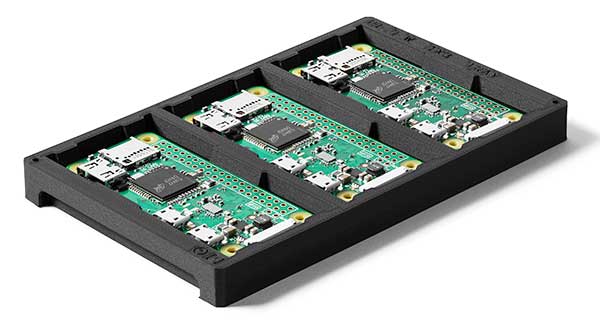
Markforged introduces Onyx ESD, a new composite material for additive manufacturing of electronics. The company, a builder of additive manufacturing equipment, says the new material is a high-performance static-dissipative version of its popular Onyx, a micro carbon fiber-filled nylon.
Markforged says electronics manufacturers have not been able to innovate with additive manufacturing due to the lack of static-dissipation materials. Electronics manufacturers must use materials that meet electrostatic discharge (ESD) safety requirements, to avoid damaging a product or critical component during production. Though there are other ESD-safe materials in the market, Markforged’s is reportedly the only to offer the highest strength (when paired with continuous carbon fiber), tightest surface resistance range and a smooth surface finish.
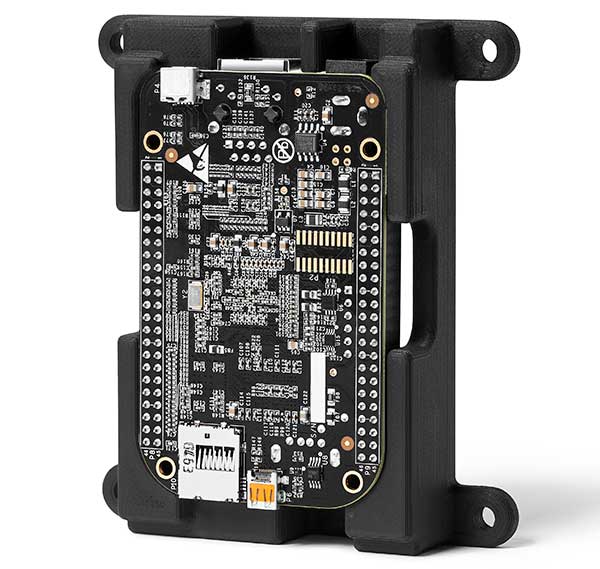
Markforged says Onyx ESD was developed to achieve a tight surface resistance range, to consistently meet strict ESD-safe requirements. The material can be reinforced with continuous carbon fiber, creating strong and static-free composite parts. The result is the ability to improve business responsiveness by producing electrostatic discharge-safe parts on demand.
When printing with Onyx ESD, Markforged says electronics manufacturers can safely produce strong, accurate tools and fixtures ready for the manufacturing floor, as well as customer-ready parts.
Markforged says the new material offers higher strength and stiffness than the original Onyx, and is compatible with the full range of Markforged continuous fiber reinforcement materials.
The material is now available for use on Markforged X7, X5 and X3 printers. Onyx ESD may be accessed by existing Markforged customers using Eiger, the company’s cloud-based AM management software.
For more information on Markforged Onyx ESD, click here.
Sources: Press materials received from the company and additional information gleaned from the company’s website.

Markforged started with a vision: Empower engineers to create strong-as-metal, finished parts using the right materials for the job - and remove the multiple barriers between design and a final product. We are overturning not only the 3D printing…

Industry Focus: Designing for Consumer Electronics
Design engineers developing consumer electronics were some of the first to arrive at the intersection of hardware, electronics, software and aesthetics. That intersection has since become jammed with engineers from various disciplines trying to navigate their way through an ever-changing smart product landscape filled with new sensors, electronic design automation (EDA) tools, communication protocols and embedded software.

DE's editors contribute news and new product announcements to Digital Engineering. Press releases may be sent to them via [email protected].
Follow DE
Join over 90,000 engineering professionals who get fresh engineering news as soon as it is published.






About Us · Contact Us · Editorial Team · Advertising · Privacy Policy · Subscriber Services · © 2026 Digital Engineering 24/7 · Peerless Media