Helping design and engineering professionals discover, evaluate and specify technologies and processes that shorten the design cycle and enable success.



Digital Engineering April 2026
In the latest issue of Digital Engineering, we take a look at the latest innovations in design for additive manufacturing, including the use of natural language inputs, social media cosplayers, and AI integration. The issue also includes a feature…

January Special Focus Issue: Design for Additive
In this Special Focus Issue of Digital Engineering, learn about the latest advancements in design for additive manufacturing, including new software tools, additive in automotive, custom medical devices, and more.
Some of the first humanitarian uses for AM included work with prosthetics. Later, plans were launched to build improved housing. Now, 3D printing is being used for smaller, but no less vital, applications. Field Ready is a humanitarian organization that uses technology to fight tragedy.
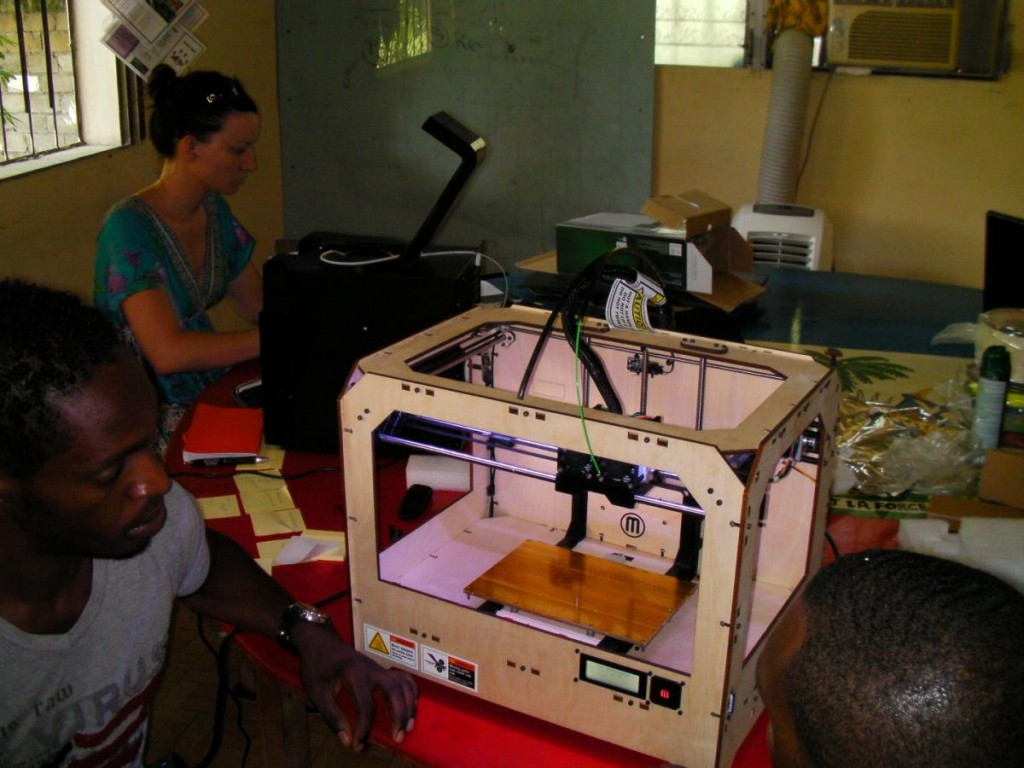 Field Ready in Haiti training local volunteers to operate and maintain 3D printers. Courtesy of Field Ready.
While the camera crews might have long departed, they didn’t take Haiti’s woes with them. The country has yet to recover from the 2010 earthquake which affected millions of people. Travel can be difficult, making trips of over an hour into grueling tests of endurance for those with medical needs.
Field hospitals are still semi-permanent fixtures across the country, and most are located near enough to major communities to be of assistance. These medical facilities suffer from a number of problems, including logistical issues that make it difficult to resupply specific items.
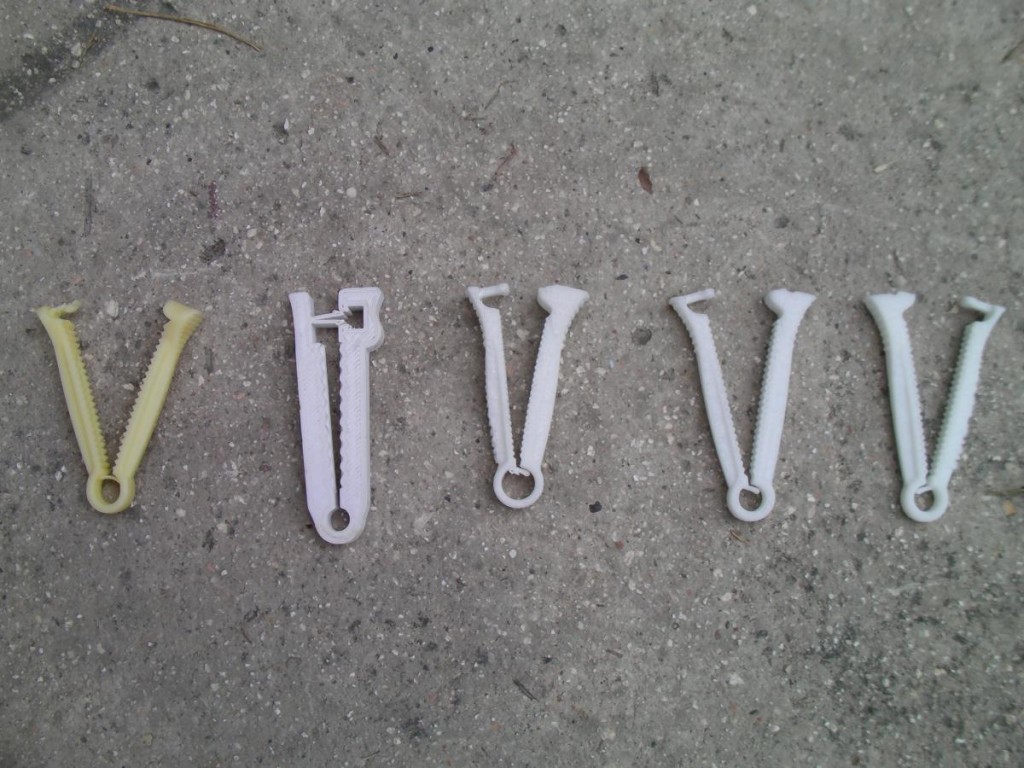 The umbilical cord clamps printed in Haiti have undergone some design iterations, as can be seen by examining the original clamp (far left) and new models. Courtesy of Field Ready.
Field Ready intends to alleviate some of the logistical issues through the use of AM. Instead of requiring basic supplies, such as oxygen tube connectors, be shipped in, locally-trained volunteers can produce whatever the facility requires, assuming it can be made from plastic.
Bringing MakerBots and UP Mini printers with them, the Field Ready team works with local inhabitants to train them in how to use, and design for, the 3D printers. When the Field Ready team departs, they leave the technology behind to continue to assist the community. From the Field Ready blog:
This month we provided introductory training for five aid workers based in Port-au-Prince. We have given considered thought as to who the training should target and what topics should be covered. For this, we have developed a framework to delineate skills – we plan to publish later. In this training provided on the premises of Haiti Communitere, topics included understanding the basics of 3D printing, introduction to CAD, how to print and how to maintain and upkeep equipment.
One of the useful tools developed and printed in Haiti is an umbilical cord clamp. Mothers-to-be are rarely able to make it to operational hospitals, and so must rely on local midwives. The midwives, in turn, had learned to make do with whatever was handy to secure the umbilical cord. The 3D-printed umbilical clamps made it possible for midwives to ensure they had performed the procedure correctly, without adding the worry of outside contaminates.
Below you’ll find a short video about Field Ready.
Source: Field Ready


John Newman is a Digital Engineering contributor who focuses on 3D printing. Contact him via [email protected] and read his posts on Rapid Ready Technology.
Follow DE
Join over 90,000 engineering professionals who get fresh engineering news as soon as it is published.






About Us · Contact Us · Editorial Team · Advertising · Privacy Policy · Subscriber Services · © 2026 Digital Engineering 24/7 · Peerless Media