Helping design and engineering professionals discover, evaluate and specify technologies and processes that shorten the design cycle and enable success.




Design & Simulation Software Guide 2025
In this Special Issue, Digital Engineering presents its second annual guide to design and simulation software vendors.

Design & Simulation Software Guide
In this Special Issue, Digital Engineering presents its inaugural guide to design and simulation software vendors, including listings for CAD, CAM, simulation, generative design, PLM, rendering and visualization, design for additive manufacturing,…
The Halo, which bolts on to a wheel, employs a pendulum-like device similar to a self-winding watch, to power a pump attached to a wheel as it turns. The device is set to a specific pressure, and once connected to the tire’s valve stem, a control system automatically ups or decreases airflow to maintain optimal pressure. As a result, the Halo guards against under-inflated tires, which in addition to gradual leaks, is caused by a variety of factors, from extreme temperatures to inaccurate measuring equipment as well as human error.
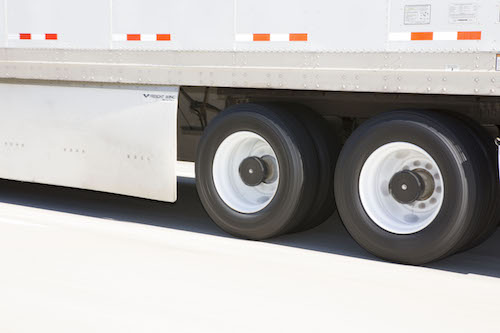 Arena PLM has been instrumental in improving ECO cycle times during development of the Halo Tire Inflator. Image Courtesy of Aperia Technologies
Tire under-inflation has become a huge maintenance challenge for fleets. By addressing the problem, companies can increase their MPG by 1.4%, on average, per year, extend tire life by 15%, reduce waste and emissions, and prevent blowouts, Aperia officials maintain. The company founders, who initially came up with the idea for consumer vehicles, quickly saw more opportunity in the commercial market, according to Pete Dillon, the company’s business development & strategy associate.
“It’s inevitable that tires go from inflated to under inflated so why wasn’t there a solution,” he says. While automatic tire inflation had been used in military applications for years, Dillon says they were complicated systems requiring lots of tubing and a significant investment. “It would require a really labor-intensive retrofit with lifecycle costs that were not insignificant,” he says.
Using that as a springboard, the development team began to focus on coming up with a design that would bolt on a wheel, be accessible as an easy fleet retrofit, and be virtually maintenance free. Taking advantage of the energy capture as the vehicle rolls down the road was a major design pillar as was coming up with a way to expend some of the air created by the momentum so the tire did not over inflate, Dillon says.
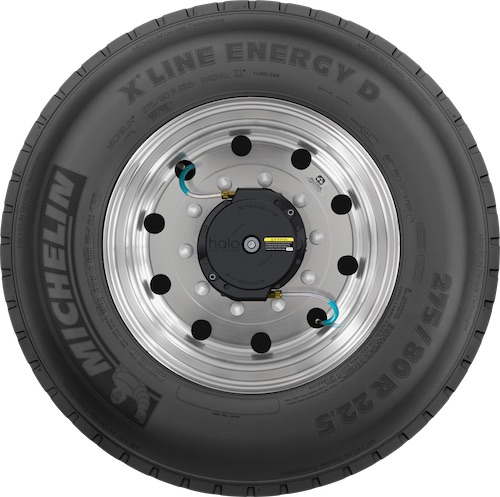 The Halo Tire Inflator’s simple design calls for an internal pump driven by wheel rotation to automatically inflate tires and protect against pressure loss. Image Courtesy of Aperia Technologies
PLM played a critical role helping Aperia maintain an agile development process by keeping everyone on the same page, Dillon says. Arena PLM was instrumental in managing engineering changes, he says, as well as ensuring the design delivered was a minimally viable product. “We needed to solve the problem, but not come up with unnecessary or incremental, value-added bells and whistles,” explained Dillon, who says a lot of extraneous features were weeded out through a rigorous field test and prototyping process.
“There were big decision choices—what the pumping mechanism needed to be, what sort of internal energy harvesting we’d need or what materials were appropriate for the casting and internal components,” he explains. “There are a bunch of degrees of freedom in the design process that are in flux as the product evolves and is iterated. Arena has been a great tool for managing the ripples of complex changes.” In fact, Aperia estimates that Arena PLM improved product quality and ECO cycle time between 51% and 75%.
Watch this video to see Halo in action:


Beth Stackpole is a contributing editor to Digital Engineering. Send e-mail about this article to [email protected].
Follow DE
Join over 90,000 engineering professionals who get fresh engineering news as soon as it is published.






About Us · Contact Us · Editorial Team · Advertising · Privacy Policy · Subscriber Services · © 2026 Digital Engineering 24/7 · Peerless Media