Helping design and engineering professionals discover, evaluate and specify technologies and processes that shorten the design cycle and enable success.


Sponsored

Digital Engineering April 2026
In the latest issue of Digital Engineering, we take a look at the latest innovations in design for additive manufacturing, including the use of natural language inputs, social media cosplayers, and AI integration. The issue also includes a feature…

January Special Focus Issue: Design for Additive
In this Special Focus Issue of Digital Engineering, learn about the latest advancements in design for additive manufacturing, including new software tools, additive in automotive, custom medical devices, and more.
Decathlon, the world’s largest sporting goods retailer, is using the high-speed Figure 4 platform and new stacking feature of 3D Systems’ 3D Sprint® software to enable direct production of 3D printed end-use parts. The stacking feature enables batch production of one or multiple parts through a combination of user-defined and automated tools, and removes significant time from the print preparation process.
“By stacking parts we are able to print in batches of 100, and have reduced the time it takes to prepare a build from 30-60 minutes to just 6-10 minutes. The combination of stacking and production-grade materials makes Figure 4 ready for production.”
- Gregoire Mercusot, Materials Engineer, ADDLAB, Decathlon
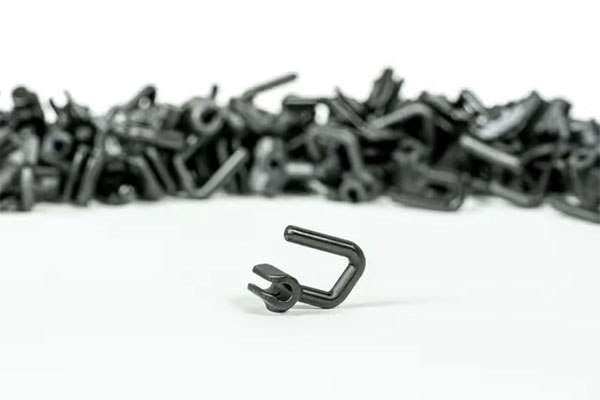
When faced with a mold injection problem on a small component for shooting glasses that connects the frame to the lenses, Decathlon opted to test the new 3D stacking solution developed by 3D Systems to evaluate additive manufacturing for production. After conducting a feasibility study on the Figure 4 solution and stacking feature, Decathlon’s teams confirmed the productivity and economics of additive manufacturing and decided that this solution could be considered for batch-run production of the final product.
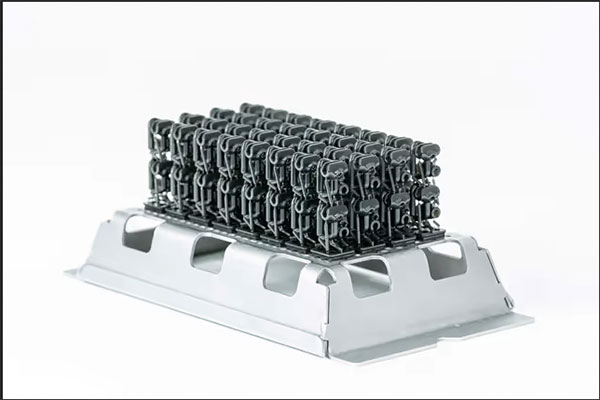
Figure 4 solution with 3D Sprint stacking feature enables batch-run production.
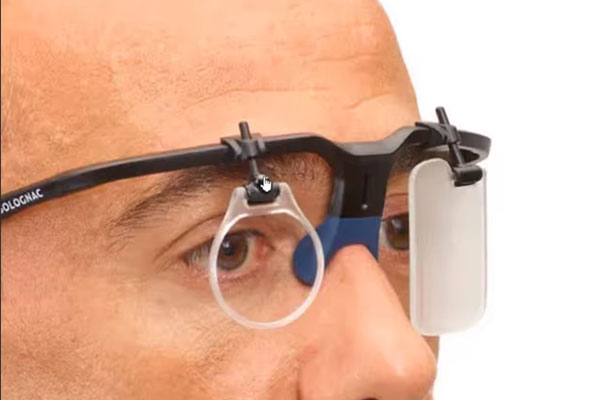
Decathlon used Figure 4 to solve an injection mold problem for a small component for shooting glasses that connects the frame to the lenses.
Decathlon’s additive manufacturing lab (ADDLAB) uses 3D Systems’ Figure 4 3D printing solution across a range of applications (including mold master patterns), and is now considering using the new high density part stacking capability of 3D Systems’ 3D Sprint software to facilitate direct production. 3D Sprint is an advanced, all-in-one software that streamlines the file-to-pattern workflow with tools for print file preparation and optimization, including automatic support generation, and optimized part placement to maximize productivity. The new stacking feature helps users print high volume batches with an efficient file preparation workflow.
To use the stacking feature, users import a part and base file, define the stack in terms of orientation and part quantities, and use automated tools to replicate consecutive vertical stack layers and supports. According to Decathlon engineer Gregoire Mercusot, stacking has reduced print preparation time by as much as 80%. Builds that used to take 30 minutes to an hour to prepare can now be completed in six to 10 minutes.
Mercusot says the utility of this function goes well beyond production: “I use this feature several times a week whenever I need multiple parts. It’s incredible for production, but it’s also very useful for prototyping,” he says.
Decathlon is using the Figure 4® PRO-BLK 10 material for this functional eyeglass component, citing the material’s strong rigid properties and fast print speeds (62 mm/hr) as key benefits. This high precision material produces parts with smooth surface finish and sidewall quality, and has excellent long-term mechanical properties and environmental stability, bringing a new level of assurance to 3D production. From its production feasibility study, Decathlon confirmed reproducibility across print batches and full functionality of the part.
The stacking capability of Figure 4 brings efficiencies of scale to post-processing as well as part building.
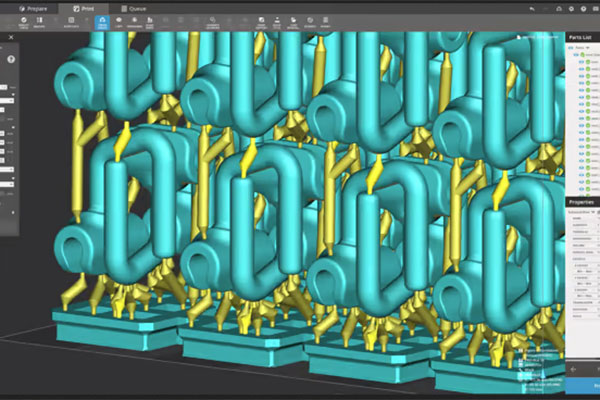
The stacking feature of 3D Sprint helps users print high volume batches with an efficient file preparation workflow.
Figure 4 is a projection-based additive manufacturing technology that uses a non-contact membrane to combine accuracy and amazing detail fidelity with ultra-fast print speeds. Decathlon uses the Figure 4 Modular system to print stacks of 100 parts in 85 minutes, which is equivalent to just 42 seconds per part. The Figure 4 Modular is a scalable, semi-automated 3D production solution comprised of a central controller that can be paired with a single printer-module up to 24 printer modules, making it a flexible option that poises businesses for growth.
The high-density stacking capability of Figure 4 brings efficiencies of scale to post-processing as well as part building, allowing Decathlon to treat a batch of parts the same as a single part. This means that the time it would take for Decathlon to clean, cure, and remove the supports from a single part remains the same, even for a batch of 100 parts. For Decathlon’s safety glass application, it takes six minutes to clean all 100 parts, 90 minutes of hands-free time to cure them, and ten minutes to remove supports from the entire batch.


From digitization, design and simulation through manufacturing, inspection and management, our comprehensive portfolio of technologies provides a seamless, customizable workflow designed to optimize products and processes while accelerating…

Save Time and Reduce Costs with NoSupports™ Metal Printing
Metal 3D printing is a high energy process in which it is possible for unmanaged heat and stress to build up and impact part quality, this guide presents a step-by-step methodology for how to apply NoSupports to a hot end section of a larger turbomachinery part.

Join over 90,000 engineering professionals who get fresh engineering news as soon as it is published.






About Us · Contact Us · Editorial Team · Advertising · Privacy Policy · Subscriber Services · © 2026 Digital Engineering 24/7 · Peerless Media