Helping design and engineering professionals discover, evaluate and specify technologies and processes that shorten the design cycle and enable success.



Digital Engineering April 2026
In the latest issue of Digital Engineering, we take a look at the latest innovations in design for additive manufacturing, including the use of natural language inputs, social media cosplayers, and AI integration. The issue also includes a feature…

January Special Focus Issue: Design for Additive
In this Special Focus Issue of Digital Engineering, learn about the latest advancements in design for additive manufacturing, including new software tools, additive in automotive, custom medical devices, and more.
3D printing equipment manufacturers talk earnestly about technology, materials, post-processing, lightweighting and many other topics relevant to this field, but not many start out a conversation by saying, “We’re rabidly obsessed with quality.”
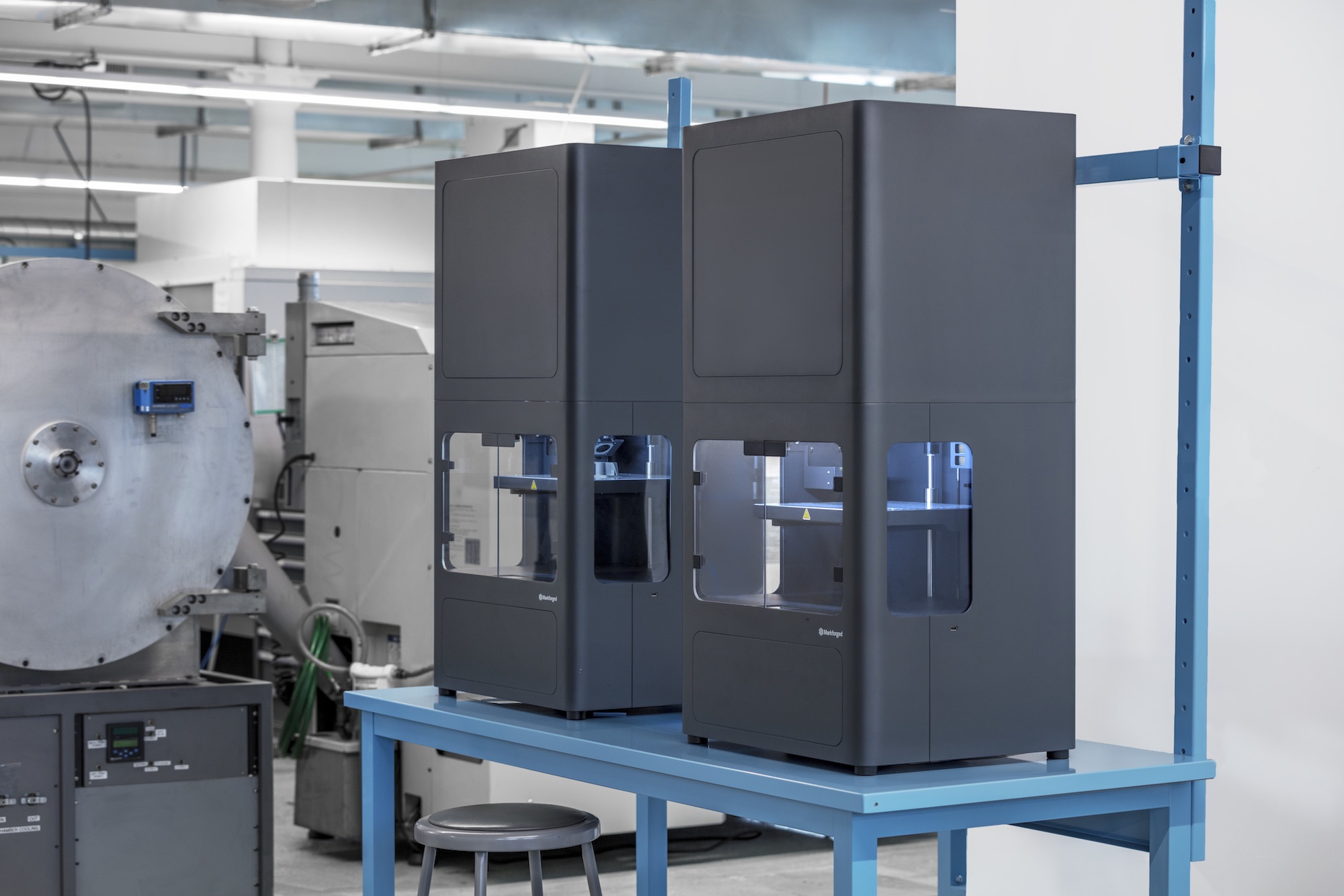
That’s the case, however, with Markforged, the Watertown-based additive manufacturing (AM) business that pioneered continuous carbon-fiber 3D printing and keeps on growing. The team is now expanding into metal AM and seems to need a larger headquarters building every year. In the midst of the company’s recent expansion to a second office in Watertown, MA, DE grabbed some time with Markforged staff members Trak Lord, director of Communications, and Andrew de Geofroy, vice president of Applications Engineering.
“The demand for the Metal X has been outside of our wildest dreams," said Lord, giving an update on the company’s direction and especially its metal AM system. "We have a very healthy list of people we are shipping to gradually every single month as we move these full systems out. It’s been a fun process.”
De Geofroy agrees, adding, “When you’re bringing cutting-edge technology to the market, that demand is a testament to the capabilities we’re bringing to a market that just has not existed before.” He points to the facts that the Metal X is not only more affordable than some of the more traditional technologies for metal printing but also offers greatly improved safety aspects. “You can use this without having a clean room or wearing bunny suits and a respirator,” he notes. “This is a huge advantage.”
A critical aspect of the internal roadmap for material releases (beyond the currently offered 17-4 PH stainless steel) is the company’s total ownership of the entire print ecosystem – everything from the software and hardware to the materials and consumables. Lord brings up the quality requirement again, saying, “We’re not going to release a new material until we’re comfortable with the standards of quality.”
Markforged says it has developed a proprietary formulation that combines metal-injection-molding (MIM) grade pellets with a plastic binder into flexible filament that is coiled onto spools. During printing, the filament is delivered to a print-head nozzle similar to the material feed-system used on Markforged composite-material printers. A secondary filament of a ceramic release material runs through a second nozzle on the same print head; this material is deposited on the building platform and ensures an easy part release after sintering in the complementary Markforged Sinter-1 furnace.
Lord says one of the most important factors in the Markforged metals business model is that all new materials will run on the same Metal X printer. Many users new to metal AM don’t understand the costs involved on traditional powder-bed sintering equipment when switching between materials. Often the user must request the OEM to send in field staff: specialized skills are needed to thoroughly clean the printer of the current metal’s residue before another type can be loaded in, due to the hazards involved in handling the fine powders.
“One customer said if they wanted to use a different metal material, they would actually have to consider buying an entirely new printer,” explains de Geofroy, “and at that point it’s just cost-prohibitive – they’re stuck with what they’ve got.” He says Markforged is adamant about making sure that’s not an issue for its customers.
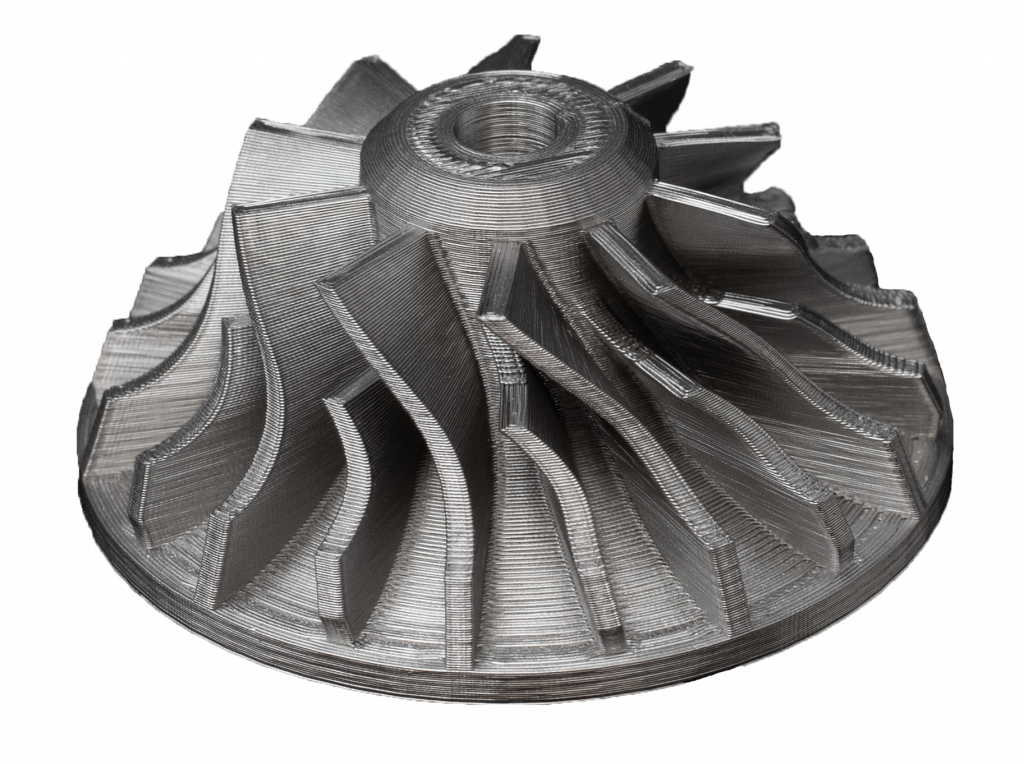 Metal impeller additively manufactured in 17-4 PH stainless steel on a Markforged Metal X printer. Image courtesy Markforged.
Once sintered, all Metal X parts meet MIM standards for strength and durability. The company is working on roll-out of a range of metals and alloys; H13 tool steel, known for its strength and resistance to thermal shock, will soon be available. Other materials already in beta stage include Inconel, two aluminum alloys, titanium and other tool steels. Both customer feedback and market demand for underserved requirements are driving the release schedule.
The Markforged Wash-1 automatic washing station, which dissolves most of the binder material, and the Sinter-1, the company’s 4,760 cubic centimeter furnace, have been delivered to all current Metal X customers. De Geofroy says they also have several orders for the larger-volume, 22,283 cubic centimeter Sinter-2 furnace as well.

Markforged started with a vision: Empower engineers to create strong-as-metal, finished parts using the right materials for the job - and remove the multiple barriers between design and a final product. We are overturning not only the 3D printing…

Industry Focus: Designing for Consumer Electronics
Design engineers developing consumer electronics were some of the first to arrive at the intersection of hardware, electronics, software and aesthetics. That intersection has since become jammed with engineers from various disciplines trying to navigate their way through an ever-changing smart product landscape filled with new sensors, electronic design automation (EDA) tools, communication protocols and embedded software.

Pamela Waterman worked as Digital Engineering's contributing editor for two decades. Contact her via DE-Editors@ digitaleng.news.
Follow DE
Join over 90,000 engineering professionals who get fresh engineering news as soon as it is published.






About Us · Contact Us · Editorial Team · Advertising · Privacy Policy · Subscriber Services · © 2026 Digital Engineering 24/7 · Peerless Media