Helping design and engineering professionals discover, evaluate and specify technologies and processes that shorten the design cycle and enable success.


Sponsored
 Dear DE Reader:
Look, if you want, read this message to the end. Be my guest. But, really, skip my bloviating and hit today’s Check it Out link now. Only one word describes what you’ll read: Cool. It'll take just a couple of minutes to read, but it will stick with you all day and have you googling for more about it now and in a few days. Here's the scoop.
This Saturday, October 8th, the first-ever Cybathlon will be held in Zurich. Switzerland, not New York. At this international competition, athletes with physical disabilities will compete using some of the latest assistive technologies. That means athletes will be using such technologies as powered wheelchairs, electric muscle stimulators, powered arm and leg prostheses, robotic exoskeletons and brain-computer interfaces.“Mind Over Machine,” a case study from Proto Labs, reports on some fascinating work being done by a multidisciplinary team of researchers at the University of Houston’s Laboratory for Noninvasive Brain-Machine Interface Systems. The scope of expertise involved in the project is huge. Beyond mechanical CAD mavens and makers, you have all sorts of engineering disciplines, neuroscientists, health professionals and, of course, students of all these disciplines participating.
The gist of the project is that they're working on a brain-machine powered robotics exoskeleton to assist people with lower-limb paralysis regain mobility without a walker or cane. Basically, a user wears an electroencephalogram cap. It reads the user's brain signals, interprets the signals for activities like walking or sitting and instructs the robotics exoskeleton to execute the signals from the user's brain to cause the intended movements. Is that cool or what?
Now get this: Cybathlon fits into the picture because the research lab’s director set the deadline of having a working model ready so that a user could vie in the powered exoskeleton race less than 10 months before next week's competition. Proto Labs plays three key roles. First, it’s custom-machining aircraft-grade aluminum joint housings—ankles, knees and hips. Second, it makes and delivers part designs within the project's tight deadlines. Third, they got into this idea and are sponsoring a portion of the cost of the parts.
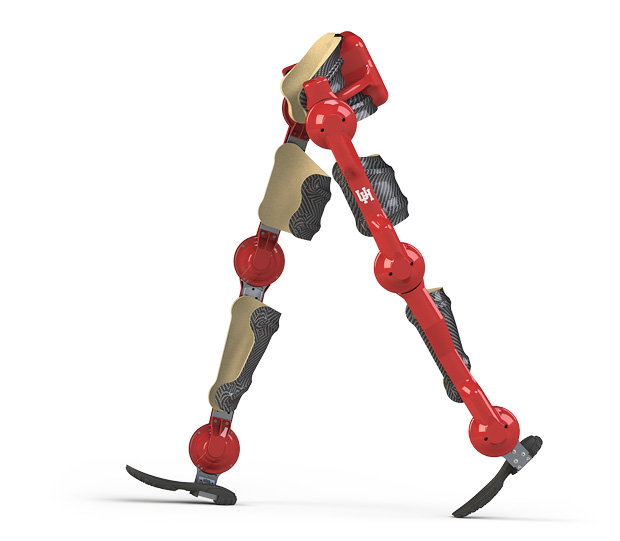 Proto Labs is providing custom-machined aluminum-joint housings for this brain-machine powered exoskeleton that will be part of a robotics system to help paraplegics walk. Image courtesy of the University of Houston and Proto Labs Inc.
The “Mind Over Machine” case study has more details on this project. It'll make you smile and maybe a little envious because you're not on this team. So, hit today’s Check it Out link now. This is too cool to miss.
Thanks, Pal. – Lockwood
Anthony J. Lockwood
Editor at Large, DE


Anthony J. Lockwood is Digital Engineering's founding editor. He is now retired. Contact him via [email protected].
Follow DE
Join over 90,000 engineering professionals who get fresh engineering news as soon as it is published.






About Us · Contact Us · Editorial Team · Advertising · Privacy Policy · Subscriber Services · © 2026 Digital Engineering 24/7 · Peerless Media