Helping design and engineering professionals discover, evaluate and specify technologies and processes that shorten the design cycle and enable success.


Alert!
Digital Engineering ceased publication on July 1, 2026. This website remains available as an archive of engineering content.
For inquiries or information, please email [email protected].


Digital Engineering April 2026
In the latest issue of Digital Engineering, we take a look at the latest innovations in design for additive manufacturing, including the use of natural language inputs, social media cosplayers, and AI integration. The issue also includes a feature…

January Special Focus Issue: Design for Additive
In this Special Focus Issue of Digital Engineering, learn about the latest advancements in design for additive manufacturing, including new software tools, additive in automotive, custom medical devices, and more.
Protolabs expanded its U.S. manufacturing capacity in 2025 due to rising domestic demand for metal 3D-printed parts, it reports. Its strategy includes investing in increased additive manufacturing capacity for scalability and focused industry certifications for more applications in various segments.
Protolabs recently added four large-format, dual-laser Colibrium Additive M2 metal printers to increase its metal 3D printing capacity. The metal 3D printing technology can produce complex, lightweight structures, suitable for medical device, aerospace, and defense industries that are using metal 3D printing for end-use production applications.
The new printers were installed at a recently opened Raleigh, NC, facility dedicated to direct metal laser sintering (DMLS) printing. The 120,000 sq. ft. factory features close 40 DMLS printers, with production capacity of more than 8,000 parts monthly.
Protolabs also recently gained ISO 13485 certification for its DMLS production facility and AS9100D for aerospace manufacturing.
“Protolabs’ comprehensive additive manufacturing capabilities have made us the preferred partner for 3D‑printed parts in the U.S,” says Suresh Krishna, president and CEO of Protolabs. “We’re sustaining our lead by listening to our customers and responding by investing in technologies that will continue to drive innovation.”
“Fundamentally, Protolabs’ 3D printing capacity, expertise, and reputation for speed and quality offer a compelling combination for businesses in these sectors, whether it be rapid prototyping or final production,” said Kenny Capps, Protolabs director of 3D printing manufacturing operations.
Sources: Press materials received from the company and additional information gleaned from the company’s website.


Proto Labs is the world's fastest source for custom prototype and low-volume parts. Our 3D printing, CNC machining and injection molding services utilize proprietary computing technology and automated systems to produce quality parts in a…
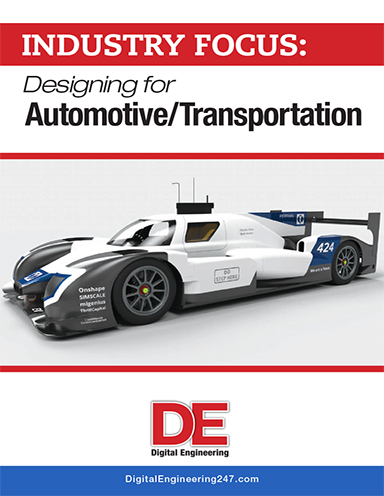
Designing for Automotive/Transportation
The automotive industry is past the point of talking about the disruption coming from demand for electric vehicle powertrains or the potential of autonomous vehicles, and well on its way to responding to those disruptions thanks to advanced engineering technologies. Download this special digital edition.

DE's editors contribute news and new product announcements to Digital Engineering. Press releases may be sent to them via [email protected].
Follow DE






About Us · Contact Us · Editorial Team · Advertising · Privacy Policy · Subscriber Services · © 2026 Digital Engineering 24/7 · Peerless Media