Helping design and engineering professionals discover, evaluate and specify technologies and processes that shorten the design cycle and enable success.



Digital Engineering April 2026
In the latest issue of Digital Engineering, we take a look at the latest innovations in design for additive manufacturing, including the use of natural language inputs, social media cosplayers, and AI integration. The issue also includes a feature…

January Special Focus Issue: Design for Additive
In this Special Focus Issue of Digital Engineering, learn about the latest advancements in design for additive manufacturing, including new software tools, additive in automotive, custom medical devices, and more.
Fabrication of early-stage conceptual models and prototypes is key to efficient new product development, according to Millit5 CEO Kim Gruber.
Millit5 typically does automotive scanning and milling projects for the world’s leading automakers. Gruber draws on his 12 years of experience in software development and training, Class-A surface generation, and 5-axis CNC milling studio prototypes for Ford Motor Company to provide a wide range of engineering, manufacturing, and milling studio services to his customers.
 |
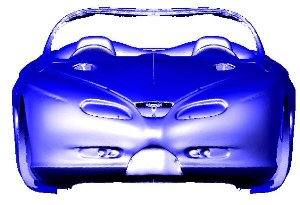 |
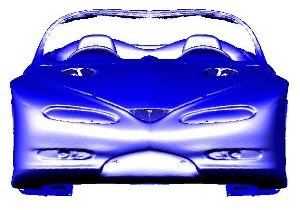
| Using Millit5's 3DDDM approach, designers can quickly evaluate multiple design concepts. This example shows variations on the Ford Mustang Mach III. |
“Technology and software advancements are pushing 3D digital boundaries in design,” says Gruber. “They require you not only to imagine the shape, but to blend design using 3DDDM reality with character and style.” In the automotive world, for instance, an entire roof or "greenhouse" of a car can be raised or lowered a slight increment—hundreds of millimeters—in a matter of minutes, with all of the car's glass planes and pillars following along.
More examples of 3DDDM using the Ford Mach III Mustang appear on the Millit Web site. The Mustang project shows how designers can work with a single data set to scan, design, render, mill, and perform CFD analysis to produce desired studio-quality work.
ICEM Surf (Dassault; Paris, France) is used for Class-A surface modeling and for adding real-time lights, materials, textures, and shadows. Depending on the job, Gruber can do a quick Class-B surface of an STL point cloud all the way to the perfect highlights of a Class-A surface.
For milling, Gruber uses a Quintax 5 axis mill with a Fagor 8070 CNC controller from (Stow, OH) in his studio. The machine’s work envelope is 5’ x 10’ x 4’ high and uses an 8-station tool changer. It accommodates plastic, wood, tooling foam, and other materials.
Unusual uses
As you’d guess, much of Gruber’s work involves vehicle concept design and CAD/CAM work across the automotive spectrum, though he believes many manufacturers can benefit from tools such as 3D scanning, milling, and 3DDDM.
During one recent work week, Millit5 scanning an entire HVAC unit for a Toyota Avalon one day. The next day was spent creating a 10-foot tall walkthrough human heart model for an Egyptian science museum. “The free-form geometry shape of the human heart is like the Class-A surface of an automobile, with all the blends and contours that make up the car body,” notes Gruber.
Another unique project was scanning a Cadillac logo to create an 8-foot diameter badge to display at the Super Bowl XLI MVP pavilion in Miami, FL.
The extensive example galley at www.millit5.com features pictures and video that showcase Millit5’s work in automotive 5-axis milling, 3D scanning, rendering, digital technology, and tooling.


DE's editors contribute news and new product announcements to Digital Engineering. Press releases may be sent to them via [email protected].
Follow DE
Join over 90,000 engineering professionals who get fresh engineering news as soon as it is published.






About Us · Contact Us · Editorial Team · Advertising · Privacy Policy · Subscriber Services · © 2026 Digital Engineering 24/7 · Peerless Media