Helping design and engineering professionals discover, evaluate and specify technologies and processes that shorten the design cycle and enable success.



April 2026 Special Focus Issue: Generative Design
In this Special Focus Issue, Digital Engineering takes a look at how generative design solutions can be used across different types of design problems and with a variety of manufacturing approaches to accelerate design space exploration, and…

Electrum utilizes the 3DEXPERIENCE platform on the cloud to develop their new electric motorcycle
Electrum, a new brand of electric motorcycles, utilizes the 3DEXPERIENCE platform. Their mission is to support Indonesia’s shift to low-carbon, sustainable transport and to ultimately help the country’s government achieve its vision of net…
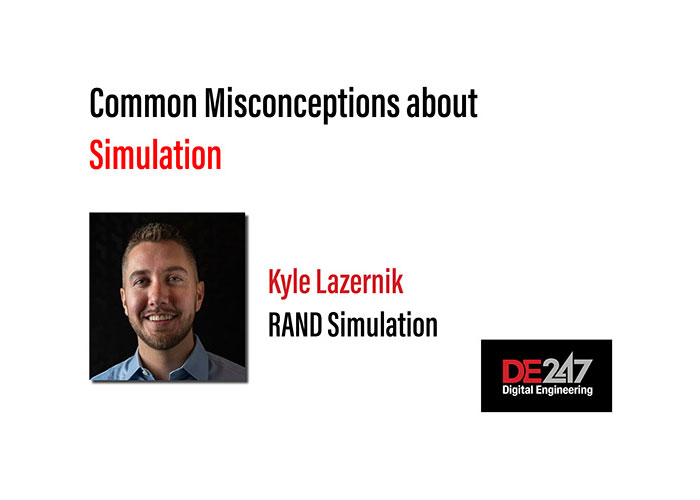
In collaboration with RAND Simulation, we produced this video to address some of the common misconceptions about engineering simulation. Kyle Lazernik, FEA expert and regional account manager, RAND Simulation, addressed the questions posed by DE editors. Here is the Q&A, along with his on-camera responses.
Question: What usually holds back companies from using adopting simulation or using it more often?
Answer: Sometimes companies don't invest in simulation tools because they think they're too expensive or they're too difficult to drive. Today, the tools are more ubiquitous and accessible than ever before. We're seeing new tools and capabilities being developed by simulation companies at the CAD level and geometry level to make simulation more ubiquitous and introducing it at the design level, making it easier and more accessible to a wider audience. As a result, we're seeing engineering teams bring simulation tools much earlier in the product development lifecycle.
Q: How would AI change simulation?
A: We're seeing AI play a very interesting role in simulation, specifically with customers that have large libraries of historical simulation data. Using machine learning and artificial intelligence, it can read and analyze that historical simulation data and make very specific recommendation, design changes, and provide engineering feedback at the design process and throughout the product development lifecycle.
Q: What are the common misconceptions about simulation both favorable and unfavorable?
A: One of the major misconceptions about simulation is that it's only useful at the end of the product development process or after a major issue occurs with a prototype or design. Implementing simulation tools truly changes the culture of an engineering team from being reactive, from when issues arise, to being proactive, identifying issues before they arise early in the product development process, avoiding the need for physical prototyping, redesign, or issues that come up later in the process that can be extremely expensive, time consuming, and a major headache for any business.


Kenneth Wong is Digital Engineering's resident blogger and senior editor. Email him at [email protected] or share your thoughts or suggestions at digitaleng.news/facebook.
Follow DE
Join over 90,000 engineering professionals who get fresh engineering news as soon as it is published.






About Us · Contact Us · Editorial Team · Advertising · Privacy Policy · Subscriber Services · © 2026 Digital Engineering 24/7 · Peerless Media