Helping design and engineering professionals discover, evaluate and specify technologies and processes that shorten the design cycle and enable success.


Sponsored

The year was 1902 and the world had just stepped through the threshold into the new millennium. New York was starting to test the boundaries of civil engineering with its skyscrapers—the innovative buildings that would dramatically alter the face of the city to what we know it to be today.
Technically, New York's first skyscraper was The Tower Building in 1889; this status was not given so much for its height—of 11 stories—but for being the first building in the city to have a steel skeleton. Unfortunately we can now only see it in old pictures, as it was demolished in 1913. But our story starts with 1902, the year the next iconic skyscraper—which is still standing tall despite adversities of all kinds—was opened: the unmistakable Flatiron Building.
Download this paper to continue reviwing the topic of pedestrian wind comfort with examples:

SimScale enables engineering teams to access accurate and fast simulation, on their terms, without compromise. We make engineering simulation technically and economically accessible from everywhere, at any time, and at any scale, in the cloud. We…
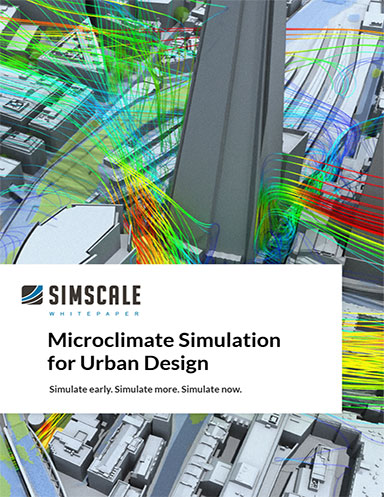
Microclimate Simulation for Urban Design
A cloud-native simulation platform allows architects and engineers to simulate and analyze high-fidelity models with complex physics for urban design.




About Us · Contact Us · Editorial Team · Advertising · Privacy Policy · Subscriber Services · © 2026 Digital Engineering 24/7 · Peerless Media