Helping design and engineering professionals discover, evaluate and specify technologies and processes that shorten the design cycle and enable success.



Digital Engineering April 2026
In the latest issue of Digital Engineering, we take a look at the latest innovations in design for additive manufacturing, including the use of natural language inputs, social media cosplayers, and AI integration. The issue also includes a feature…

January Special Focus Issue: Design for Additive
In this Special Focus Issue of Digital Engineering, learn about the latest advancements in design for additive manufacturing, including new software tools, additive in automotive, custom medical devices, and more.
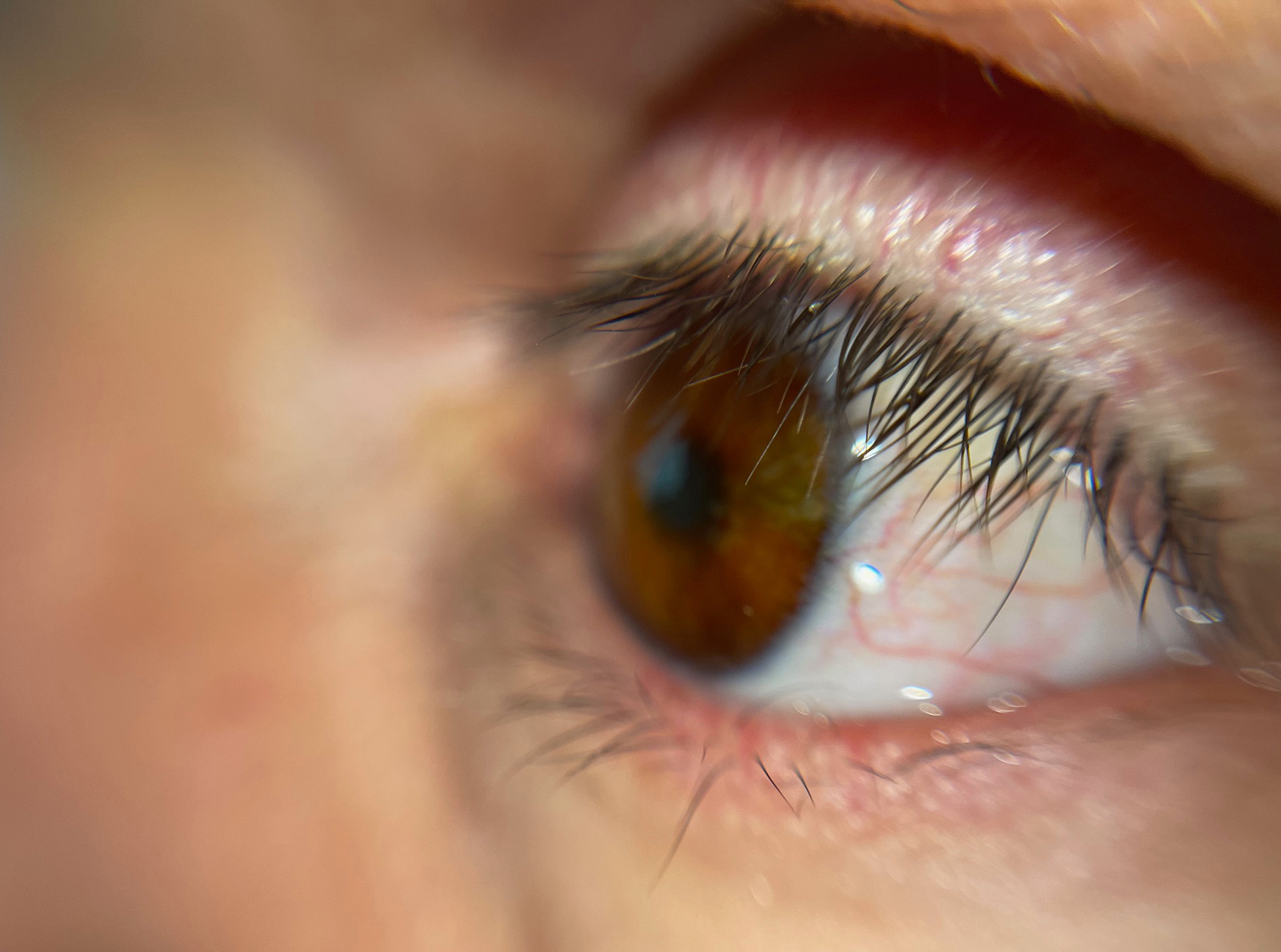
3D printed prosthetic eyes may sound a bit science fiction, but they are one step closer to reality thanks to a partnership between Fraunhofer IDG, a research institution specializing in applied visual computing and image- and model-based information technology, and a a handful of partners in healthcare and manufacturing.
Professor Mandeep Sagoo, a consultant ophthalmologist at Moorfields Eye Hospital London, worked in close collaboration with Ocupeye Ltd. and Fraunhofer to create a unique process for 3D printing eye prosthetics. The process takes a virtual model culled from a scan of the eye socket and uses a photo of a healthy eye as the foundation for a digital platform that can result in 3D printed output.
Key to the effort is Fraunhofer IDG’s Cuttlefish:Eye universal 3D printing software, which creates a 3D print model from the scan and healthy eye image, which can be output on any compatible 3D printer. Cuttlefish software is known for its ability to reproduce, at super high fidelity, accurate and detailed colors, which pushes the limits of accuracy and realism in 3D printing, company officials claim.
The Cuttlefish:Eye software is uniquely suitable for this high-performance application due to its ability to automatically process complex input models, including millions of triangles, multiple texture maps as well as overlapping and embedded models with different color and translucency textures.
The breakthrough technology and process is allowing physicians to produce eye prostheses that can be fit for patients in clinical trials for the first time. “We are excited about the potential for this fully digital eye,” said Sagoo, also professor of ophthalmology at the NIHR Biomedical Research Centre at Moorfields Eye Hospital and the UCL Institute of Ophthalmology, in a press release. “We hope the forthcoming clinical trial will provide us with robust evidence about the value of this new technology, showing what a difference it makes for patients.”
Beyond the realism of the 3D printed eye, the new approach is also significantly faster than the conventional way of making ocular prostheses. Traditionally, patients must have their eye socket individually measured, and the invasive molding can be uncomfortable, oftentimes requiring a general anesthetic. Once the mold is done and the prostheses speced, the hand-crafted manufacturing process takes months, keeping patients waiting.
With the 3D printing process, that timeframe is significantly accelerated, giving patients quicker results and a better overall experience. Patients are subjected to a non-invasive, non-ionizing scan using a specially modified Optical Coherence Tomography ophthalmic scanner. Those scans and a color-calibrated image of the healthy eye is digitally transferred to Faunhofer IDG, which creates the 3D print model, and another company does the actual 3D printing work.
Watch this video to learn about the genesis of a 3D printed eye prostheses and the first patient’s story.


Beth Stackpole is a contributing editor to Digital Engineering. Send e-mail about this article to [email protected].
Follow DE
Join over 90,000 engineering professionals who get fresh engineering news as soon as it is published.






About Us · Contact Us · Editorial Team · Advertising · Privacy Policy · Subscriber Services · © 2026 Digital Engineering 24/7 · Peerless Media