Helping design and engineering professionals discover, evaluate and specify technologies and processes that shorten the design cycle and enable success.



Digital Engineering April 2026
In the latest issue of Digital Engineering, we take a look at the latest innovations in design for additive manufacturing, including the use of natural language inputs, social media cosplayers, and AI integration. The issue also includes a feature…

January Special Focus Issue: Design for Additive
In this Special Focus Issue of Digital Engineering, learn about the latest advancements in design for additive manufacturing, including new software tools, additive in automotive, custom medical devices, and more.
3D printing produces objects you can touch, and is capable of building everything from architectural models to reproducing paintings. Hands On Search, from Yahoo Japan, combines the power of AM with humanity’s largest database, the internet, to give blind children at the Special Needs Education School for the Visually Impaired a chance to feel the world around them.
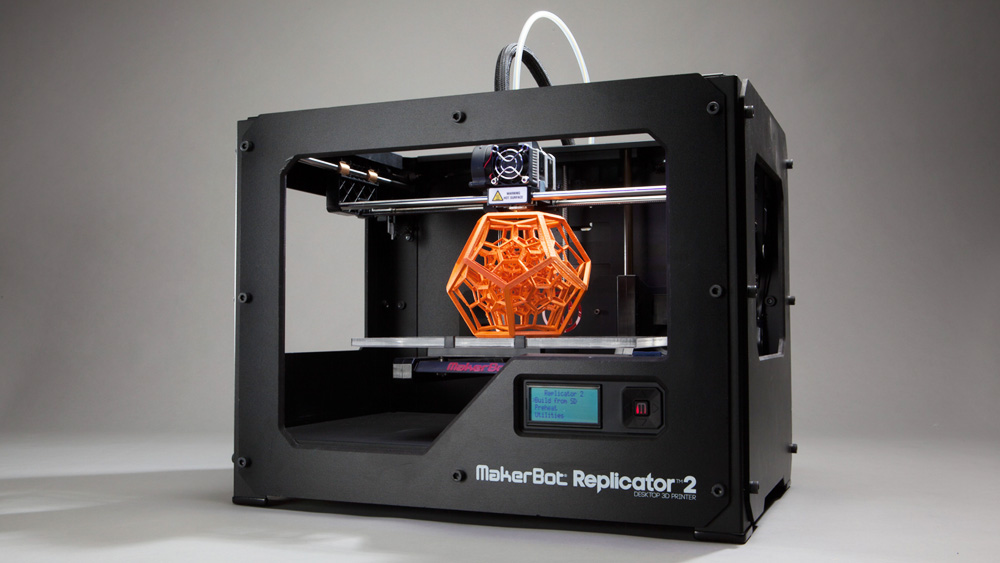
The physical form of the Hands On Search project is a machine that combines a MakerBot Replicator 2, a computer, and a voice activated search engine written specifically for the project by Yahoo Japan. Kids approach the machine, thump a giant button, and speak aloud what they’d like to have printed.
The search engine looks for an existing 3D model and, upon success, the Replicator 2 starts a print. If no 3D model can be found, Yahoo posts ads asking for help. Users browsing the Links for Good area can provide models for printing, or point the way toward pre-existing models.
The project offers blind children the chance to feel objects without regard to scale. It’s one thing to describe a Tyrannosaurus rex to a blind child, and another thing altogether to give that child a chance to feel the shape of the extinct predator. The same goes for other objects way too large for anyone to get their hands around, including skyscrapers, giraffes, or even the Earth itself.
AM can benefit blind parents as well. For many couples, the first sonogram of a baby is a defining moment in parenthood. It’s their first chance to see their child. Blind parents (or blind relatives) miss out on this experience.
A Brazilian company named Tecnologia Humana 3D developed a method of using data collected from sonograms to 3D print the still developing child. Originally the prints were intended for diagnostic purposes, but the American Foundation for the Blind thought of an alternative use for the technology. AM-produced replicas of a sonogram are built for blind parents to give them the same opportunity to experience an early glimpse of their child as that enjoyed by sighted parents.
With AM still really coming into its own, I’d expect these applications of the technology to be the first among many to help people with physical handicaps of every kind. As 3D printers make the transition from industry to the home, more people will be able to take advantage of AM. Projects like Hands On Search will move from schools to living rooms, opening up new worlds of possibility to people around the world.
Below you’ll find a short video about the Hands On Search project.
Sources: Hands On Search, Tecnologia Humana 3D


John Newman is a Digital Engineering contributor who focuses on 3D printing. Contact him via [email protected] and read his posts on Rapid Ready Technology.
Follow DE
Join over 90,000 engineering professionals who get fresh engineering news as soon as it is published.






About Us · Contact Us · Editorial Team · Advertising · Privacy Policy · Subscriber Services · © 2026 Digital Engineering 24/7 · Peerless Media