Helping design and engineering professionals discover, evaluate and specify technologies and processes that shorten the design cycle and enable success.



May 2026 Special Focus: Artificial Intelligence in Design and Simulation
In this Special Focus Issue, learn about the latest developments in the integration of artificial intelligence into engineering workflows.

April 2026 Special Focus Issue: Generative Design
In this Special Focus Issue, Digital Engineering takes a look at how generative design solutions can be used across different types of design problems and with a variety of manufacturing approaches to accelerate design space exploration, and…
AM can also be used for more direct conservation efforts, as demonstrated by 3D printed solar panels. While that particular use might be a bit high tech for the average user, a German designer named Andreas Haeuser has created plans that allow nearly anyone with access to an AM system to build their own Stirling Engine.
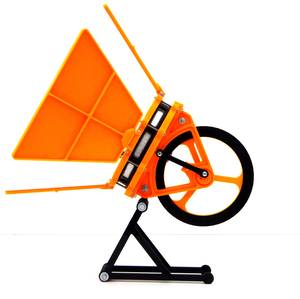 A 3D printed Stirling Engine generates power from absorbed heat. Courtesy of Reprap Windturbine.
The Stirling Engine was first introduced in 1816 by Scottish inventor Robert Stirling. The engine uses the push and pull created by opposing heat gathering and cooling elements to propel a cylinder, which can then be used for power.
While many Stirling Engines use liquids to produce energy, Haeuser’s 3D printed design can generate power from the heat produced by the sun. From his website:
In sunny weather, the Stirling Engine can be driven directly by the sun rays. On less sunny days reflector mirrors can be mounted to increase the efficiency enormously. Without sunlight, in the dark or indoors, the Stirling Engine can also be operated. For example, on a cup of hot tea, or on the heatbed of your 3d printer.
The majority of Haeuser’s design was built using 3D printed parts, minus a few easily obtainable bits and pieces (bolts, screws, etc.). Instructions on how to build the engine can be found on his website.
It’d be easy to dismiss this design as a toy or science fair type experiment, but solar powered Stirling Engines are used to generate energy in a number of sunny locations around the world. By adding 3D printing to the mix, Haeuser has made it possible to build an inexpensive remote energy generator, which could be used in emergencies or in areas without access to electricity.
Below you’ll find a video about the Stirling Engine.
Source: Reprap Windturbine


John Newman is a Digital Engineering contributor who focuses on 3D printing. Contact him via [email protected] and read his posts on Rapid Ready Technology.
Follow DE
Join over 90,000 engineering professionals who get fresh engineering news as soon as it is published.






About Us · Contact Us · Editorial Team · Advertising · Privacy Policy · Subscriber Services · © 2026 Digital Engineering 24/7 · Peerless Media