Helping design and engineering professionals discover, evaluate and specify technologies and processes that shorten the design cycle and enable success.


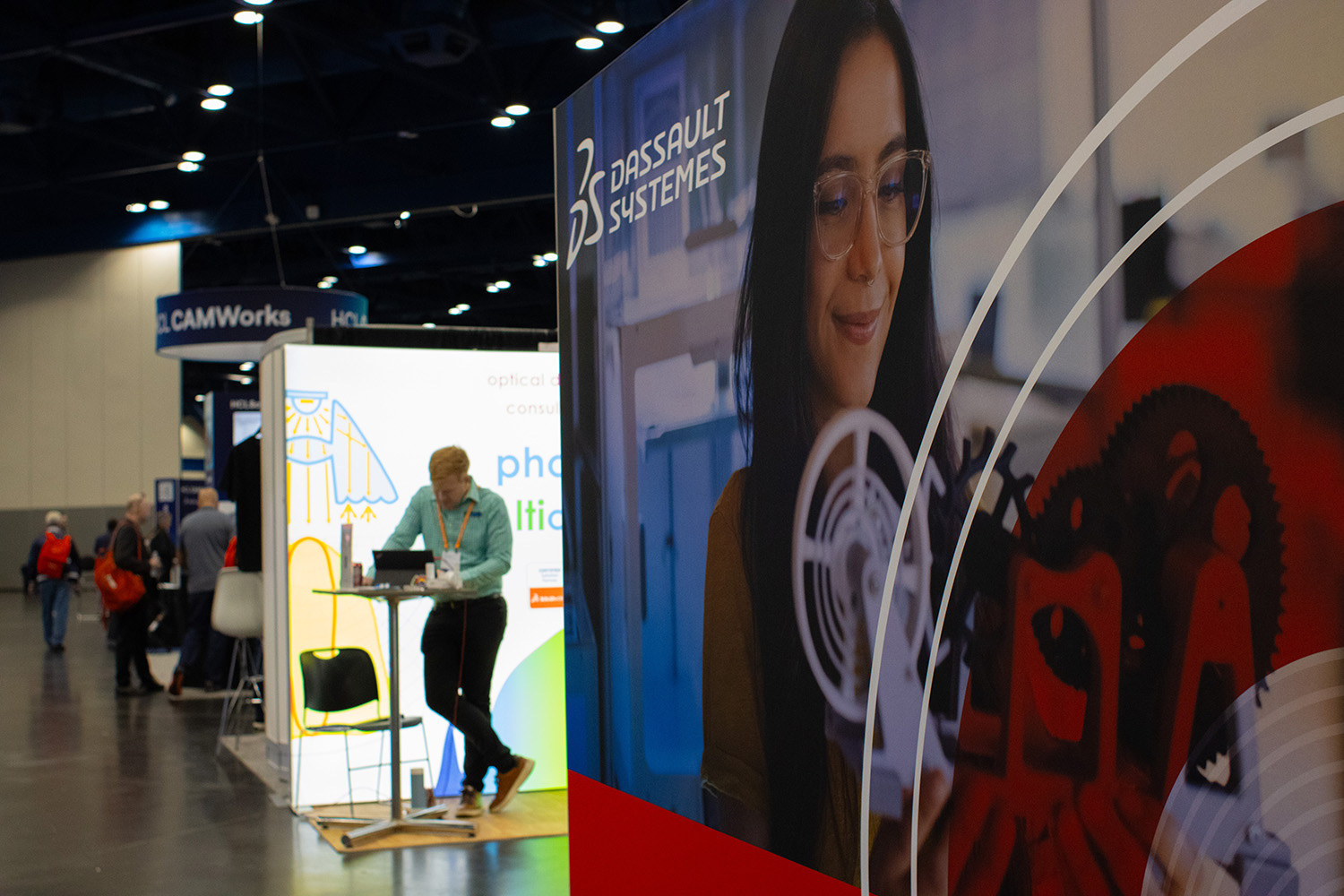
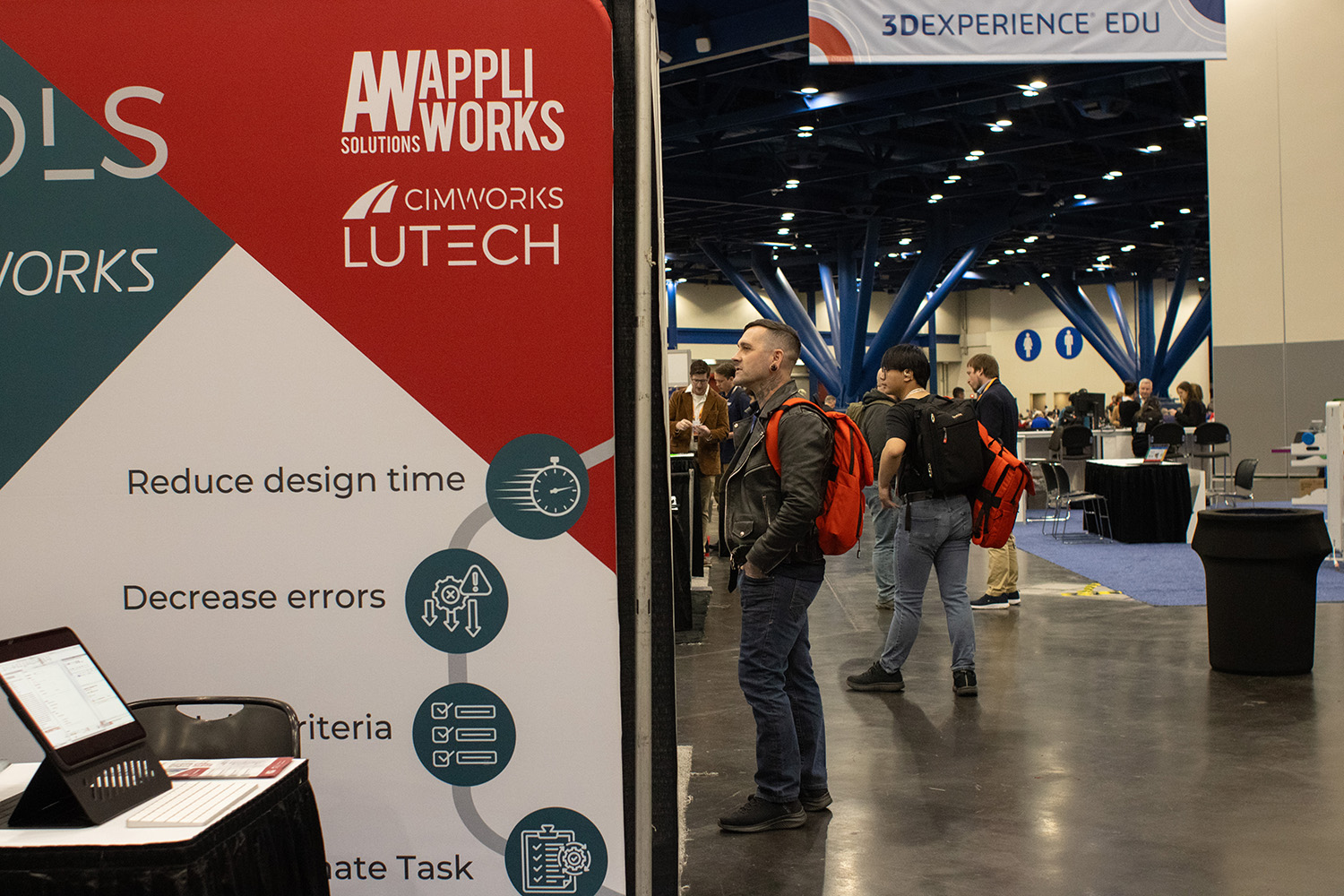
This year, SOLIDWORKS, one of the most widely used mainstream CAD packages, reached 30 years. Launched in 1995 as the first PC-based CAD, SOLIDWORKS was the brainchild of cofounders Jon Hirschtick and John McEleney, who went on to launch the cloud-hosted CAD Onshape afterward. Many of the SOLDIWORKS users, newbies and veterans alike, came together at the annual gathering, 3DEXPERIENCE World, hosted by SolidWorks' parent company Dassault Systemes.
"The software that started the CAD revolution, needed constant improvements over the years," noted Manish Kumar, SolidWorks CEO and VP R&D, during the keynote. "We continue to explore and add value based on your direct feedback. We also expanded to more engineering disciplines, such as simulation, data management, and electronics. Today is the new era for SOLIDWORKS."
The new era is marked by the introduction of AI-powered or AI-like tools, such as suggested commands, automatic drawing creation, and automatic assembly. These tools, "while making you more productive, save you tremendous amount of time," said Kumar. "I'm happy to report to you that the first phase has been delivered. We will continue to learn, improve, and make the tools more precise.
The command predictor "learns from you to predict your next move. No need to search through the menus for the next command," explained Kumar. The feature is part of SOLIDWORKS classic as well as the cloud-based SOLIDWORKS xDesign.
Automatic drawing creation allows you to generate a 2D production drawing using the 3D CAD model. It's one of the unavoidable and tedious tasks that beg to be automated. With the tool, "We are taking AI-driven image-to-sketch conversion to the next level. We can generate the sketch by identifying CAD entities and constraints, and we will automatically add dimensions as well," said Kumar.
Assembly creation is typically a time-consuming process that requires you to select the relevant surfaces on different parts, define the mating constraints, and then connect them with the right orientation. Kumar revealed SOLIDWORKS was introducing a new approach. "Just like in the real world, you'll bring the parts together in the virtual environment, lay them out, then figure out how to put them together ... After asking you some clarifying questions, the software can instantly create a fully assembled model," said Kumar.
The centerpiece of SOLIDWORKS AI is Aura, a virtual that's currently in beta test within the company. It's set to make its public debut in July. "Aura learns from you, teaches you, and performs tasks for you," explained Kumar. It's available anywhere, on any device, right in the context of your design."
One of the guests for the keynote was Dr. Luis Sentis, a professor at The University of Texas at Austin and cofounder of Apptronik. The use of articulated robotic arms in manufacturing is already widespread. Though robots can be in any shape, Sentis believes there are good reasons to anticipate humanoid robots.
"The global market for robotics is driven by the confluence of electro mechanics and the use of generative AI, but really, the world is designed for humans, and the humanoid form factor allows us to go anywhere in our factories, retail logistics, home care and so on," said Sentis.
Due to medical advances, humans are living longer on average. "By age 80, 40% of us will be immobile. That opens up tremendous opportunities in millions of homes around the world for humanoids, maybe in a small form factor, capable of doing healthcare and home chores," observed Sentis.
Along with humanoid robots came robots in the shape of men's best friend, as examplified by robotic dog Spot from Boston Dynamics. Another guest at during the keynote was Marc Raibert, Executive Director of The AI Institute, founder of Boston Dynamics, and the cocreator of Spot. He was joined by his famous quadruped robot on stage.
"It's difficult to have Spot as a partner," quipped Raibert. "People would rather see Spot than listen to me."
Early deployment of Spot ranges from inspecting hazardous environments (such as sites suspected of radiation) and law enforcement. Raibert also showed Atlas, a newer humanoid model in development at Boston Dynamics.
"Atlas is about as athletic as a person. It can jump around, balance itself, and do parkour ... It's a reminder that hardware is important, just as much as the software that controls it," said Raibert.
At the conference, Dassault Systemes announced a partnership with KUKAR, an industrial automation and robotics company. "Dassault Systèmes is joining mosaixx, KUKA’s digital ecosystem for industrial software solutions, offering KUKA customers an easy way to purchase and use Dassault Systèmes’ 3DEXPERIENCE platform and applications," according to the announcement.
Launched in 2024, KUKA's mosaixx is an open, collaborative, cloud platform for industrial software, giving system integrators and engineers access to a wide range of solutions for digitalization and automation of factory floors and production machines.
On the last day of the conference, Dassault Systemes announced a partnership with Apple, to add Apple Vision Pro as a hardware choice for the next generation 3DEXPERIENCE platform. "With 3DLive, virtual twins created on the 3DEXPERIENCE platform will be able to leap off the screen and into a user’s physical space, enabling real-time visualization and team collaboration in lifelike environments. Apple Vision Pro’s advanced cameras, sensors and tracking also allow virtual twins to interact with the physical world around them in 3D UNIV+RSES with scientific accuracy," said the announcement.


Kenneth Wong is Digital Engineering's resident blogger and senior editor. Email him at [email protected] or share your thoughts or suggestions at digitaleng.news/facebook.
Follow DE
Join over 90,000 engineering professionals who get fresh engineering news as soon as it is published.






About Us · Contact Us · Editorial Team · Advertising · Privacy Policy · Subscriber Services · © 2026 Digital Engineering 24/7 · Peerless Media