Helping design and engineering professionals discover, evaluate and specify technologies and processes that shorten the design cycle and enable success.




Digital Engineering April 2026
In the latest issue of Digital Engineering, we take a look at the latest innovations in design for additive manufacturing, including the use of natural language inputs, social media cosplayers, and AI integration. The issue also includes a feature…

January Special Focus Issue: Design for Additive
In this Special Focus Issue of Digital Engineering, learn about the latest advancements in design for additive manufacturing, including new software tools, additive in automotive, custom medical devices, and more.
3E EOS, a company vested in electro-optic systems, has expanded its additive manufacturing capabilities with an investment in Stratasys technology, the company announced. This expansion includes the addition of multiple Stratasys FDM 3D printers, bringing their total fleet to 15 large-scale systems, including the F3300, Neo800, F900, F770, Origin One models and SAF technologies.
3E EOS is establishing a dedicated additive manufacturing center to support prototyping, tooling and production. The expanded fleet enables the company to produce critical components such as air ducts and fuel adapters for aircraft.
"In a world where trends evolve rapidly, staying ahead of the market is not just an advantage—it’s a necessity," says Emir Ozdemir, head of Market Development at 3E EOS. "Our continued partnership with Stratasys ensures we remain at the forefront of innovation, delivering cutting-edge solutions that exceed market demands. By equipping our team with the industry’s best additive manufacturing technology, we empower innovation and drive excellence."
Stratasys’ material range and advanced 3D printing systems have allowed 3E EOS to streamline production workflows.
“3E EOS is demonstrating a forward-thinking approach by strategically adopting additive manufacturing for applications where it offers clear advantages over traditional methods," says Andreas Langfeld, president of EMEA and APAC at Stratasys. "By developing impactful use cases and integrating AM into their operations, they’ve recognized its potential to drive efficiency and innovation. Their decision to establish a large AM center further elevates the value of additive manufacturing, enabling them to maximize its impact across the manufacturing lifecycle.”
CoreLayer, alongside 3E EOS, is concentrating on the needs of the automotive industry, bringing its expertise in designing and manufacturing assembly line jigs and fixtures to the sector. In addition, 3E EOS is advancing the adoption of additive manufacturing while promoting sustainability by minimizing material waste and energy consumption.
Sources: Press materials received from the company and additional information gleaned from the company’s website.


Every day, our customers find simpler, smarter approaches to stubborn design problemsand greater confidence to confront towering human and technological challenges. Less hindered by the usual constraints, they can imagine, design, iterate and…
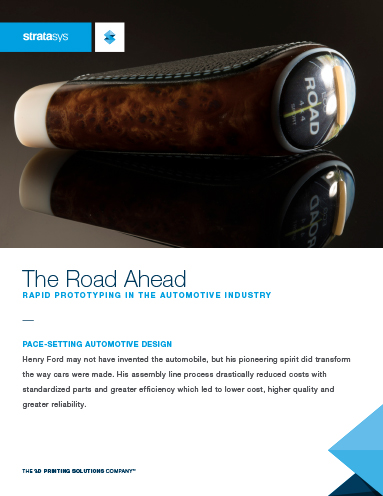
Rapid Prototyping in The Automotive Industry
Henry Ford may not have invented the automobile, but his pioneering spirit did transform the way cars were made. His assembly line process drastically reduced costs with standardized parts and greater efficiency which led to lower cost, higher quality and greater reliability.

DE's editors contribute news and new product announcements to Digital Engineering. Press releases may be sent to them via [email protected].
Follow DE
Join over 90,000 engineering professionals who get fresh engineering news as soon as it is published.






About Us · Contact Us · Editorial Team · Advertising · Privacy Policy · Subscriber Services · © 2026 Digital Engineering 24/7 · Peerless Media